Untold Studios has revealed new behind-the-scenes details showcasing their groundbreaking visual effects work on Remarkably Bright Creatures, the Netflix adaptation of Shelby Van Pelt’s bestselling novel. The studio played a central role in creating Marcellus, a fully computer-generated octopus whose intelligence, personality, and emotional depth form the heart of the film. Following its release, the movie quickly surged to the top of Netflix’s global film charts, drawing attention not only for its storytelling but also for its stunning underwater visual effects.
The newly released breakdown reel highlights the intricate process behind bringing Marcellus to life. Known for its expertise in creature and character animation across both film and advertising, Untold Studios was brought into the project during its early development phase. Their task was not simply to animate an octopus, but to design a believable, emotionally expressive digital creature capable of carrying narrative weight alongside human actors.
Senior VFX Supervisor Chris Ritvo led the team responsible for Marcellus’ creation. His involvement marked a reunion with director Olivia Newman, following their previous collaboration on Where the Crawdads Sing. That prior experience helped establish a creative shorthand between director and studio, allowing for a more ambitious approach to the visual representation of Marcellus.
From the beginning, the filmmakers aimed to ensure that Marcellus felt grounded in realism while still being capable of expressive storytelling. On set, the production team used a specially designed physical puppet that matched Marcellus in scale, texture, and coloration. This practical reference served multiple purposes: it helped actors maintain accurate eyelines, provided consistent lighting reference for cinematographers, and gave the VFX team a tangible foundation on which to build the final digital performance.
However, the puppet represented only a starting point. The final version of Marcellus would exist entirely in CGI, requiring extensive digital craftsmanship to achieve fluidity, emotional nuance, and natural underwater behavior. According to Ritvo, one of the biggest challenges was replicating the constant motion inherent to real octopuses. Unlike most animals, octopuses move continuously in multiple directions at once, with their limbs independently shifting, curling, and reacting to subtle environmental changes.
“To study real octopuses is to understand motion that never stops,” Ritvo explained. “Everything is alive at once — skin, tentacles, texture — it’s all reacting simultaneously.”
To achieve this level of realism, Untold Studios’ CFX (Character Effects) department developed highly advanced systems for skin deformation, muscle movement, and tentacle physics. Each limb of Marcellus was individually simulated, allowing for naturalistic motion that could respond dynamically to underwater currents, surrounding objects, and character interactions.
The team also created multiple simulation layers for different aspects of his behavior. One layer controlled primary tentacle movement, another handled secondary fine motion such as curling and relaxation, while additional systems managed skin elasticity, suction cup interaction, and environmental contact. These overlapping simulations allowed Marcellus to feel like a truly living organism rather than a digitally animated model.
Underwater performance added another layer of complexity. The VFX team developed specialized simulation passes to replicate how water resistance affects movement, how light refracts through shifting currents, and how particles interact with Marcellus’ body. These environmental effects were essential in grounding the character within the aquatic world of the film.
Beyond physical realism, the creative challenge was to give Marcellus personality without compromising biological authenticity. Unlike human characters, an octopus does not have facial expressions, so emotion had to be conveyed through subtle shifts in posture, tentacle positioning, and timing of movement. The animation team carefully studied marine biology footage while also referencing performance techniques from character animation to strike a balance between realism and storytelling clarity.
This combination of science and artistry became one of the defining achievements of the project. Untold Studios built on its previous experience with creature work, including projects such as Disney’s Blub Blub and BMW’s Octo campaign for Heart of Joy. Those earlier productions provided a technical foundation in rigging and simulation, but Marcellus demanded a higher level of sophistication in emotional storytelling and detail.
According to the studio, Marcellus represented a significant step forward in their creature pipeline. Every tentacle, texture, and movement was refined to support not only realism but also narrative intention. The goal was for audiences to emotionally connect with a non-human character in a way that felt natural and unforced.
As development progressed, Marcellus evolved from a technical challenge into a fully realized character within the story. The production team worked closely with editorial and direction to ensure that his presence on screen felt integrated rather than added through visual effects. Scenes involving Marcellus were carefully staged to allow his movement to complement human performances, reinforcing emotional beats rather than distracting from them.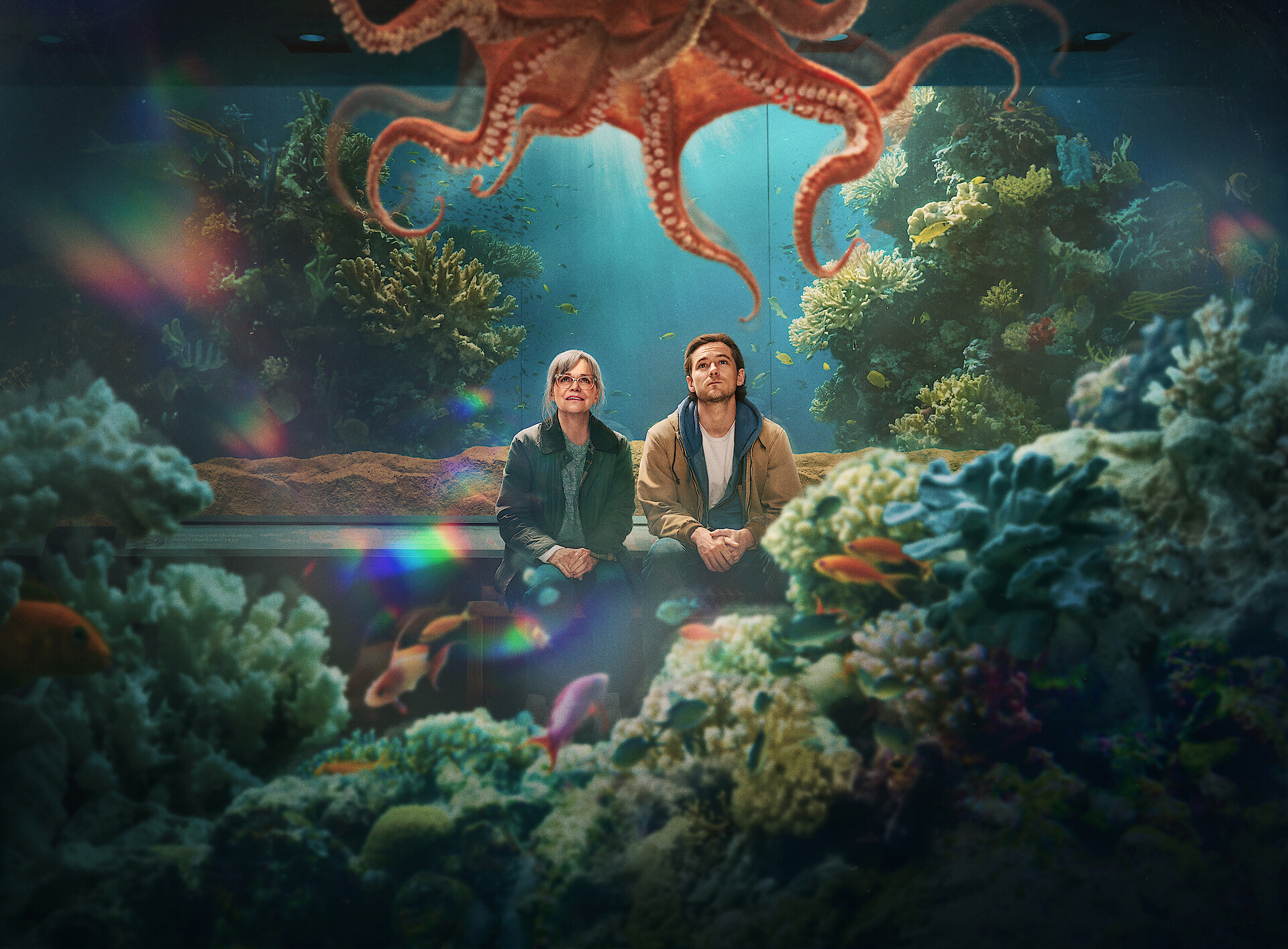
Once completed, Marcellus became one of the standout elements of Remarkably Bright Creatures, contributing significantly to the film’s global success. His character resonated strongly with audiences, many of whom praised the seamless integration of CGI and live-action storytelling.
Interestingly, Marcellus’ presence extended beyond the film itself. The character was also featured prominently in the broader marketing campaign for the release, including promotional material for the film tie-in edition of Shelby Van Pelt’s novel. One of the most eye-catching appearances was a large-scale billboard in Times Square, where Marcellus was showcased as part of the global launch strategy.
This cross-platform visibility helped establish Marcellus not just as a visual effects achievement, but as a recognizable cultural image tied to the film’s identity. For Untold Studios, it represented another milestone in their ongoing evolution as leaders in digital creature creation.
In reflecting on the project, the team emphasized that Marcellus was more than just a technical exercise. It was an opportunity to push the boundaries of what fully CG characters can achieve in modern filmmaking. By blending biological accuracy with emotional storytelling, the studio helped create a character that feels both scientifically grounded and narratively compelling.
With Remarkably Bright Creatures now a global streaming success, Marcellus stands as a testament to how far visual effects technology has come — and how, when combined with strong storytelling, even a fully digital octopus can leave a lasting emotional impact on audiences around the world.