Netflix’s upcoming adaptation of Remarkably Bright Creatures is already generating major anticipation among fans of Shelby Van Pelt’s bestselling novel, and much of the excitement surrounding the film comes from the emotional visual world created by cinematographer Ashley Connor. Warm, colorful, intimate, and quietly magical, the movie transforms a deeply beloved story into something visually immersive while preserving the tenderness that made the novel resonate with millions of readers.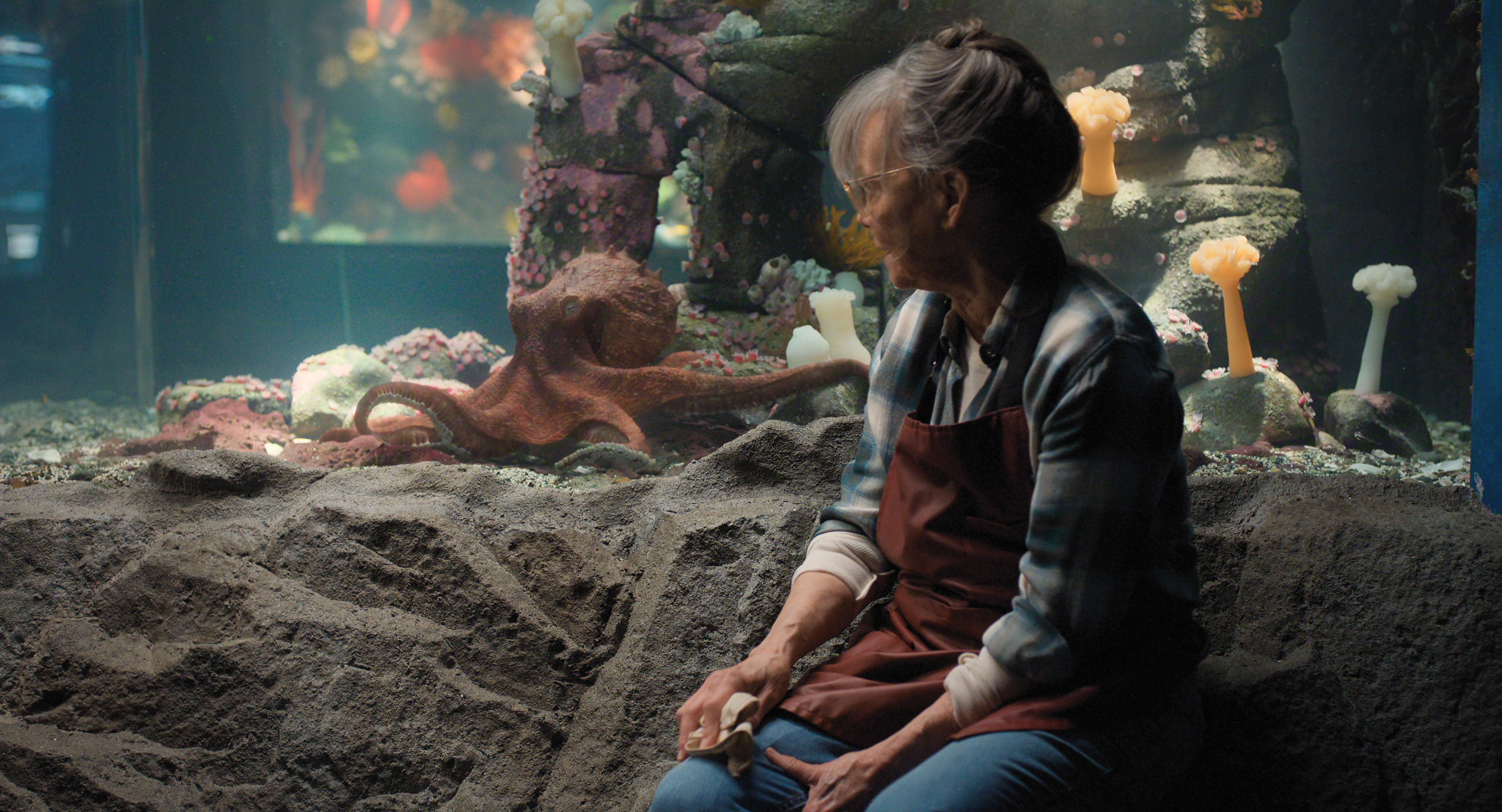
Directed by Olivia Newman, the film stars Sally Field as Tova, Lewis Pullman as Cameron, and features Alfred Molina as the voice of the intelligent octopus Marcellus — the unlikely emotional center of the story. Set against the breathtaking coastal beauty of Vancouver, Canada, the adaptation balances grief, loneliness, humor, and human connection through an atmosphere that feels simultaneously grounded and dreamlike.
For Ashley Connor, however, bringing Remarkably Bright Creatures to life presented one of the most unusual and technically demanding challenges of her career.
Connor, known for her work on projects like The Chair and Polite Society, recently explained that the biggest obstacle was figuring out how to make Marcellus feel like a living participant in the story rather than simply a CGI effect added afterward.
“The entire movie depended on whether audiences emotionally believed in Marcellus,” Connor revealed. “If he didn’t feel alive, observant, and emotionally connected to the humans, the whole thing would collapse.”
Unlike many creature-heavy films that emphasize spectacle, the creative team approached Marcellus almost like a human character with emotional agency and perspective. According to Connor, that philosophy shaped every visual decision from camera movement to lens selection.
“One of the things I love most as a cinematographer is subjective photography,” she explained. “The novel is written through multiple perspectives, so we wanted audiences to experience each character’s emotional reality individually — including Marcellus.”
That decision led to one of the production’s most innovative technical experiments.
Because Marcellus spends much of the story inside an aquarium tank observing humans from behind glass, Connor and director Olivia Newman wanted viewers to literally see scenes through the octopus’s eyes. But rather than relying entirely on digital visual effects, they insisted on capturing much of that perspective physically and in-camera.
“We could’ve done it the conventional way,” Connor said. “Shoot all the aquarium material separately later and recreate everything artificially. But Olivia and I felt that would disconnect the actors emotionally from the scenes.”
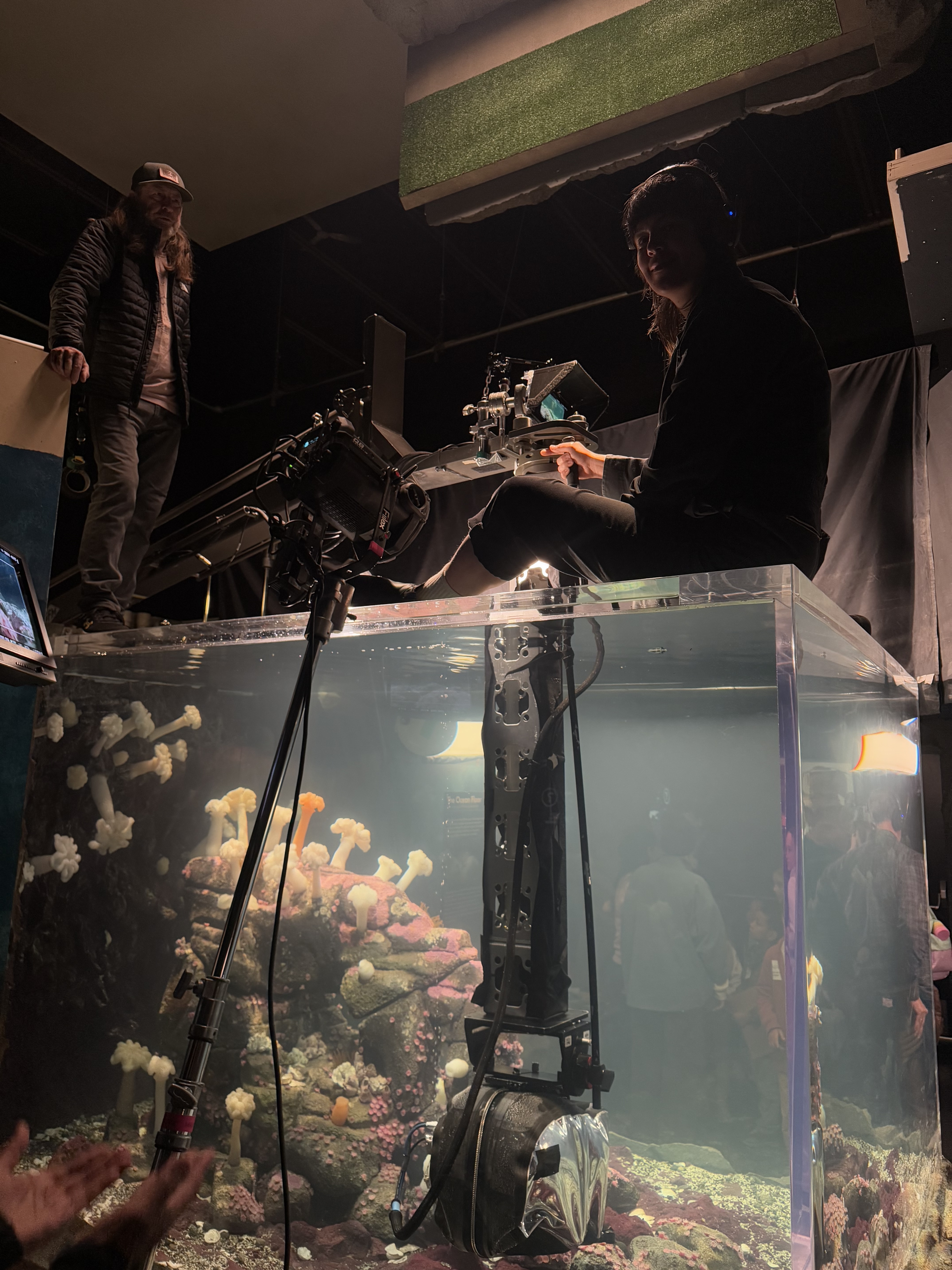
Instead, the crew developed an unusual hybrid system allowing the camera to be submerged directly into Marcellus’s tank during live performances. Connor described the setup as a “high-budget DIY invention” built through experimentation, improvisation, and collaboration between departments.
The cinematographer even sketched early concepts herself.
“My first idea was honestly ridiculous,” she laughed. “I basically drew a broomstick attached to a camera arm and thought maybe I could physically hold the camera underwater myself.”
To her surprise, the crew embraced the challenge enthusiastically.
Connor’s key grip and technical teams eventually designed a far more sophisticated version of her concept — one capable of lowering the camera smoothly into tight underwater spaces while maintaining mobility and preserving image quality.
The custom setup became affectionately known on set as “Octovision.”
Panavision, which supplied the cameras and lenses for the production, helped engineer specialized front-lens attachments that created subtle distortion effects mimicking how the world might appear through water and aquarium glass.
Connor explained that the goal was not scientific realism but emotional realism.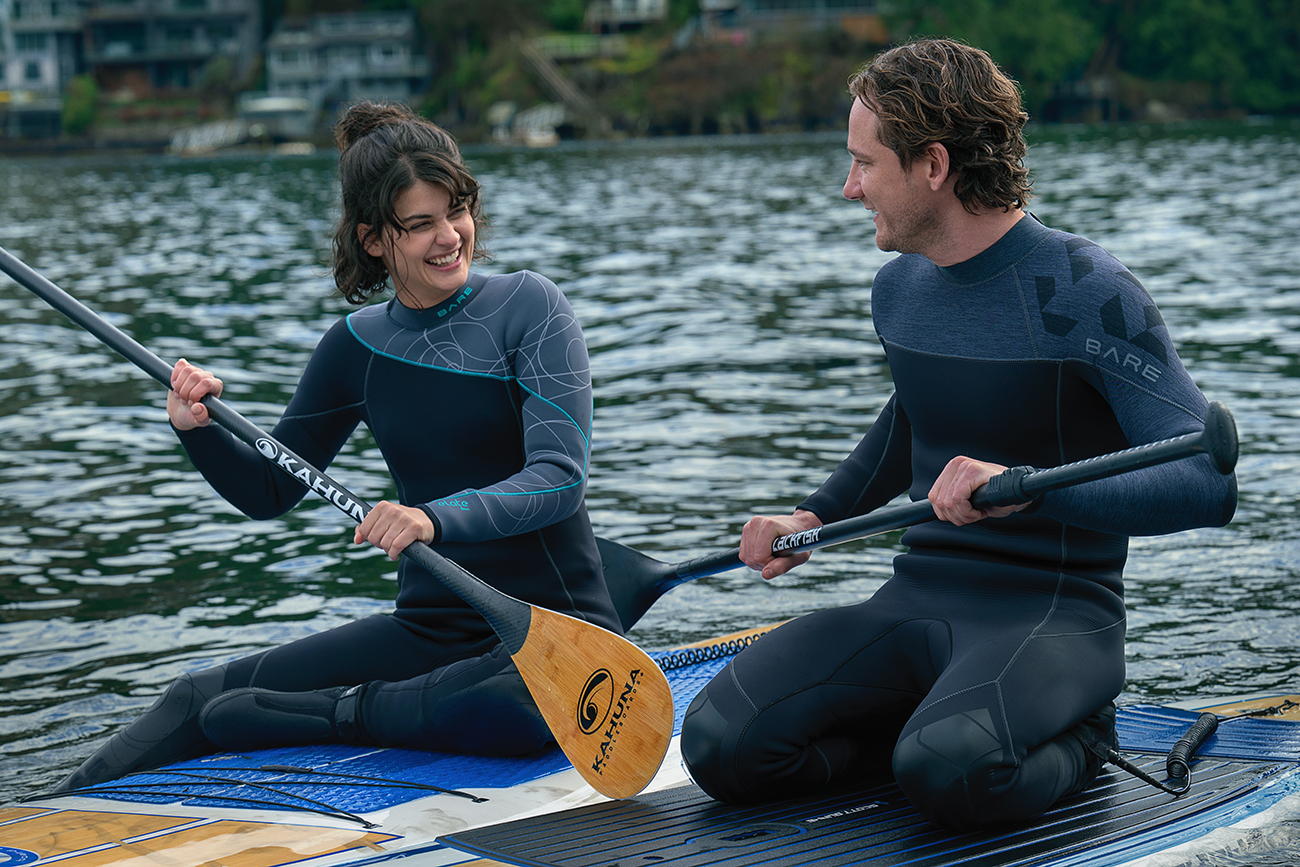
“Octopuses actually have incredible vision,” she said. “The distortion wasn’t about their eyesight being poor. It was about how the tank environment shapes perception.”
To achieve that effect, the team spent weeks testing filters and lens combinations.
The movie was shot primarily using the Alexa 35 camera paired with Panavision Primo lenses, which Connor describes as her favorites because of their soft, portrait-like texture.
“They’re gentle lenses,” she explained. “They create warmth without feeling overly stylized. We wanted the movie to feel approachable and emotionally inviting.”
That warmth became one of the defining visual qualities of the film.
Throughout Remarkably Bright Creatures, Connor emphasizes tactile textures — reflections in water, soft coastal sunlight, aquarium glass, weathered wood, damp jackets, glowing blues and greens — all designed to subtly mirror the emotional states of the characters.
“There’s loneliness in this story,” Connor said. “But there’s also hope and curiosity. The visuals had to carry both.”
Creating Marcellus’s aquarium environment introduced additional complications.
The production built much of the octopus tank on a soundstage rather than filming entirely inside a functioning aquarium. Production designer Jennifer Morden reportedly faced a difficult balancing act: constructing a tank believable enough for audiences while still leaving enough physical space for cameras and lighting equipment.
“It had to feel cramped enough that Marcellus seemed trapped,” Connor explained, “but large enough that we could physically operate inside it.”
The octopus’s natural behavior added another layer of complexity.
“Octopuses don’t move like fish,” Connor said. “They curl into rocks, squeeze into tiny spaces, cling to surfaces. They behave almost like aliens.”
Visual effects supervisor Chris Ritvo became one of Connor’s closest collaborators during the process. Together, they worked extensively to ensure Marcellus felt emotionally expressive while still behaving realistically.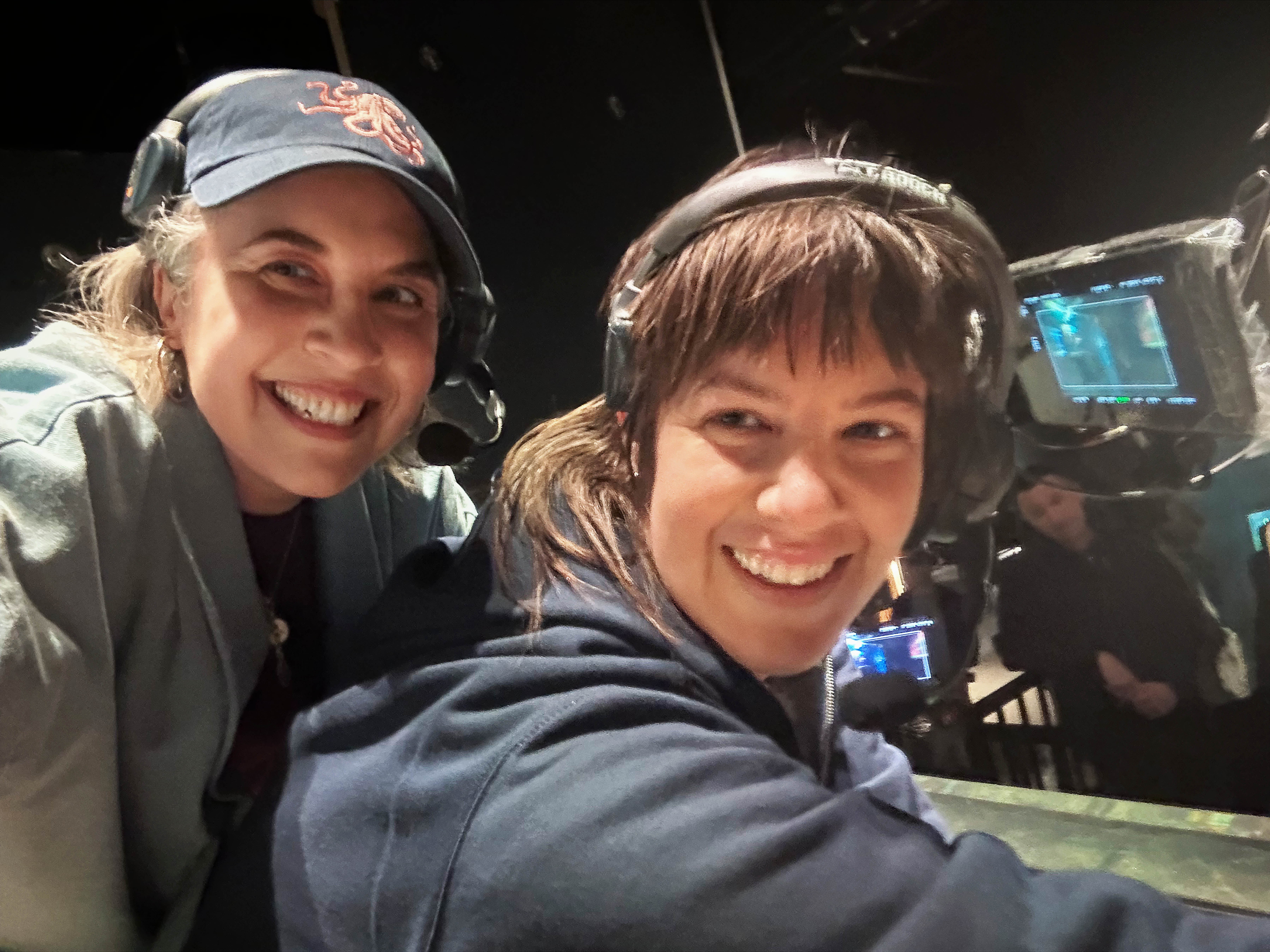
Connor admitted she had never previously worked on a film centered around a CGI creature.
“I was nervous,” she said. “Creature work is its own language.”
Fortunately, Ritvo reportedly shared the filmmakers’ desire to treat Marcellus as a genuine emotional presence rather than merely a visual effect.
“We wanted to light him exactly like we would light Sally Field or Lewis Pullman,” Connor explained.
To maintain visual consistency, the crew even created a physical octopus puppet matching Marcellus’s size, coloring, and proportions. Although the puppet lacked fully functional tentacles, it allowed Connor and the VFX team to accurately test shadows, reflections, and underwater lighting interactions before digital animation was added later.
“Chris was obsessive about matching the lighting perfectly,” Connor recalled. “That level of detail made all the difference.”
Meanwhile, filming around actual water proved physically exhausting for the cast and crew.
Connor admitted many of the film’s serene waterfront scenes were far more difficult to shoot than they appear onscreen.
“Shooting in water is miserable,” she joked. “Beautiful to watch. Horrible to do.”
The cinematographer revealed she actually fell between two boats during production while wearing heavy waterproof gear that instantly filled with freezing water.
“There’s no glamorous version of that,” she laughed.
The emotionally important final sequence involving Tova releasing Marcellus into the ocean reportedly became one of the hardest shoots of the entire production. Torrential rain hit during filming, but because of complex scheduling logistics involving town access and marine equipment, postponement was impossible.
“We just had to commit and shoot through it,” Connor explained.
Ironically, she believes the difficult weather ultimately enhanced the emotional atmosphere of the scene.
“There’s something raw and real about the final footage because everyone was emotionally and physically exhausted,” she said.