‘Girls Like Girls’ Director Hayley Kiyoko Explains Why She Changed the Story’s Original Ending for the Film Adaptation
Warning: Spoilers ahead for the ending of Girls Like Girls.
When Hayley Kiyoko brought Girls Like Girls from song and music video to novel and ultimately to the big screen, she made a creative decision that significantly altered one of the story’s most memorable moments. While previous versions of the story ended with a dramatic physical confrontation between protagonist Coley and her longtime antagonist Trent, the filmmaker ultimately chose to remove that climactic fight from the final cut of the movie.
The change reflects a deeper shift in focus for the story. Rather than ending with violence and revenge, Kiyoko wanted the film to emphasize personal growth, self-acceptance, and the emotional journey shared by its central characters, Coley and Sonya.
The original Girls Like Girls music video, released in 2015, became a cultural phenomenon and has accumulated more than 160 million views online. In that version of the story, the conclusion featured an intense fight between Coley and Trent over Sonya, the girl both characters are connected to. The confrontation served as an emotional release after viewers had spent the entire story watching Coley and Sonya struggle to acknowledge and embrace their feelings for one another.
Kiyoko later expanded the narrative in her 2023 novel, where the confrontation became even more intense. In the book, Trent attacks Coley while she and Sonya share a private moment by a swimming pool after rekindling their relationship. Sonya has finally begun to accept her feelings, and the couple appears ready to move forward together. However, Trent interrupts the moment with violence, provoking Coley into defending herself and the person she loves.
The novel vividly describes Coley’s emotional response as anger overtakes her. Driven by years of frustration and pain, she retaliates fiercely against Trent, refusing to stop even after he has been knocked to the ground. The scene serves as a moment of catharsis, allowing both Coley and readers to release the tension built throughout the story.
Because the fight had become such an iconic element of the Girls Like Girls narrative, many fans expected it to appear in the movie adaptation as well. In fact, Kiyoko initially intended to include it. During production, the scene was fully filmed and completed according to plan.
However, once the project entered the editing stage, Kiyoko began to reconsider whether the fight still represented the story she wanted to tell.
Speaking about the decision, she explained that watching the performances delivered by Maya da Costa and Myra Molloy ultimately changed her perspective. Seeing the emotional depth and chemistry between the two actresses made her realize that the story’s true focus was never Trent.
Instead, the film was always about Coley and Sonya.
According to Kiyoko, the central conflict of the story was not a battle against an external villain but rather an internal struggle. Both young women spend much of the narrative wrestling with fear, identity, vulnerability, and the challenge of accepting their authentic selves. By ending the movie with a fight, she felt the focus shifted away from that emotional journey.
Rather than allowing Trent to dominate the final moments, Kiyoko wanted the conclusion to belong entirely to the two women whose relationship drives the story.
She explained that the film ultimately became a reflection on authenticity and the choices people make regarding their own truth. For her, that message felt far more important than delivering a traditional cinematic showdown.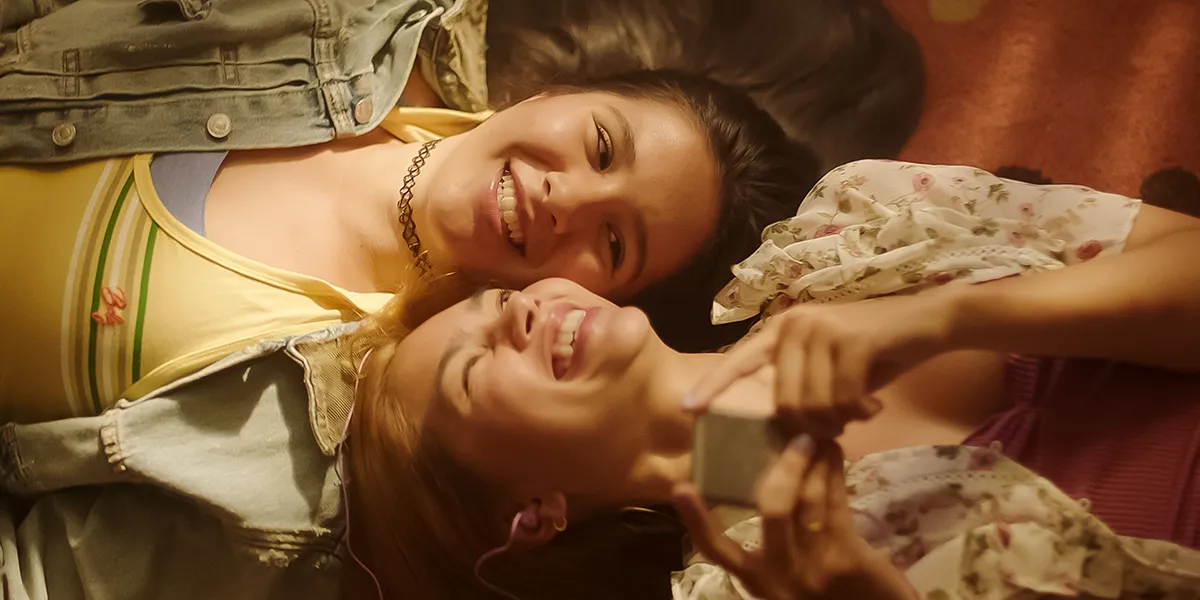
The filmmaker also noted that the themes of the story are deeply connected to her own experiences growing up as a queer person. Throughout her youth, she rarely saw positive representations of lesbian relationships in mainstream media. As a result, creating Girls Like Girls became a way to offer the kind of visibility and support she wished she had experienced earlier in life.
Kiyoko believes that seeing stories of queer love portrayed with honesty and hope can have a profound impact on audiences. She reflected that if she had encountered that kind of representation sooner, it might have helped her embrace her identity earlier and with less fear.
For that reason, she felt it was fitting to conclude the film’s decade-long creative journey with a message centered on love, self-acceptance, and emotional courage rather than violence.
Although fans may wonder whether the deleted fight scene will ever be released separately, Kiyoko revealed that she currently has no plans to include it as bonus content in future digital or physical releases.
The actors involved in filming the sequence also shared their thoughts on the decision to remove it.
Maya da Costa recalled that shooting the fight required extensive choreography and preparation. She compared the experience to performing a dance routine because every movement had to be carefully coordinated. Working alongside Levon Hawke, who portrays Trent, was a positive experience, and she praised the stunt team for helping create a safe and collaborative environment on set.
Despite enjoying the filming process, da Costa agreed with the final creative choice.
She explained that the movie’s emotional core lies in the quieter moments—the moments when characters confront difficult questions about themselves and decide whether they are willing to pursue the life and love they truly want. In her view, the ending ultimately captured those themes more effectively without the fight.
Myra Molloy shared a similar perspective.
She admitted that watching the character she loved being physically attacked was emotionally difficult. More importantly, she felt the confrontation conflicted with the larger message of the story.
For Molloy, allowing Trent to dictate the ending would have given too much power to a character who represented intolerance and control. Instead, she appreciated that the film allows Coley and Sonya to determine their own future. Their relationship, not Trent’s actions, becomes the defining force in the story’s conclusion.
The film also introduces another notable departure from traditional storytelling by delaying the couple’s full reunion until after the credits.
The main narrative ends on a bittersweet note, showing the possibility of reconciliation without immediately delivering complete closure. The actual reunion, featuring an emotional and romantic kiss between Coley and Sonya, appears during a post-credits scene.
Kiyoko revealed that she loved the idea of audiences remaining in the theater as a new version of “Girls Like Girls” played over the credits. The sequence allows viewers to reflect on the characters’ journey before receiving one final moment of hope and happiness.
She described the post-credits reunion as one of the most beautiful scenes in the film and expressed pride in how it was ultimately presented.
Beyond the movie itself, Kiyoko has continued expanding the Girls Like Girls universe through music. The film’s soundtrack includes an updated version of the original song alongside ten new tracks inspired by the movie’s characters and themes.
Having already transformed the story into a song, music video, novel, and feature film, some fans have even suggested that a Broadway musical could be the next step.
Kiyoko responded enthusiastically to the idea, joking that a stage adaptation might represent the final chapter in the story’s evolution if the opportunity ever arose.
For now, however, her focus remains on helping audiences discover both the film and its accompanying music.
Ultimately, Kiyoko, da Costa, and Molloy all hope viewers leave the theater with a greater sense of joy, love, and self-acceptance.
At a time when positive LGBTQ+ representation remains incredibly important, they believe stories like Girls Like Girls can provide comfort, inspiration, and validation for audiences of all ages.
As Kiyoko emphasized, queer joy matters. Seeing authentic stories reflected on screen can help people feel seen, understood, and valued. For many viewers—especially those who have spent decades without seeing themselves represented in mainstream entertainment—that visibility can be life-changing.
In the end, that message became far more important than any fight scene. Instead of concluding with violence, Girls Like Girls ends with love, hope, and the belief that living authentically is a victory in itself.