The latest episode of The Boys, titled “King of Hell,” takes a deep dive into the complicated and violent past of Soldier Boy, played by Jensen Ackles. The story pushes the character into a high-stakes mission at Fort Harmony, where long-buried secrets about the origins of Compound V—and the early days of superhuman experimentation—begin to surface. The episode blends present-day tension with historical revelations, setting the stage for future spin-off storytelling while also reshaping how viewers understand key characters.
In this installment, Soldier Boy is sent on a mission to locate V-1, an experimental predecessor to the well-known Compound V formula. This original version is rumored to hold immense power, with the potential to dramatically alter the future of superhumans. One of the most dangerous implications raised in the episode is the possibility that it could even enhance or extend the life of Homelander, played by Antony Starr, making him potentially unstoppable.
The mission becomes even more complicated when Sister Sage, portrayed by Susan Heyward, persuades Soldier Boy to cooperate with Homelander in order to secure the V-1 before their enemies do. However, her motivations are far from simple. She subtly suggests that controlling access to the formula could shift the balance of power, preventing Homelander from gaining ultimate dominance. This sets up a tense dynamic where trust is fragile and betrayal feels inevitable.
Fort Harmony itself is presented as a disturbing and oppressive environment. It is described as a place soaked in hatred and suffering, shaped by the violent history of experimentation conducted there. The location is not just a backdrop but a living reminder of past atrocities tied to early superhuman development. Among its most unsettling features is a grotesque remnant of Soldier Boy’s past—Quinn, played by Kris Hagen—whose condition serves as a haunting symbol of the consequences of Vought’s experiments.
Quinn’s existence, displayed in a disturbing, organic form attached to the environment, deeply unsettles Soldier Boy. The encounter triggers emotional and psychological responses that reveal more about his character than previous episodes have shown. Instead of the confident and aggressive figure viewers are used to, Soldier Boy is forced to confront the consequences of decisions tied to his past, particularly those connected to early Vought operations and the development of superhuman soldiers.
In a significant turning point, Soldier Boy manages to overpower Homelander temporarily by trapping him inside a chamber filled with uranium-based radiation. This moment is particularly notable because it exposes a rare vulnerability in Homelander, a character typically portrayed as nearly invincible. The use of radioactive material weakens him in a way that has not been seen before in the series, adding a new layer to the understanding of his limitations.
Although the mission to secure or destroy the V-1 does not fully succeed, the journey itself becomes more important than the outcome. Through Fort Harmony, viewers gain deeper insight into the early stages of Vought’s experimentation programs, including the trial-and-error processes that led to the creation of super-soldiers. These experiments were marked by repeated failures, ethical violations, and a trail of casualties that shaped the foundation of the modern superhuman world within the series.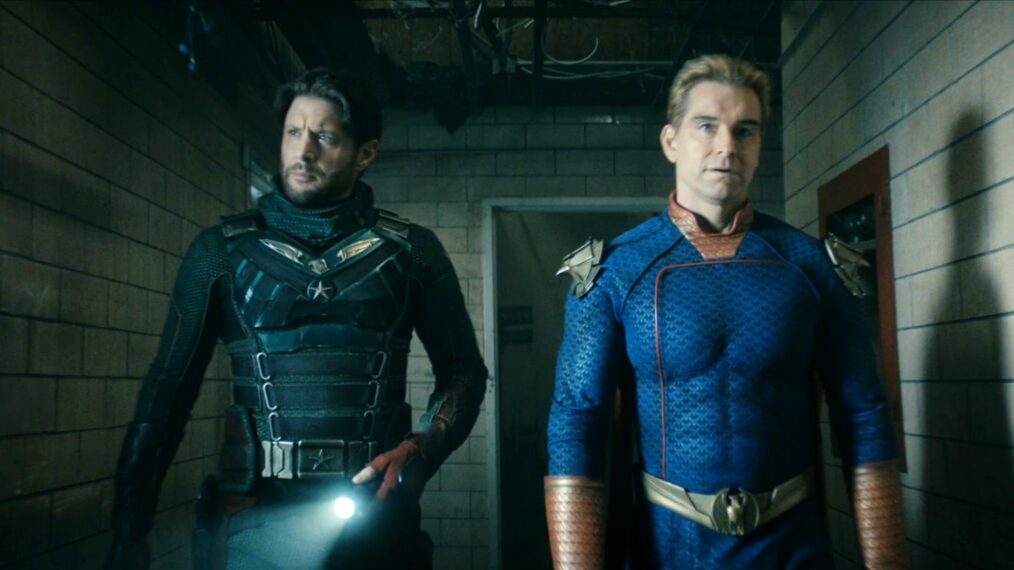
The episode also serves as a narrative bridge toward the upcoming prequel project Vought Rising. Showrunner Eric Kripke uses Fort Harmony as a storytelling device to hint at larger historical arcs, including Soldier Boy’s earlier years and his complicated relationship with both power and identity. Kripke explains that the focus is less about the physical location itself and more about the stories embedded within it—particularly rivalries, early experiments, and the flawed creation of super-soldiers.
According to Kripke, the early version of Soldier Boy is far removed from the confident, arrogant figure audiences know today. Instead, he is portrayed as inexperienced, privileged, and somewhat out of place among trained military personnel. This contrast highlights how his identity evolved over time and how Vought’s system shaped him into the figure he later becomes. The episode also emphasizes how experimentation and corporate ambition led to unintended consequences that still affect the present storyline.
Another key element of the episode is the introduction of a radioactive containment chamber used to weaken Homelander. This device raises questions about his physical limits and adds a rare layer of vulnerability to a character who is otherwise portrayed as nearly untouchable. The chamber does not kill him, but it causes significant physical distress, revealing that even someone as powerful as Homelander has weaknesses rooted in real-world scientific limitations.
Kripke explains that this concept was designed as a grounded interpretation of classic superhero weaknesses. Rather than relying on fictional substances, the show imagines a realistic equivalent—extremely dangerous radioactive materials that would be lethal to humans and highly damaging even to beings with superhuman abilities. This approach reinforces the series’ signature style of blending satire with grounded, often disturbing realism.
The episode also touches on broader themes of legacy, power, and accountability. Through Soldier Boy’s journey, the narrative explores how past actions continue to influence present conflicts. Meanwhile, the exploration of Vought’s early experimentation highlights the long-term consequences of unchecked ambition and scientific manipulation.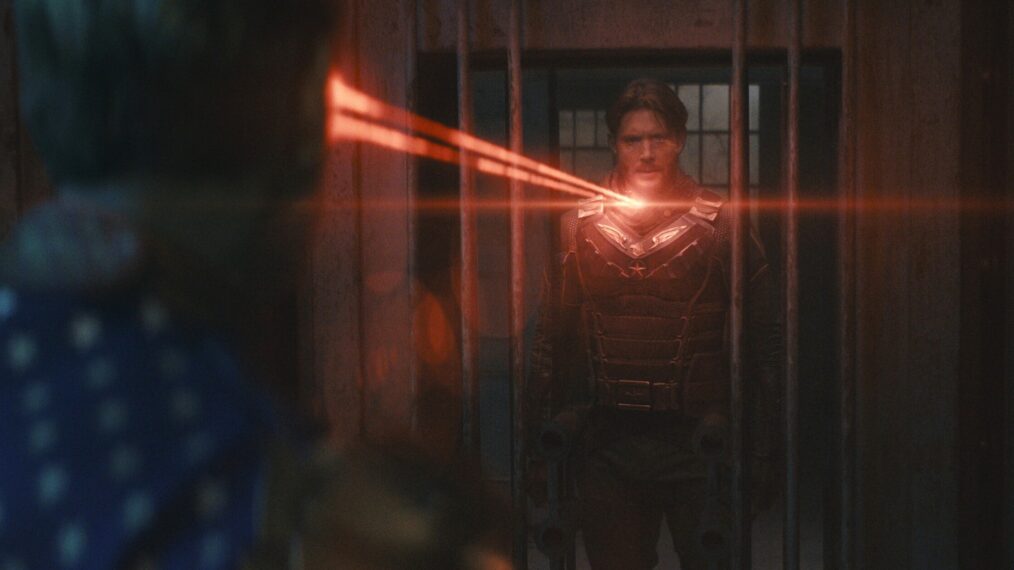
As the season progresses, Episode 4 stands out not only for its action and revelations but also for its deeper emotional and historical context. It expands the mythology of the series while setting up future storylines, particularly those connected to Vought’s origins and the evolving power dynamics among its most dangerous characters.
Ultimately, “King of Hell” serves as both a character study and a world-building chapter. It reshapes how audiences view Soldier Boy and Homelander while expanding the universe of The Boys in meaningful ways.