As the final season of The Boys moves past its midpoint, actor Laz Alonso has shared new insights into his character Marvin T. “Mother’s Milk” (MM), reflecting on how the role has evolved in unexpected ways as the story heads toward its conclusion. In an in-depth conversation, Alonso opened up about MM’s emotional journey, the impact of major twists involving Soldier Boy, and how it feels to bring a long-running character to an end that he feels is both satisfying and meaningful.
This season, MM is once again part of the central ensemble fighting against the chaos caused by Homelander and the ever-growing influence of Vought. The core cast includes Karl Urban, Jack Quaid, Antony Starr, Erin Moriarty, Jessie T. Usher, Laz Alonso himself, Chace Crawford, Tomer Capone, Karen Fukuhara, Nathan Mitchell, Colby Minifie, Cameron Crovetti, Susan Heyward, Valorie Curry, Jeffrey Dean Morgan, Jensen Ackles, and Daveed Diggs.
The first four episodes of the season are already streaming, setting the stage for what is expected to be an intense and emotional final stretch.
A Different Version of MM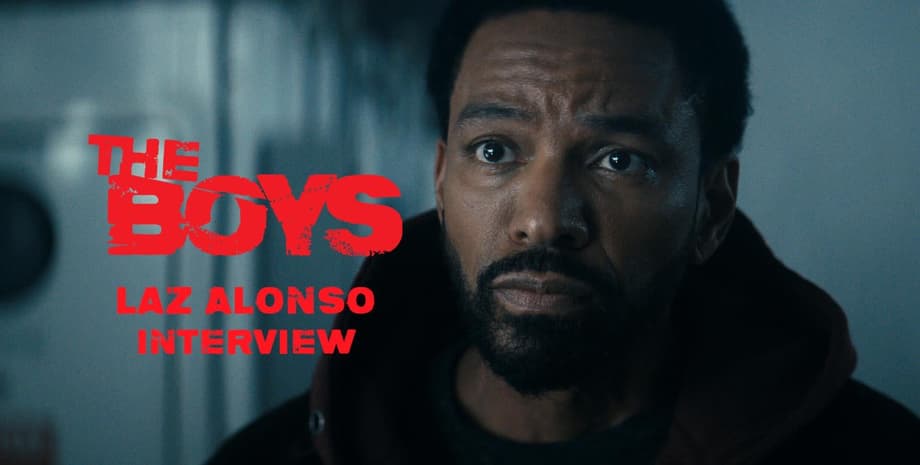
Speaking about his character’s evolution, Alonso explained that this season presents the most unusual version of MM audiences have ever seen. Traditionally, MM has been portrayed as the moral center of the group—the one who tries to hold The Boys together, talk people down from reckless decisions, and maintain a sense of ethical grounding even in extreme circumstances.
However, in this final chapter, that role has shifted dramatically. Instead of calming others, MM now often finds himself closer to the edge than anyone else. The steady optimism that once defined him has faded, replaced by a more exhausted, cynical outlook shaped by years of trauma, loss, and relentless conflict.
Alonso described this transformation as both surprising and paradoxical. On one hand, MM has stopped believing in the possibility of a better future. He no longer tries to convince others that things will improve, and he has effectively abandoned the idea that the world can be repaired in any meaningful way. In that sense, he has given up hope.
But at the same time, this emotional surrender has created an unexpected sense of relief. For the first time in years, MM is not constantly burdened by the responsibility of holding everyone together. The mental strain that once defined him—his anxiety, his obsessive-compulsive tendencies, his need to control chaos—has begun to loosen its grip.
Alonso noted that MM is, ironically, the happiest he has ever been.
Acceptance at the Edge of Collapse
This season, MM is portrayed as someone who has reached a psychological turning point. He is drinking more, smoking more, laughing more freely, and allowing himself to enjoy moments without overthinking their consequences. It is not that his problems have disappeared—in fact, he is more aware than ever that survival is uncertain—but rather that he has stopped resisting that uncertainty.
He has accepted that he may not make it to the end of the journey. And instead of fearing that outcome, he has chosen to live fully within the time he has left.
Alonso described this mindset as a form of emotional surrender, but not in a tragic sense. Instead, he sees it as strangely liberating. By letting go of control, MM is finally able to experience life without the constant pressure of responsibility weighing him down.
There is still sadness in his arc, but it is layered with moments of peace and even joy. MM is no longer trying to save everyone at the cost of himself. Instead, he is choosing to be present, even if that presence is unstable and chaotic.
Soldier Boy and Lingering Trauma
A major part of this season also revolves around the fallout from earlier confrontations involving Soldier Boy. Alonso discussed how these events continue to affect MM’s emotional state, particularly in relation to his unresolved trauma and long-standing desire for justice tied to his family history.
The question of revenge—whether MM has truly moved past it or whether it still quietly drives him—remains central to his arc. According to Alonso, the character is not fully healed, and there is still emotional residue that could surface at any moment. Even if MM appears calmer on the outside, that history has not disappeared. It continues to shape how he reacts, how he trusts others, and how he defines closure.
This internal conflict adds complexity to his current mindset. While he may seem more relaxed or even carefree at times, there is still a deeper emotional weight underneath, waiting for the right trigger to resurface.
Reuniting the Team
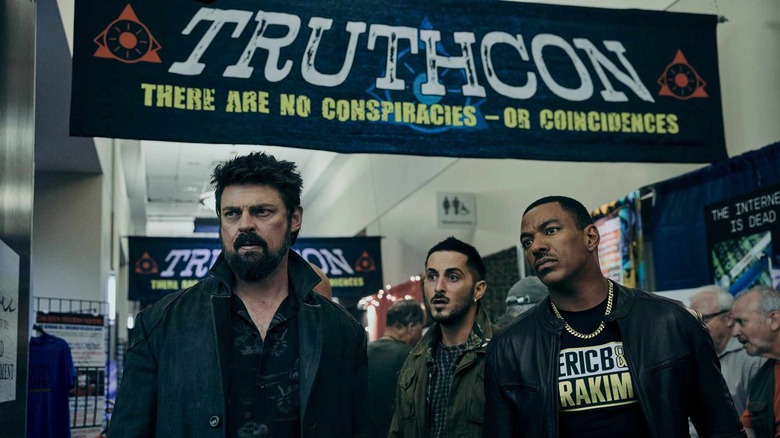
Another important aspect of the final season is the reformation of The Boys as a group. After years of fragmentation, betrayals, and shifting alliances, the team comes back together in a more unified—but also more fragile—state.
Alonso reflected on how meaningful it was to explore those dynamics one last time. The relationships between the characters are more layered than ever, shaped by years of shared trauma and conflicting ideals. Trust is not automatic anymore; it is something constantly tested and rebuilt.
For MM specifically, this reunion brings both comfort and tension. Being back with the group gives him a sense of belonging, but it also forces him to confront unresolved issues he may have preferred to leave behind. It is a reminder that even in moments of unity, nothing about their world is stable.
Saying Goodbye to MM
Perhaps the most emotional part of Alonso’s reflection was his discussion about the end of MM’s journey. Without revealing spoilers, he shared that he was satisfied with how the character’s story concludes in the series finale.
He emphasized that endings are rarely easy for actors, especially when a character has been part of their life for so long. However, in this case, he feels that MM’s arc has been handled with care and intention. The conclusion respects the character’s growth while also staying true to the emotional complexity that has defined him since the beginning.
There is a sense that MM’s journey comes full circle—not in a perfectly neat way, but in a way that feels honest to who he has become. He is not the same man who started the fight, and the ending reflects that transformation.
A Final Season Defined by Change
As The Boys approaches its conclusion, MM’s storyline stands as one of the clearest examples of how much the characters have evolved since the beginning. What started as a mission driven by anger, justice, and resistance has gradually become something more personal, more fragmented, and more emotionally raw.
For Laz Alonso, this final season is not just about action or resolution—it is about examining what happens when people stop trying to hold everything together and instead choose to live within the chaos.
And for MM, that choice—however contradictory it may seem—is what makes this final chapter his most human one yet.

-
Tra cứu
-
Dịch
-
Cài đặt