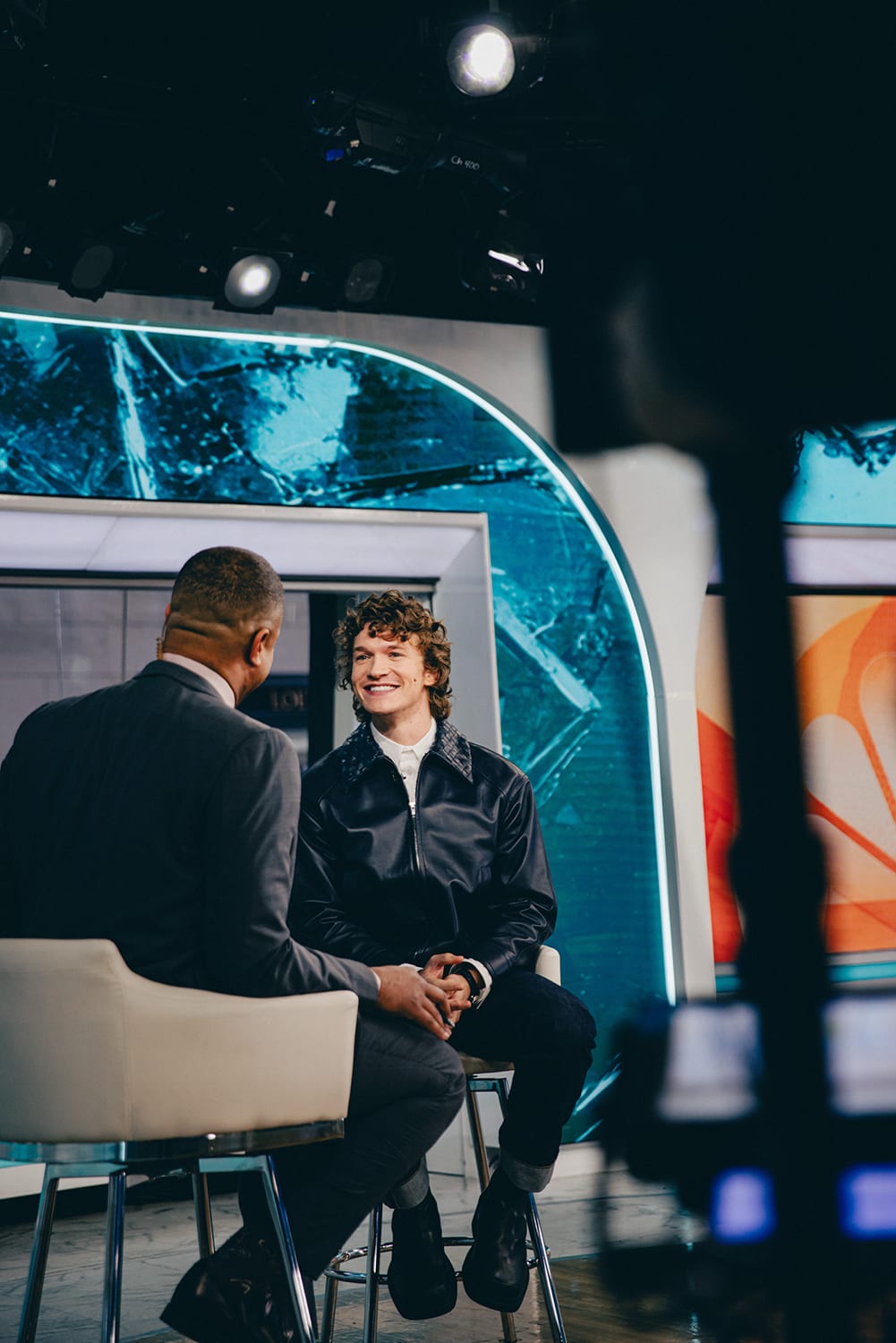
Actor Connor Storrie has opened up about the unexpected global attention surrounding the hit series Heated Rivalry, as well as his family’s very different reactions to its growing popularity—especially his father’s decision to stay completely away from the show.
In a recent interview on Today with Craig Melvin, Storrie discussed how surreal it feels to be part of a project that has gained such widespread attention. He explained that his mother has been one of his strongest supporters from the very beginning of his acting journey. According to him, she has always encouraged his ambitions, even when he was young and just starting to express interest in film and television.
“My mom is my number-one supporter,” he said during the interview. “My family has always been really supportive. Even when I was just a kid saying I wanted to act, they never discouraged me. They just told me to go for it.”
Storrie described how meaningful it has been to see that early encouragement turn into reality, especially now that he is part of a major international series. He admitted that seeing his own career reach this level still feels somewhat unreal, and that his family likely experiences a similar sense of disbelief when watching his success unfold from the outside.
However, when the conversation turned to his father’s reaction, Storrie revealed a very different response. While his mother has embraced the show, his father has chosen not to watch it at all. The actor made it clear that this decision is completely respected within their family.
“My dad hasn’t seen it,” he said. “And I’m not asking him to see it. If he doesn’t want to, that’s totally fine.”
The series itself, which follows the emotionally complex relationship between two professional hockey players—Storrie’s character Ilya Rozanov and Shane Hollander, played by Hudson Williams—has become known for its intense storytelling and deeply personal character arcs. The show explores themes of identity, secrecy, competition, and emotional vulnerability within the high-pressure world of professional sports.
Storrie’s role has drawn particular attention due to the character’s emotional depth and the storyline’s exploration of a hidden relationship between two athletes navigating both personal and professional challenges. As the series gained traction, audiences began discussing it widely online, turning it into a cultural talking point.
Despite this, Storrie shared that the level of fame associated with the show still feels somewhat distant from his everyday experience. He explained that in the modern streaming era, popularity is harder to visually measure compared to traditional television. Without constant advertising, billboards, or scheduled broadcasts, success often feels abstract.
“Streaming has changed everything,” he said. “Even when something is really popular, it doesn’t always feel real because you don’t see it everywhere like before. There are no constant commercials or big promotions in the same way.”:max_bytes(150000):strip_icc()/Connor-Storrie-Hudson-Williams-snl-030126-2da658b77d8f4b3593c6f5a0ddd7b84b.jpg)
He added that when he was younger, television fame felt more visible and concrete. Actors and shows were constantly present in everyday life through TV schedules, magazine covers, and advertisements. In contrast, today’s streaming-driven entertainment landscape makes success feel more fragmented and less physically visible.
Because of this shift, Storrie admitted that he sometimes struggles to fully grasp the scale of the show’s popularity. He even joked that at times, it feels like the buzz around the series is confined to his personal digital environment, shaped by algorithms and online recommendations.
However, that perception began to change once he started traveling and interacting with fans directly. After returning from filming in Canada, he noticed that people began recognizing him more frequently in public. Strangers would approach him to share their reactions to the show, often expressing enthusiasm and emotional connection to the story.
“It started to feel more real when people would come up and talk about it in everyday life,” he said. “That’s when I realized it wasn’t just something happening online—it was actually reaching people.”
His co-star Hudson Williams shared a similar experience, admitting that both actors initially underestimated the show’s reach. During production, they assumed the audience would be relatively niche, largely due to the personal and specific nature of the story.
“We honestly thought we were in a small bubble,” Williams explained in a separate interview. “We figured the attention we were seeing was just because of the people around us and the algorithms feeding us similar content.”
That perception changed quickly once the series was released. Williams described being surprised when fans began recognizing them in public spaces, from city streets to travel destinations. The increasing visibility of the show made it clear that its audience was far larger than they had initially imagined.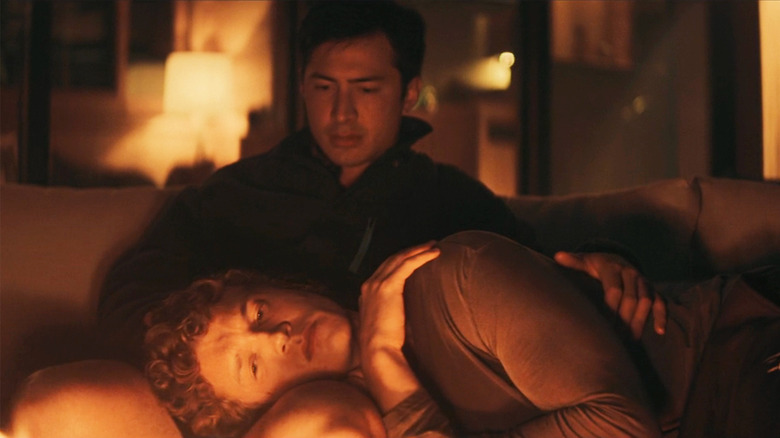
Despite the growing fame, both actors expressed gratitude for the audience response. Williams noted that the emotional reactions from viewers have been particularly meaningful, especially because the series deals with deeply personal and vulnerable themes.
For Storrie, the experience has been both exciting and slightly surreal. While he remains grounded by his family’s support system, he also acknowledges that seeing his work resonate with so many people is something he never fully expected.
He reflected again on how his father’s choice not to watch the series fits into that larger dynamic of fame and distance. Rather than seeing it as a negative, he views it as a personal boundary that is completely acceptable within their family.
“My dad just has his own way of engaging with things,” he said. “And that’s okay. Not everyone needs to experience everything the same way.”
As Heated Rivalry continues to gain momentum, discussions around its characters, emotional storytelling, and cultural impact are only growing stronger. The series has evolved from what its cast once believed might be a modest streaming project into a widely discussed hit with an expanding global audience.
Even as the show’s popularity increases, Storrie remains focused on the work itself rather than the attention surrounding it. For him, the most meaningful part of the experience is still the storytelling and the opportunity to bring complex characters to life.
Still, he acknowledges that moments like these—interviews, fan encounters, and unexpected global reach—serve as reminders that the project has grown far beyond what anyone on set originally anticipated.