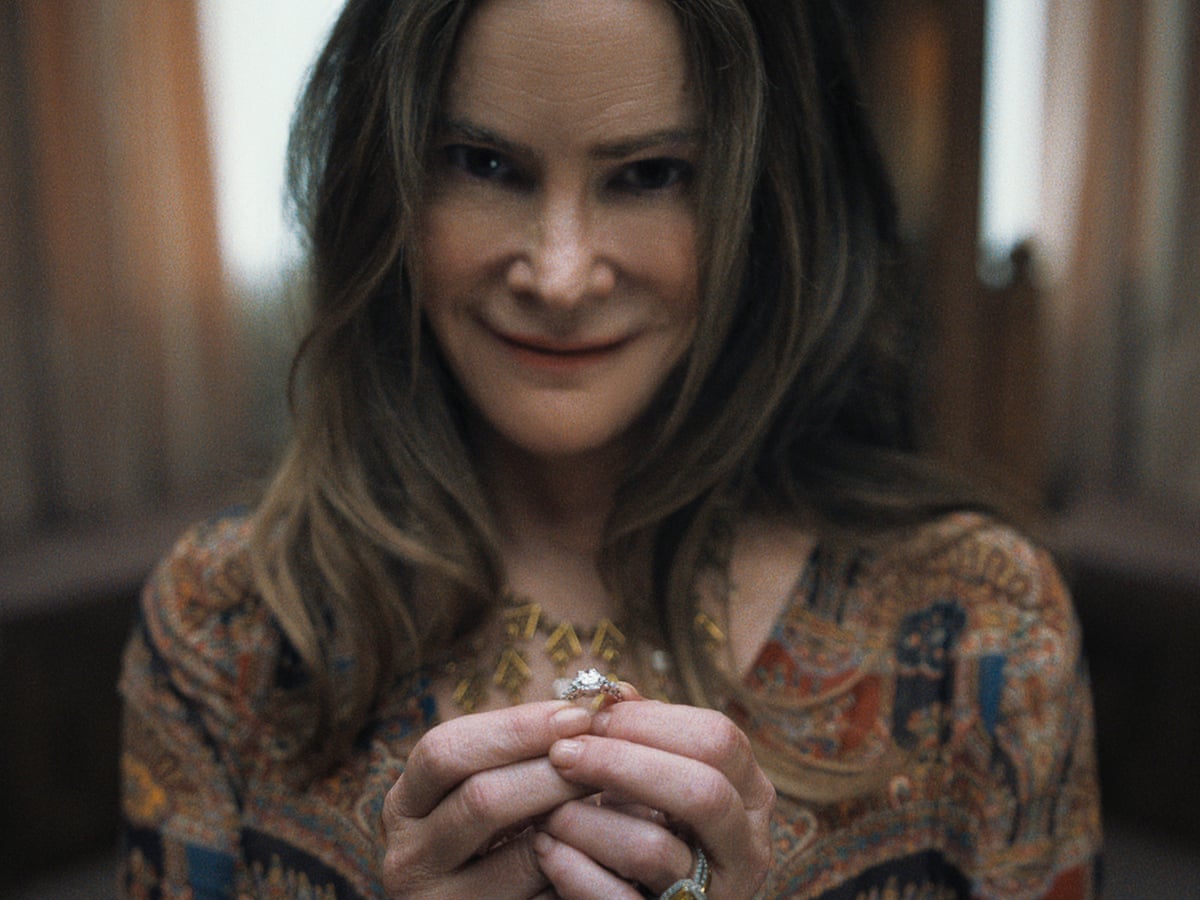
The Duffer brothers, widely known for creating the global hit series Stranger Things, have returned with a new horror drama for Netflix that has already sparked intense reactions among viewers and critics alike. Titled Something Very Bad Is Going to Happen, the series leans heavily into psychological dread, atmospheric storytelling, and slow-burning terror. From its very first moments, it signals its intention clearly: this is not a story built on comfort or safety, but on unease that gradually tightens its grip.
The premise begins in an unsettlingly ordinary way. A young couple, Nicky and Rachel, are preparing for what should be one of the happiest events of their lives—an intimate wedding celebration. Instead of a traditional venue, however, they choose a secluded family cabin deep in the woods, owned by Nicky’s relatives. At first glance, it seems like a romantic and rustic decision, the kind of picturesque escape often portrayed in wedding magazines. Snow is expected to blanket the landscape, the ceremony is planned to be small, and the atmosphere is meant to feel warm and personal.
But almost immediately, something feels off.
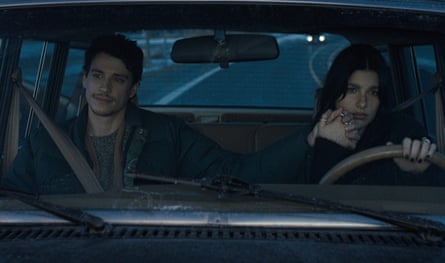
On their journey to the cabin, strange incidents begin to occur that subtly disturb Rachel’s sense of reality. During a stop at a nearly empty roadside rest area, she notices unsettling details that others might dismiss: a parked vehicle with a child left alone inside, and an unnervingly quiet environment that feels suspended in time. When she attempts to find help, she becomes disoriented in the dimly lit facility, where flickering lights and distorted background music create a growing sense of unease. Even familiar sounds, like a popular song playing over the speakers, seem warped and wrong, as though reality itself is slightly misaligned.
Despite these early warnings, the couple continues their journey. When they finally arrive at the cabin, Rachel immediately senses that the building is far larger and more imposing than she had been told. What was described as a cozy family retreat reveals itself to be an old, sprawling structure with long, winding hallways and high ceilings that seem to swallow sound. The architecture feels deliberately confusing, almost maze-like, with rooms that appear connected in illogical ways.
Inside, the décor adds to the discomfort. A large family portrait hangs prominently in the central hall, depicting generations of stern-faced relatives. Yet one figure in the painting appears unfinished, as though waiting to be completed. The absence feels intentional and strangely symbolic, as if the family history itself contains something unresolved. Mounted animal figures line the walls, their glassy eyes reflecting light in a way that makes it difficult for visitors to look at them directly. Rachel is casually warned not to meet their gaze for too long, a remark that only deepens her discomfort.
Despite these warning signs, Rachel tries to remain polite and composed, attributing her unease to pre-wedding nerves. However, the household she has entered is far from normal. Nicky’s relatives behave in peculiar, unpredictable ways. Conversations often drift into unsettling territory, blending mundane family matters with strange stories that seem out of place. One of the younger relatives, Portia, tells Rachel an odd tale about a figure known within family folklore as “the Sorry Man,” a mysterious presence said to appear in moments of emotional or physical vulnerability. According to the story, he is drawn to sorrow and is believed to search endlessly for something lost, though no one can agree on what that truly means.
The story is delivered in a casual, almost joking tone, but its imagery is disturbing enough to linger in Rachel’s mind long after the conversation ends. She begins to notice that the household avoids certain topics, especially those related to past relationships, former marriages, or unexplained absences within the family history. Doors that should remain open are kept locked. Certain rooms are never used. And at night, the house settles into an unnatural silence that feels heavier than sleep itself.
As Rachel spends more time inside the cabin, she starts noticing additional inconsistencies. Objects appear slightly misplaced, conversations repeat themselves with subtle variations, and some family members seem to contradict things they said only hours earlier. Whether these are intentional manipulations or products of her own growing anxiety is never immediately clear, but the effect is deeply disorienting.
The wedding preparations themselves also take on an increasingly surreal quality. The decorations, meant to evoke warmth and celebration, instead feel distorted—flowers arranged in overly rigid patterns, candles placed in symmetrical but unnatural formations, and fabrics that seem heavier than they should be. Even the concept of marriage, usually associated with joy and unity, is reframed in an unsettling light, as if the ceremony is less about beginnings and more about irreversible commitments made under unclear circumstances.
Rachel also begins to feel watched within the house, even when she is alone. Footsteps echo faintly in empty corridors, and reflections in mirrors seem delayed by fractions of a second. These small anomalies accumulate, building a persistent tension that never fully resolves. She starts questioning whether the house itself is influencing the people inside it, or whether the family has simply adapted to something long ago.
Nicky, meanwhile, appears increasingly torn between his role as a fiancé and his loyalty to his family. His behavior grows inconsistent—sometimes warm and reassuring, other times distant and distracted, as if he is struggling to maintain balance between two incompatible realities. Rachel’s attempts to speak openly with him about her concerns are often deflected or minimized, leaving her feeling increasingly isolated.
One evening, Rachel discovers a note slipped beneath her door. The message is short but chilling: “Do not proceed with the wedding.” There is no signature, only a faint smudge that looks like it may have been left in haste. When she attempts to show it to others, the note is nowhere to be found, raising further doubts about what is real and what might be imagined.
As the wedding day approaches, the atmosphere inside the cabin becomes even more oppressive. Weather conditions worsen, cutting off communication with the outside world. The roads become impassable, and the house feels increasingly sealed from external reality. Time itself seems to slow down, stretching each moment into something uncomfortable and heavy.
Strange traditions emerge among the family members in preparation for the ceremony, rituals that are never fully explained but are treated with absolute seriousness. Rachel, although confused and increasingly fearful, finds herself drawn deeper into the event, unable to easily leave or interrupt what is already in motion.
By the time the wedding night arrives, the line between ceremony and something far more disturbing begins to blur. The celebration, intended to mark a union, instead feels like the culmination of something that has been building long before Rachel ever arrived at the cabin.
Throughout the series, the Duffer brothers construct a world where familiarity becomes unstable and safety is an illusion. Ordinary settings—roadsides, family homes, wedding gatherings—are transformed into spaces of quiet dread. The horror does not rely on constant shocks, but rather on a slow erosion of certainty, where each detail feels slightly wrong but never definitively explainable.
For viewers, the experience is designed to be deeply unsettling. The tension is not only in what is shown, but in what is suggested and left unresolved. Every scene invites interpretation, and every moment of calm feels temporary, as though something unseen is waiting just beyond the edge of perception.
Whether audiences find it compelling or overwhelming, Something Very Bad Is Going to Happen succeeds in one clear objective: it makes even the most ordinary situations feel fragile, as if reality itself could fracture at any moment.