THE NIGHT MY DAUGHTER CHOSE A LUXURY VACATION OVER MY COMPANY’S FORTIETH ANNIVERSARY, I REALIZED THE MOST IMPORTANT SIGNATURE OF MY LIFE WAS THE ONE I NEVER WROTE
Three hours before the biggest night of my career, my daughter sent me a text that changed both of our futures.
Sorry, Mom. Ethan’s parents surprised us with a trip to Maui. We’ll celebrate when I get back! ❤️
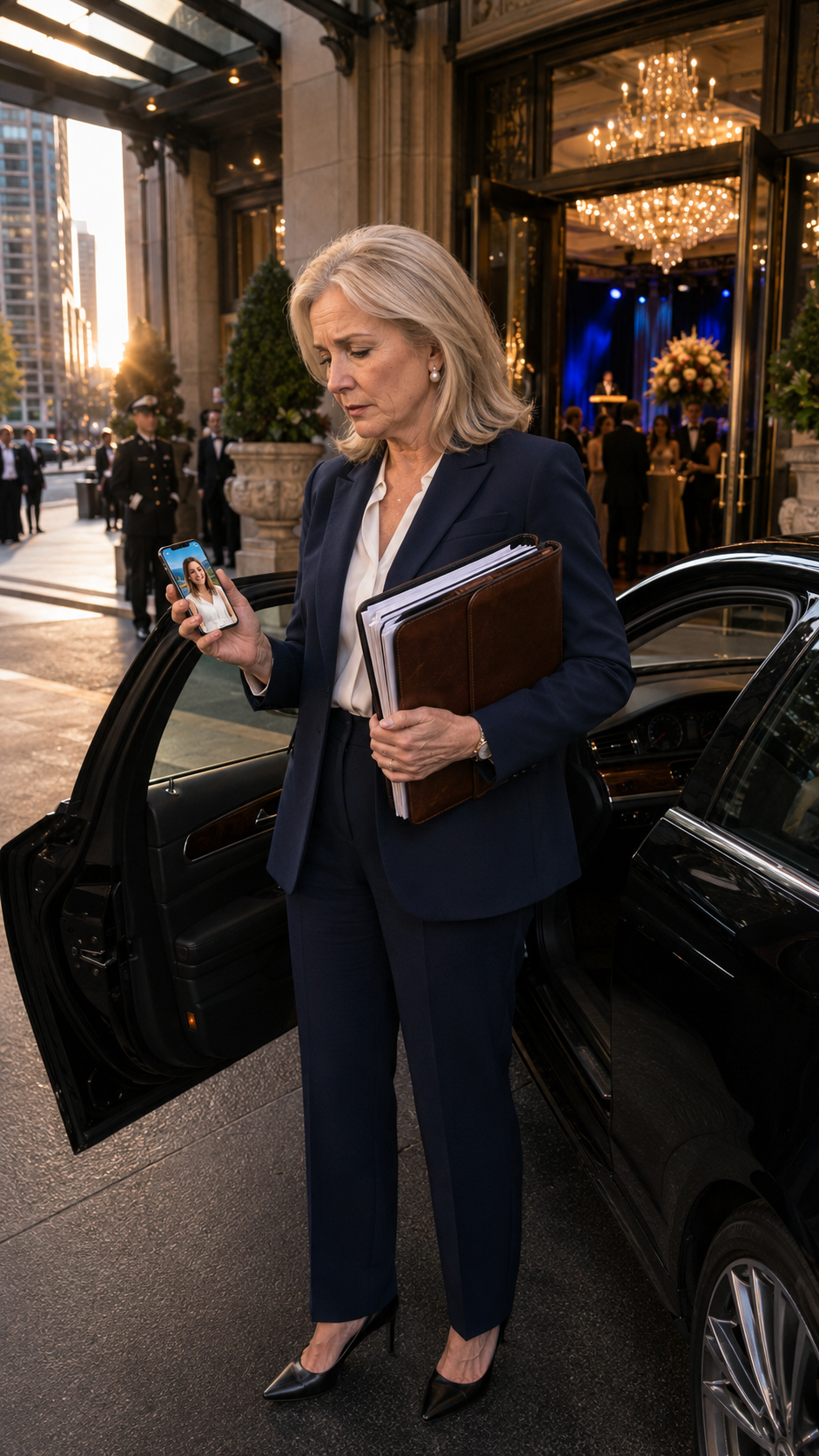
A photo arrived seconds later.
Avery stood in an airport lounge with a champagne flute in one hand and her husband around her waist. His parents smiled proudly beside them. The platinum bracelet I had given her for earning her MBA sparkled under the terminal lights.
I stared at the image for a long moment.
Then I looked at the leather folder resting on the passenger seat of my car.
Inside was a share transfer agreement worth nearly fifty million dollars.
It still needed one signature.
Mine.
I had built Lawson Freight Solutions from a struggling regional trucking company into one of the Midwest’s largest logistics firms. My father had started the business with a single truck. After he died unexpectedly, I inherited debt instead of prosperity.
At twenty-one, I worked eighteen-hour days while raising Avery alone. I negotiated contracts with my daughter asleep in a playpen beside my office desk. I missed birthdays, vacations, and every luxury my friends enjoyed because every dollar went back into the company.
Whenever the sacrifices felt impossible, I reminded myself why I was making them.
One day, Avery would have opportunities I never did.
Tonight was supposed to be that day.
Our board had approved her appointment as Chief Operating Officer. During my speech, I planned to announce that forty percent of Lawson Freight would transfer into a family trust under her leadership.
She never even called.
Instead, she boarded a plane because her in-laws wanted a spontaneous vacation.
The Whitakers had never hidden their opinion of me.
Claire Whitaker described my success as “impressive for someone who started with so little.”
George Whitaker loved reminding everyone that “real wealth” came from generations of family money, not trucking companies.
I tolerated every insult because Avery loved Ethan.
When they married, I paid for the wedding.
When they bought a home, I made the down payment.
When Ethan struggled to find work, I created a management position inside Lawson Freight and paid him far more than his experience justified.
I called it helping family.
Looking back, I had been rewarding entitlement.
I opened the folder.
The unsigned signature line seemed to ask a simple question.
Was I giving away ownership because Avery had earned it?
Or because she expected it?
The answer hurt.
I closed the folder and picked up my phone.
Instead of calling Avery, I called someone else.
David Whitaker.
George’s older brother.
Unlike the rest of his family, David had built his own investment company without relying on inherited wealth. Although he rarely attended family gatherings, everyone respected—and feared—his opinion.
He answered after the second ring.
“Margaret,” he said warmly. “Congratulations on your anniversary gala.”
“Thank you.”
“You sound disappointed.”
“My future successor decided she’d rather be on a beach.”
He was silent for several seconds.
“Would you like some company tonight?”
“I would.”
“I’ll meet you there.”
The ballroom shimmered beneath crystal chandeliers.
More than four hundred employees, clients, and community leaders filled the room. Along one wall, photographs chronicled forty years of Lawson Freight—from my father’s first truck to our newest distribution center.
An empty chair remained beside mine at the head table.
A small place card still read:
Avery Lawson
No one removed it.
When David entered beside me, conversations slowed.
Several executives recognized him immediately.
They also noticed Avery’s empty seat.
Questions spread quietly across the room.
At eight o’clock, the lights dimmed.
The master of ceremonies introduced me.
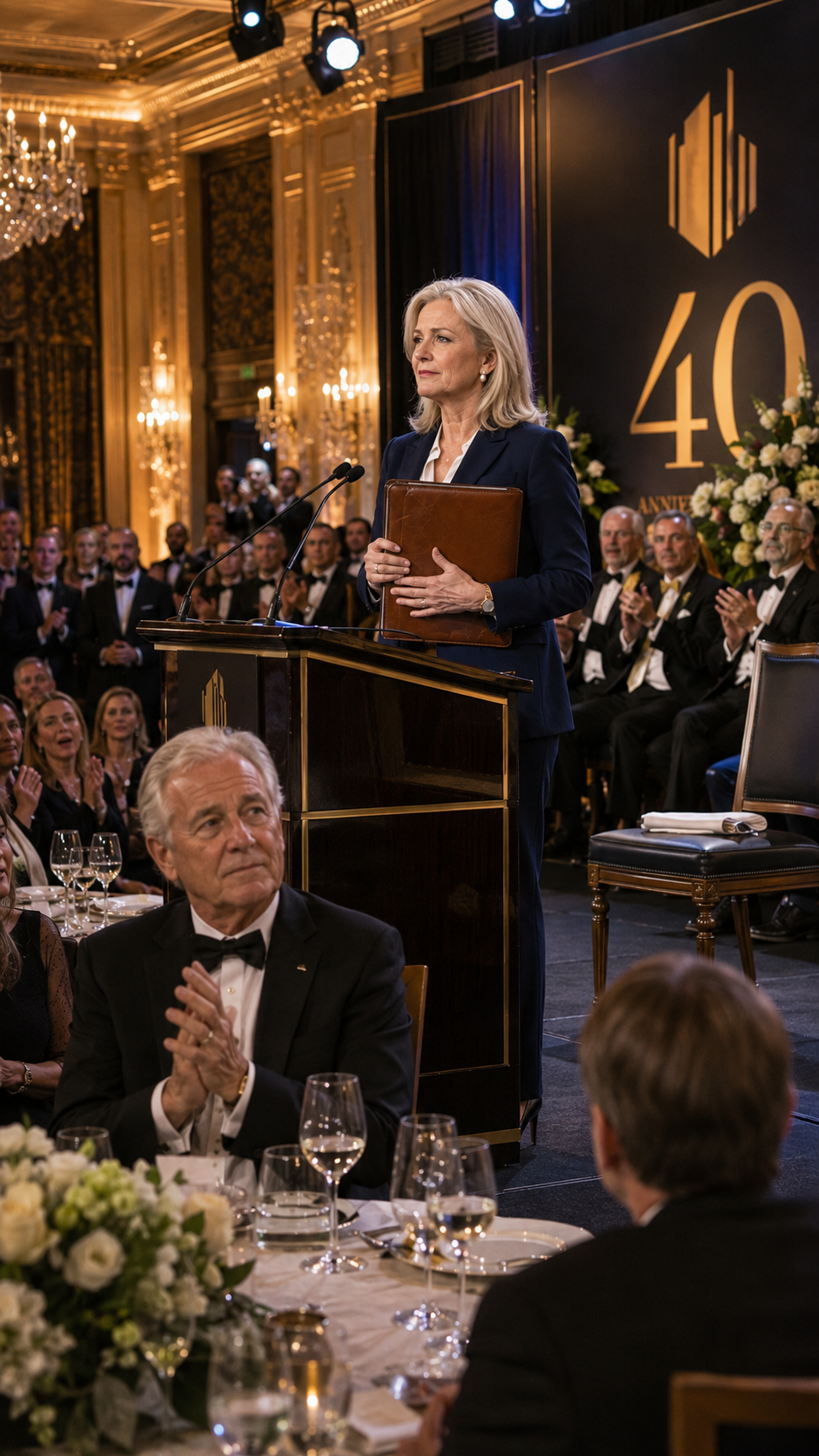
I stepped onto the stage carrying two speeches.
One welcomed Avery as the future leader of Lawson Freight.
The other did not mention her name.
I placed the original speech beneath the podium.
Then I unfolded the revised pages.
“For forty years,” I began, “people have asked what made this company successful.”
The audience grew quiet.
“They usually expect me to talk about trucks, warehouses, technology, or contracts.”
A few guests smiled.
“But they’re wrong.”
I paused.
“The greatest asset any company possesses is judgment.”
I looked toward the empty chair.
“And judgment cannot be inherited.”
Confused glances spread through the audience.
“I had planned to announce the next generation of Lawson Freight tonight.”
I held up the transfer agreement.
“This document would have transferred nearly half of this company.”
Every eye fixed on the papers in my hand.
“But leadership is more than a title.”
“It’s showing up.”
“It’s honoring commitments.”
“It’s understanding that thousands of employees depend upon your decisions.”
I slowly folded the agreement closed.
“It remains unsigned.”
Silence filled the ballroom.
“I have decided that no executive position at Lawson Freight will ever again be reserved for a member of my family.”
Gasps echoed through the room.
“Every future leader—including my own daughter—will compete on merit alongside every other employee.”
For one long moment, no one reacted.
Then applause began near the back of the ballroom.
It spread row by row until nearly everyone stood.
I wasn’t being applauded for disinheriting my daughter.
I was being applauded for protecting the company.
After the speech, longtime employees approached with tears in their eyes.
One warehouse manager hugged me.
“My daughter started in shipping six years ago,” he said. “Tonight you gave people like her a chance.”
I smiled.
“She’ll earn it.”
“So did you.”
Halfway through dinner, my phone buzzed.
Avery.
I stepped into the hallway before answering.
“Mom!” she cried. “Ethan just saw videos online. Everyone’s calling me! What happened?”
“I changed my succession plan.”
“You embarrassed me!”
“I wasn’t thinking about embarrassing anyone.”
“You promised me that company.”
“I promised to prepare you for leadership.”
“That’s the same thing.”
“No,” I said quietly. “It isn’t.”
She became angry.
“I’ve spent years expecting to take over!”
“Exactly.”
She stopped talking.
“For months,” I continued, “I waited for you to ask about our drivers, our dispatchers, our safety programs, or our expansion plans.”
“You never did.”
“You asked about your future office.”
“You asked about stock ownership.”
“You asked about executive benefits.”
“But you never asked how to lead.”
Her voice softened.
“So… what happens now?”
“You start where every other management trainee starts.”
There was another silence.
“You mean… entry level?”
“I mean earned opportunity.”
She exhaled sharply.
“Ethan’s parents are going to say you humiliated me.”
“They’re welcome to.”
Before hanging up, I added one final sentence.
“When you’re ready to build something instead of inherit it, my door is open.”
Six months later, Avery returned to Chicago.
She applied for a position in Lawson Freight’s operations department.
She did not receive special treatment.
She reported to a supervisor who had no idea she was the founder’s daughter until weeks later.
She learned dispatch scheduling, customer service, warehouse operations, and freight planning.
For the first time in her life, employees respected her for her work rather than her last name.
Two years later, she earned her first promotion.
Not because I approved it.
Because her manager recommended it.
When she finally stood beside me at another anniversary celebration, there were no transfer papers waiting.
Only a quiet moment between mother and daughter.
“I’m glad you never signed those documents,” she admitted.
“So am I.”
She smiled.
“If you had, I would have inherited a company.”
I squeezed her hand.
“And instead?”
“I earned a career.”
At that moment, I realized the most valuable gift I had ever given my daughter wasn’t forty percent of a business.
It was the chance to become someone worthy of leading it.