The first sign that something was wrong came ten minutes before my sister’s wedding.
My stepmother, Vanessa Harper, stood in the doorway of the bridal suite like she had been stationed to guard a secret evidence locker. Her posture was rigid, lips pressed into a precise line. The air smelled of hairspray, lilies, and a tension so thick it felt like it could snap. Somewhere beyond the double doors of the ballroom, a string quartet was tuning their instruments, soft notes drifting unevenly through the ornate inn. Guests were already being shepherded toward the garden terrace. The florist was straightening a leaning centerpiece, the photographer was giving quiet instructions, and a toddler somewhere was wailing, its cries slicing through the pre-wedding calm.
I carried my sister Lila’s reception dress in a garment bag draped over my left arm and a cream folder tucked under my right. The folder contained the marriage license, vendor invoices, emergency safety pins, a printed timeline, and the bakery’s phone number—just in case they tried to cancel the cake again.
Lila had handed it to me that morning with a nervous laugh. “Clara,” she said, “you’re the only organized person in this family. Please don’t let me lose my marriage license.”
I had saluted her. “Your wedding license is safe with me, Miss Reynolds.”
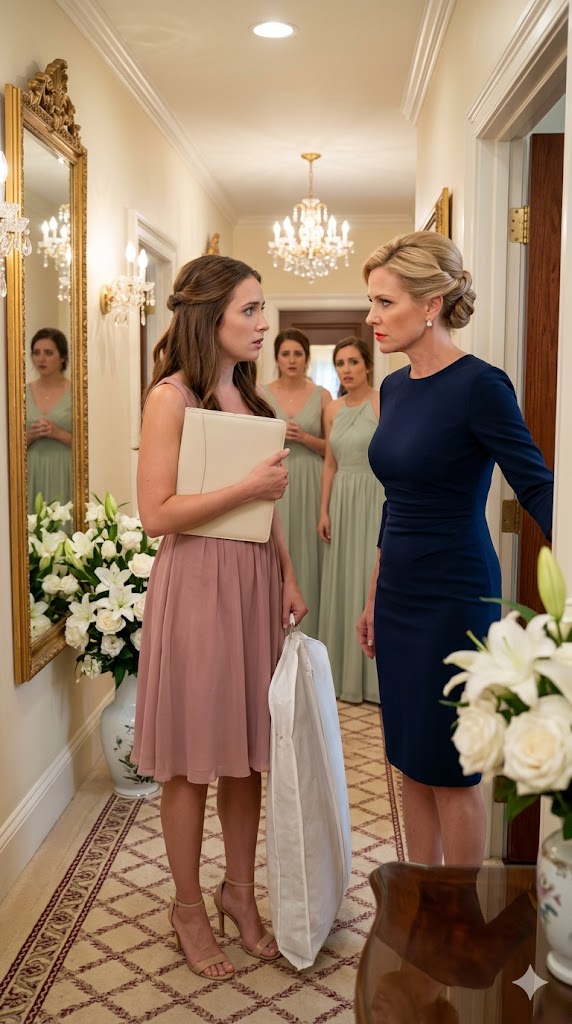
For a brief moment, I saw the little sister I had protected for years—not the anxious bride struggling with half-glued lashes and a room full of buzzing relatives. She had once crawled into my bed during thunderstorms and whispered about monsters on the roof. That memory warmed my chest.
Then I turned the corner and froze.
Vanessa blocked the doorway.
Her blond hair was sprayed into a flawless twist. Her deep coral lipstick gleamed under the hallway light. Her navy dress looked sharp, tailored for intimidation. She held her phone casually—but as soon as she saw me, she lowered it. Her smile vanished.
“You’re not ruining this day,” she said.
I blinked. Maybe she meant the dress. Maybe it was a misunderstanding. I had grown up around manipulation; I had excuses ready for everything she did.
“Move, Vanessa,” I said softly. “Lila needs this.”
She didn’t budge. Instead, she stepped forward and snatched the garment bag from my arm. My fingers clenched instinctively.
“What are you doing?” I demanded.
Her eyes flashed. “I know what you’re doing.”
“Bringing Lila her dress?”
“You always do this,” she hissed. “Hover. Make yourself needed. You can’t let one day go by without everyone depending on you.”
I froze. She was accusing me of selfishness, when all week I had handled every disaster nobody else wanted to touch: calling the florist when the peonies didn’t arrive, paying the hair trial deposit when Lila’s card declined, staying up past midnight fixing escort cards and emergency pearls, tracking down lost handkerchiefs, printing backup vows, calming my father when he realized the welcome sign had the wrong initial, and consoling Lila when she cried in the bathroom, terrified that marriage would change everything. If anyone held this wedding together, it was me.
“This is not the time,” I said firmly.
“It is,” she said. “Stop it.”
She shoved the garment bag against the wall. The plastic crinkled. I stumbled back. The cream folder slipped under my arm.
Two bridesmaids froze mid-step. My cousin Mara held water bottles, eyes wide. The photographer’s assistant lowered her camera. The hallway held its breath.
“Give me the dress,” I said.
Vanessa leaned closer. Her perfume was sharp, expensive, suffocating. “Your sister isn’t going to spend her wedding day comforting you because you’re lonely, jealous, and desperate for attention.”
I opened my mouth to reply.
And then she yanked my hair near the back of my head. Pain shot across my scalp. Before I could react, she slapped me.
The sound cracked through the hallway. Ten minutes before the ceremony. In front of witnesses.
Time froze. The string quartet played on, oblivious. My cheek burned. My scalp throbbed.
Vanessa stepped back, clutching the garment bag like a trophy.
Then my father, Robert Hale, appeared. He had moved quickly toward the noise, as he always did, but with the precision that favored Vanessa. “Kneel,” he barked. “Apologize. Now. Don’t make a scene.”
I stared. Kneel? Here? Now? At my sister’s wedding?
Vanessa gasped softly. She had shifted seamlessly into victim mode. Dad, thirty years of parenting erased in a moment, played along.
The bridal suite door opened. Lila stepped out, half her face glowing bridal, half bare, eyes wide. She saw me clutching my cheek, Vanessa clutching the garment bag, Dad pointing at the floor, and everyone watching.
The pattern of my life flashed before me. Vanessa manipulates. Dad shields. Everyone else observes. I burn quietly.
But not today.
I straightened. I took the garment bag from Vanessa—she was too startled to resist. I picked up the cream folder that had slipped from under my arm. And I walked away.
People gasped. Phones buzzed. Cameras tilted.
I opened the folder in the parking lot. Inside: the marriage license. Untouched. The one thing Vanessa could not replace in ten minutes. The one thing everyone needed most.
Then it clicked. They weren’t calling because Dad had finally grown a conscience. They were calling because they needed me functional. Not whole. Functional.
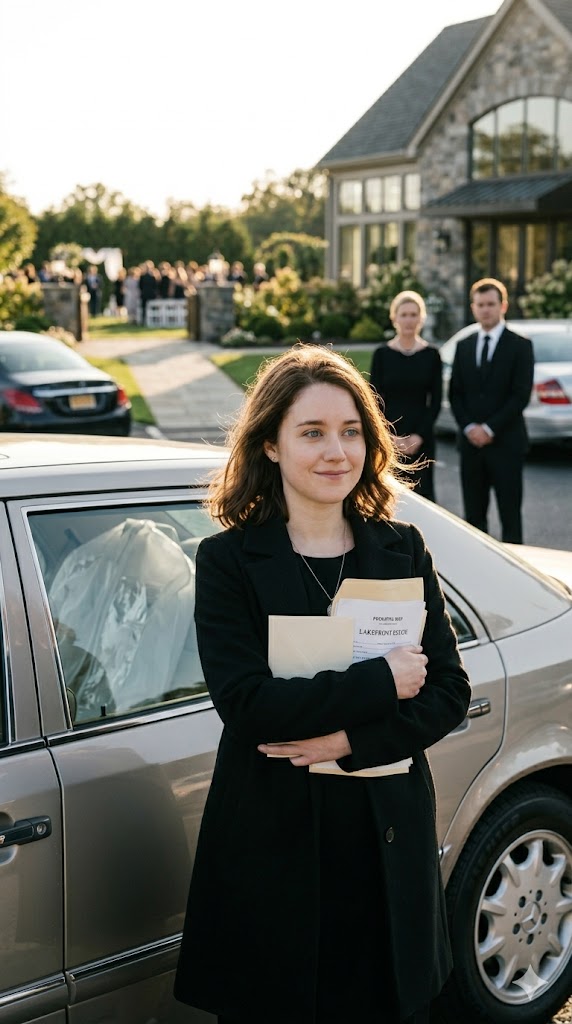
For the first time in my life, I refused. I would not be useful on command.
I placed Lila’s dress on the passenger seat, the license secure in the folder. I called the photographer. Told her to begin documenting the reception setup. Called the florist. Told them the missing centerpiece was en route. Every detail I had managed for days—under stress, exhaustion, and threat of humiliation—was now under my control.
Back in the ballroom, Lila noticed my absence, then realized I had the license and the dress. Her relieved smile was wide, unguarded. Guests murmured questions, but I ignored them. The wedding could continue. I had the power now, not from force or aggression, but from being irreplaceable at the moment that mattered most.
Vanessa’s smug expression faltered. Dad looked flustered. And I? I smiled. The real power in the room wasn’t in accusations, gestures, or public appearances—it was in being the one person they could not bypass when it truly counted.
Ten minutes before the wedding, a slap had tried to define me. But what defined me that day was holding the thing everyone else needed most—and refusing to surrender it on anyone’s timeline.