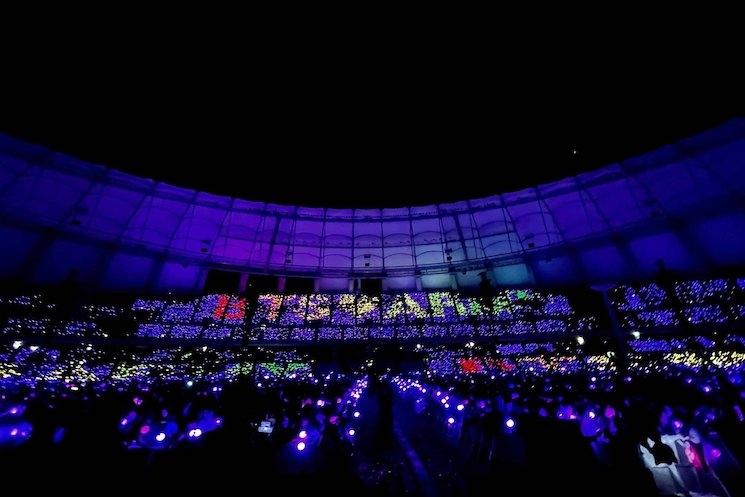
The air in Mexico City is currently thick with a specific kind of electricity, a rhythmic pulse that transcends the usual bustle of one of the world’s most populous metropolises. On the iconic Paseo de la Reforma, the city’s grandest thoroughfare, the usual sounds of traffic have been replaced by the synchronized clapping and melodic shouting of hundreds of young people. They are not protesting or campaigning; they are dancing. Moving in perfect unison to the infectious beats of South Korean superstars BTS, these fans are part of a massive “pep rally” that signals the start of what many are calling the most significant cultural event in Mexico this year. As the countdown ticks toward the group’s arrival, it is becoming increasingly clear that the “Purple Ocean” is about to swallow the capital whole.

The sheer scale of the BTS phenomenon in Mexico is perhaps best illustrated by the numbers. The group is scheduled to perform a highly anticipated string of shows in Mexico City on May 7, 9, and 10. When the box office opened, the demand was nothing short of apocalyptic. More than 135,000 tickets were put on sale, and within a matter of minutes, every single seat was claimed. The digital queue was a battlefield, leaving hundreds of thousands of “ARMY” (the official BTS fandom) members in a state of heartbreak.
This desperation has birthed a staggering secondary market. On resale platforms like StubHub, the price for a chance to see the septet in person has skyrocketed to as much as $13,000. For many Mexican families, this is a fortune, yet the desire to witness the group’s return to the world spotlight – following their nearly four-year hiatus for mandatory military service – has turned these tickets into the most valuable currency in the country.

The Presidential Intervention
The frenzy reached such a fever pitch that it caught the attention of the highest office in the land. President Claudia Sheinbaum, recognizing the cultural and social magnitude of the event, took the unprecedented step of intervening on behalf of frustrated fans. In a move that blurred the lines between diplomacy and pop culture, Sheinbaum asked her Foreign Minister to draft an unusual missive to South Korean President Lee Jae Myung.
The letter was a formal request to see if the K-pop icons could squeeze more dates into their Mexican itinerary. Sheinbaum later noted that her South Korean counterpart was “very open” to the request and had passed the message along to the band’s production company. While no new dates have been officially announced, the fact that the Mexican government engaged in international diplomacy over a boy band concert speaks volumes about the group’s influence. According to the South Korean government, this “soft power” is working; a study across 26 countries showed that 82% of people now hold a favorable opinion of South Korea, largely thanks to the global reach of K-pop.
More Than Just Music: A Cultural Sanctuary
For the fans gathered on Paseo de la Reforma, BTS represents something far deeper than catchy choruses. Jude Pelaez, one of the dancers at the promotional event, explained that these public gatherings are a form of collective catharsis. “We do these types of events to emotionally and psychologically prepare ourselves, and to prepare the energy and vibe of the place,” Pelaez told reporters. “That makes Mexico different.”
This sentiment of emotional safety is echoed by 16-year-old Mare Sousa, who describes the BTS fandom as a sanctuary. “It’s a phenomenon in which everyone is free to be who they are,” she says. Mare is a student at a specialized “K-pop Dance” school, where she and 30 other enthusiasts—mostly young women—spend hours perfecting choreography. The dedication is intense; students arrive early to rehearse in front of mirrors and use their rest breaks to help one another correct footwork. Their teacher, 22-year-old Ginna Montoya, acts as both a choreographer and a mentor, often reminding her breathless students to “take it easy, breathe.”
Interestingly, the K-pop fever has found unexpected allies: Mexican parents. In a country where popular music genres like reggaeton often lean into heavy sexuality, and narcocorridos (ballads celebrating the lifestyles of drug traffickers) dominate the airwaves, many parents view BTS as a wholesome alternative.

Lucio Campos is a prime example of this generational bridge. He decided to learn Korean after his daughter, Ana, asked for a trip to South Korea for her 15th birthday. Today, Lucio is as much a fan as his daughter, pointing out the members in posters—though Ana still has to correct him when he mistakes Jin for another member.
“BTS was born with the idea of transmitting healthy questions for young people,” Lucio explains. “Their war cry is ‘let’s live life, let’s live it healthily, let’s live well,’ and obviously this fascinates me.” For Lucio, the group’s message of self-love and resilience provides a necessary moral compass in a complex world. Ana agrees, flipping through an album filled with band photos and motivational phrases. “BTS taught me to love myself,” she says simply.
A City Transformed
As May 7 approaches, Mexico City is transforming into a hub of South Korean culture. Beyond the dance rehearsals and the presidential letters, the fandom has moved into the city’s culinary and educational spaces. Cafes adorned with BTS posters are packed with fans sharing bowls of noodles, while the South Korean Cultural Center has seen a surge in enrollment for language classes.
The upcoming concerts are not just musical performances; they are a validation of a subculture that has spent years growing in the shadows of mainstream Mexican media. Now, with the blessing of the President and the unwavering support of families, the Mexican ARMY is ready. They have the tattoos, they have the moves, and they have the “energy and vibe” ready to welcome their idols. In Mexico City, the message is clear: the wait is almost over, and the passion has never been higher.