For many viewers, Connor Storrie will forever be linked to Ilya, the character that launched a thousand social media edits, endless discussions, and more than a few late-night spirals over fictional hockey players falling in love under impossible pressure. His breakout performance in Heated Rivalry turned him into one of the most talked-about young actors in queer television almost overnight, with fans dissecting every glance, silence, and emotional fracture he brought to the screen.
But if anyone expected Storrie to settle comfortably into that wave of attention, his recent choices suggest otherwise.
The 26-year-old actor appears far more interested in unpredictability than repetition, and that unpredictability is quickly becoming his signature.
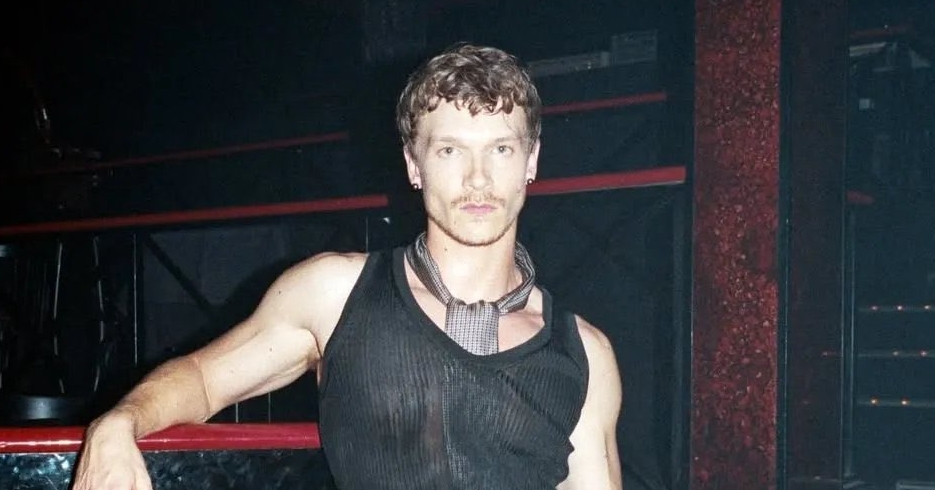
While audiences wait for his upcoming feature film Transaction Planet, Storrie has been quietly assembling a body of work that feels intentionally varied—almost like he’s testing different creative identities rather than committing to a single lane.
Back in April, he surprised fans with the sudden release of the short film The Ginger Eater. There was no major promotional rollout, no viral campaign, just a quiet drop that immediately caught the attention of his growing audience.
For many, it felt like a small but meaningful signal: Storrie isn’t just chasing visibility, he’s chasing curiosity.
Then came June, and things shifted into even more unexpected territory.
He released another short film titled Coax (2024), and the reaction online was immediate and intense. This was not the kind of project viewers casually scroll past. It demanded attention, and often, discomfort.
Dark, atmospheric, and structurally unsettling, Coax leans heavily into psychological tension rather than traditional storytelling comfort. It’s the kind of film that doesn’t just aim to entertain—it lingers, presses, and unsettles in ways that are difficult to shake.
One viewer described their experience bluntly: they had never watched horror before, actively avoided it, and still watched the entire thing simply because Storrie was involved. Their conclusion was surprisingly enthusiastic: they called it a masterpiece and praised its emotional impact despite its disturbing tone.
Another reaction highlighted just how far the film pushes boundaries, pointing out a moment involving a fishing hook that left them visibly disturbed.
Others, however, focused less on shock value and more on interpretation. One comment described the film as “dark yet extremely thought-provoking,” suggesting that beneath the discomfort lies something emotionally resonant about toxicity, survival, and internal resilience.
That split reaction has sparked an ongoing question among fans and critics alike: is Connor Storrie quietly moving toward horror and psychological thriller storytelling?
Based on his recent choices, the answer increasingly looks like yes.
What’s notable is that these projects don’t feel like detours. They feel like deliberate steps into tonal extremes, as if he is actively resisting being boxed into a single genre identity.
And that experimentation doesn’t stop at short films.
Storrie has also made his way into network television with a guest arc on Criminal Minds: Evolution. His four-episode appearance in Season 19 marked a return to mainstream procedural storytelling, but it also showcased something different from what audiences had seen before.
The role was filmed before Heated Rivalry aired, meaning it captures him at an earlier point in his career—before the global attention, before the fandom expansion, and before Ilya became a defining cultural figure in online spaces.
For viewers expecting echoes of his breakout performance, the show delivered a surprise.
There was no Russian accent, no icy composure, no trace of the romantic intensity that defined Ilya. Instead, Storrie appeared in a completely different register, one that emphasized restraint, tension, and psychological ambiguity in a more grounded procedural context.
The shift only reinforced what casting directors and early collaborators have begun to recognize: he is not dependent on a single type of role to hold attention.
Of course, none of this means Heated Rivalry has been left behind.

Season 2 of the series is expected to begin production soon, bringing Storrie back into the role that made him a breakout name. The show’s popularity has only continued to grow in the months since its finale, with fan edits, interviews, convention appearances, and social media speculation keeping interest alive between seasons.
But even as anticipation builds, Storrie doesn’t seem to be defined by that momentum alone.
Instead, he appears to be actively balancing it with projects that pull him in the opposite direction—away from familiarity and into risk.
That balance may be the most interesting part of his current trajectory.
Actors who break out in a culturally dominant role often face a narrow path forward: repeat the success, or risk losing visibility. Storrie, however, seems to be exploring a third option—treating visibility as permission to experiment rather than a contract to repeat.
It’s a strategy that can be unpredictable, but it also signals a kind of long-term creative confidence. He isn’t just reacting to success; he’s using it to diversify the kinds of stories he can tell.
And that range is becoming increasingly visible.
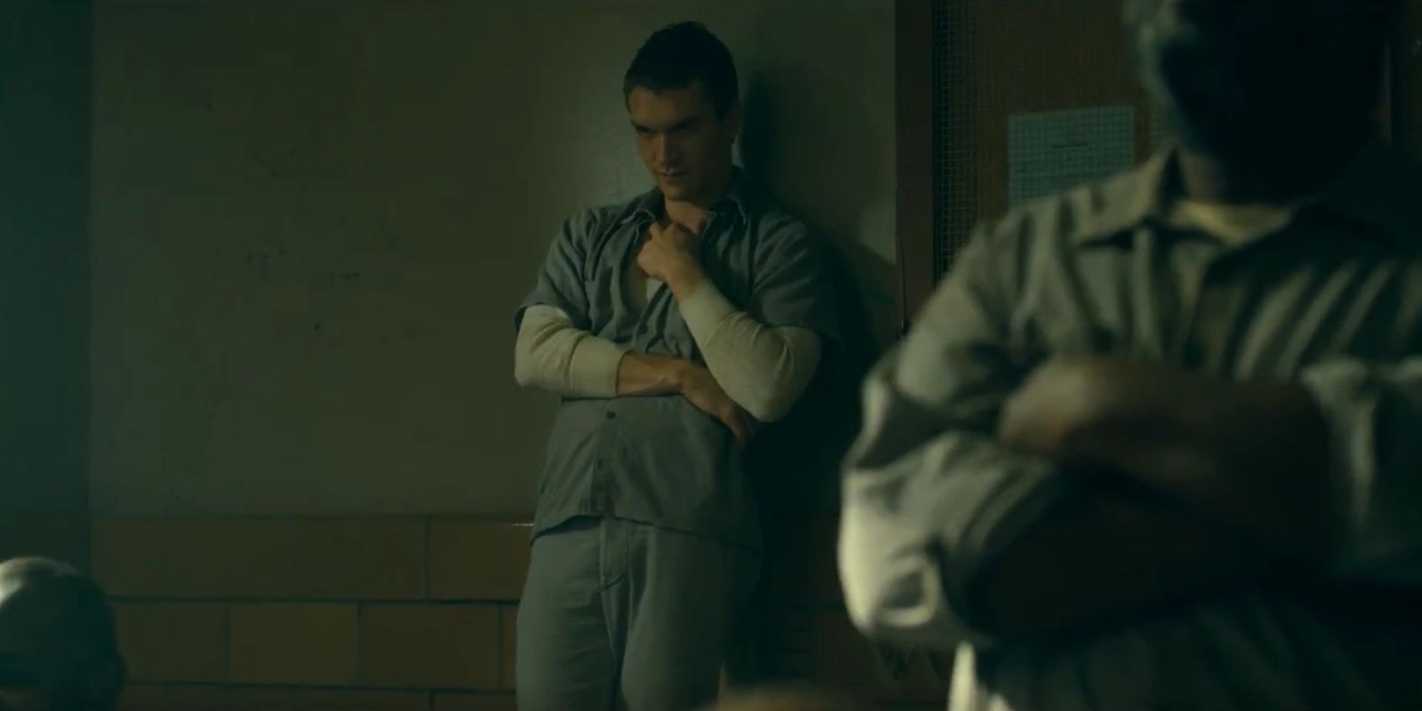
From romantic drama to psychological horror, from streaming television to indie short films, from emotionally charged performances to procedural guest arcs, Storrie is building a portfolio that resists easy categorization.
That resistance is exactly what keeps audiences watching.
In an industry that often rewards repetition, he seems more interested in variation. In a landscape where breakout roles can become cages, he appears intent on keeping the door open.
It’s still early in his career, and the long-term shape of his filmography is far from defined. But if the past year is any indication, Connor Storrie is not approaching momentum as something to preserve in a straight line.
He’s approaching it as something to test, stretch, and occasionally disrupt.
And if there’s one thing audiences have learned so far, it’s this: the most predictable thing about Connor Storrie is that he refuses to be predictable.