Heated Rivalry may have exploded into mainstream culture as a sweeping queer hockey romance, but its aftershocks are still being felt far beyond the rink.
The series, which premiered last fall, quickly became one of the most talked-about streaming releases of the year thanks to its emotional storytelling, intense sports drama, and the undeniable chemistry between its leads. At the center of that phenomenon was Connor Storrie, who played Ilya Rozanov—a character whose internal conflict and secret relationship helped define the show’s global appeal.
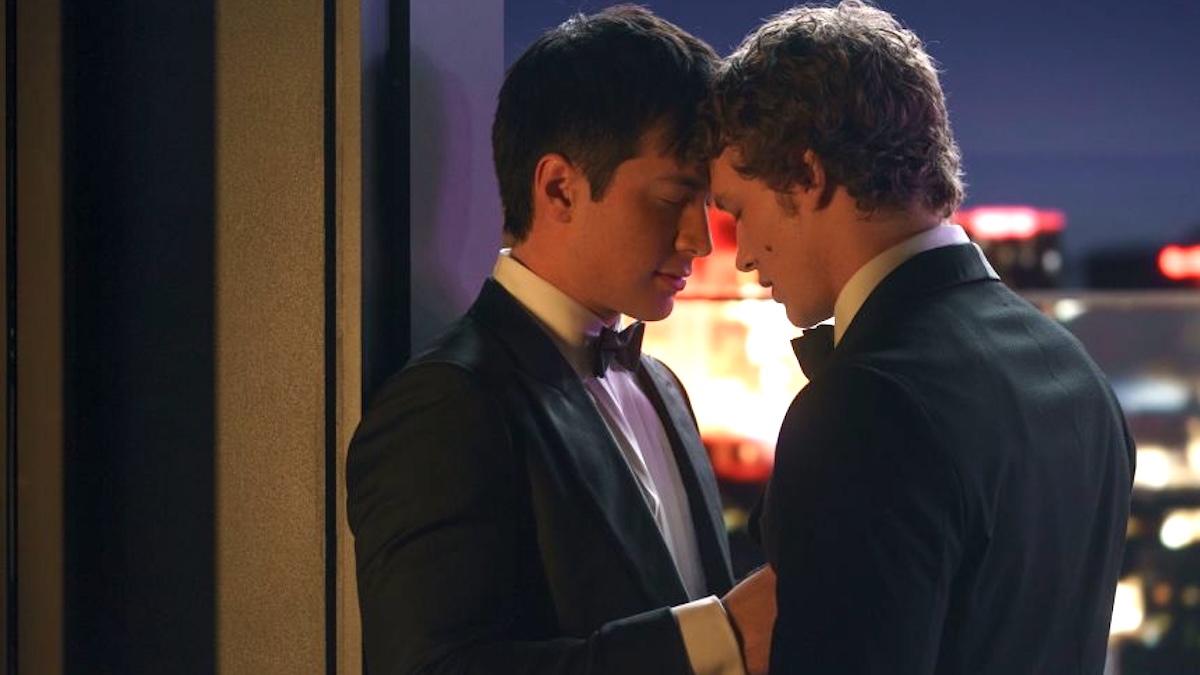
For many viewers, Storrie seemed to appear out of nowhere and suddenly dominate fan conversations, edits, and social media discourse.
But while Heated Rivalry introduced him to a massive new audience, it turns out his creative output has been building in a very different corner of the internet for years.
Away from hockey arenas and prestige streaming sets, Storrie has been quietly developing a second identity as a filmmaker—one that lives on YouTube, where he writes and directs experimental short horror films under the name Sin Monger.
It’s a side of his career that many newer fans are only just discovering.
And it arrives at a fascinating moment in the broader film landscape.
In recent years, YouTube has become an unexpected incubator for horror talent, with several creators successfully transitioning from low-budget online projects to major studio releases. The platform, once dismissed as amateur territory, is now increasingly viewed as a proving ground for ambitious genre filmmakers.
Some of the most notable success stories have come directly from creators who started with small, experimental projects and gradually scaled up to feature films.
Markiplier’s Iron Lung, adapted from a video game about a convict trapped in a submarine submerged in a blood-filled ocean, demonstrated that internet-born creators can translate niche horror concepts into commercially viable cinema. Produced on a relatively modest budget, the film went on to earn over $50 million globally, proving that audience curiosity can outweigh traditional marketing constraints.
Similarly, Kane Parsons took his viral Backrooms series—originally inspired by an online 4chan urban legend—and expanded it into a feature-length adaptation that became a breakout theatrical success. With earnings surpassing $265 million worldwide, it not only cemented Parsons as a serious filmmaker but also marked one of A24’s most successful releases to date.
Another standout example comes from Curry Barker, whose evolution from YouTube comedy creator to horror filmmaker has been particularly striking. After co-creating the found-footage project Milk & Serial, Barker followed it up with Obsession, a psychological horror film that quickly became a cultural talking point. Its mix of viral marketing, online debate, and audience speculation helped propel it to more than $300 million in global box office revenue.
Together, these filmmakers represent a new kind of pipeline—one where internet experimentation can evolve into mainstream cinematic success.
And Connor Storrie appears to be quietly carving out his own place within that ecosystem.

Under his Sin Monger alias, Storrie has released two short horror films on YouTube in recent months, both of which have flown largely under the radar compared to his acting breakthrough.
The first, Jerry the Ginger Eater, is a darkly comic and visually saturated short that follows a cannibal who exclusively targets redheaded victims. The premise takes a surreal turn when the protagonist mistakenly consumes a girl whose “ginger” hair turns out to be artificial, setting off a chain of events that oscillates between absurdity and tragedy. The film blends grotesque humor with stylized visuals, creating a tone that feels both unsettling and oddly playful.
Rather than relying on traditional jump scares, the short leans into tonal dissonance—juxtaposing violent ideas with bright, almost exaggerated color palettes. The result is a piece that feels deliberately off-kilter, refusing to settle into a single genre identity.
Storrie’s second short, Coax, takes a very different approach.
Shot in stark black and white, the film draws heavily on German Expressionist influences, evoking the distorted, shadow-heavy visual language of classics like The Cabinet of Dr. Caligari. It follows a young woman who begins to experience a slow, surreal haunting inside her own home, where the boundaries between reality, memory, and hallucination begin to dissolve.
The presence of an unnamed entity—and unsettlingly, fish appearing in impossible domestic spaces—gives the film an abstract, dreamlike quality that resists straightforward interpretation.
If Jerry the Ginger Eater is chaotic and irreverent, Coax is controlled and atmospheric, suggesting a filmmaker interested in exploring multiple extremes of tone and style.

Storrie briefly acknowledged the film’s existence on Instagram, sharing a link to Coax with the caption, “Old to me, new to you.” The post revealed that the short had actually been completed in 2024, long before his rise to mainstream recognition through Heated Rivalry.
Together, the two films offer a glimpse into a creative identity that exists separately from his on-screen acting work.
They are strange, experimental, and intentionally difficult to categorize.
But that may be exactly the point.
As audiences continue to embrace unconventional horror storytelling—especially work that blends surrealism, psychological tension, and low-budget creativity—Storrie’s shorts feel increasingly aligned with a wider cultural shift. Viewers are no longer just seeking polished studio horror; they are actively engaging with raw, personal, and concept-driven projects that feel unpredictable in execution.
In that sense, his timing is unexpectedly ideal.
The growing interest in creator-driven horror suggests that filmmakers with strong individual voices can find audiences even without traditional industry backing. And Storrie’s work, while still early in development, already shows signs of a distinct stylistic approach that could translate well into larger-scale projects.
That transition may already be underway.
Storrie recently completed production on Transaction Planet, his feature directorial debut, which wrapped filming at the end of 2025. While details remain tightly guarded, the project is described as a micro-budget science fiction film centered on an alien entity that inhabits a human body and begins experiencing human life for the first time.

The concept suggests a continuation of Storrie’s interest in identity, perception, and surreal transformation—ideas already present in his short films, but now expanded into a feature-length narrative structure.
Frequent collaborators Gabe Kessler and Bailey Tait, both of whom appeared in his earlier shorts, are also attached to the project, signaling a continuity of creative partnerships as he transitions into longer-form storytelling.
At this stage, however, Transaction Planet does not yet have a confirmed release date.
In the meantime, Storrie’s acting career continues to accelerate alongside his filmmaking ambitions. Following the success of Heated Rivalry, he remains attached to several upcoming projects, including Peaked, Turpentine, and Please, as well as the already confirmed second season of the hockey drama that first brought him into the spotlight.
The combination of rising acting fame and a quietly developing directorial portfolio places Storrie in a rare position: he is simultaneously becoming a mainstream screen presence while cultivating a parallel identity as an experimental filmmaker.
Whether these two paths will eventually converge remains to be seen.
But what is already clear is that his creative output is not limited to a single medium or genre.
From hockey romance to surreal horror, from viral streaming success to low-budget experimental filmmaking, Connor Storrie is building a career that resists easy categorization.
And as audiences wait for his next on-screen performance, there is a growing chance they may also be waiting for his next unsettling, strange, and unexpectedly ambitious film.