Netflix’s I Will Find You has officially joined the growing list of Harlan Coben adaptations that thrive on one simple formula: trauma, mystery, and one final emotional question that refuses to fully resolve itself. And while the eight-episode thriller delivers on all three, it’s the ending that has viewers arguing the most — not about who did what, but about what it all means.
At the center of the story are Britt Lower’s Rachel Mills and Sam Worthington’s David Burroughs, two people thrown together by an impossible circumstance. David begins the series locked away in prison, serving a life sentence for the murder of his own son. But just as the case seems closed in every conceivable way, Rachel arrives with information that shatters the foundation of that conviction: the child may still be alive.
What follows is a slow unraveling of certainty itself. Across eight episodes, the pair dig through a web of buried evidence, conflicting testimonies, and emotional landmines that make the truth feel increasingly unstable. And by the time the final episode arrives, the series is no longer just about solving a disappearance — it becomes about what people are willing to believe when grief has already rewritten their reality.
The final moments are deliberately restrained. After everything they endure, Rachel is seen reaching out and taking David’s hand. No declarations. No resolution. No clean emotional punctuation mark. Just a gesture — small, human, and loaded with implication.
It’s the kind of ending that feels designed to spark debate rather than closure.
Showrunner Robert Hull has now addressed that ambiguity directly, explaining that the decision was intentional and even a departure from Harlan Coben’s original novel.
Speaking to Us Weekly, Hull said the goal was never to force a definitive romantic conclusion, but rather to land on something more emotionally suggestive.
“That is meant to indicate what I truly wanted to do — and this is a little different from the book,” he explained. “My goal was to make you want them to be together.”
That distinction is key. In most crime thrillers, emotional resolution tends to follow narrative resolution. Once the mystery is solved, relationships either solidify or dissolve. I Will Find You refuses to commit to either direction, instead leaving Rachel and David suspended in a space between survival and possibility.
Hull expanded on that idea further, pointing out that the story is ultimately about connection formed under extreme pressure — not necessarily romance in the traditional sense.
“Whether they are or not, I think is left open because I think there’s different definitions of soulmates and I think the journey that they’ve gone on, they’re so connected,” he said. “If that turns romantic all the better, but I just wanted people rooting for it. After that, my job’s done.”
That framing explains why the final handhold lands with so much weight. It’s not a payoff in the conventional sense. Instead, it functions more like an emotional echo of everything that came before it — the shared grief, the escalating danger, and the fragile trust that had to be built in the absence of certainty.
Across the series, Rachel is written less like a passive investigator and more like a force of momentum. Britt Lower plays her with a controlled urgency, someone who refuses to accept easy answers even when the cost of digging deeper becomes personal. David, by contrast, is defined by collapse and reconstruction — a man forced to rebuild his identity from inside a system that already decided who he was.
Together, they form a pairing that is less about romance in the traditional genre sense and more about shared fracture points. The series constantly pushes them into situations where trust is not optional but necessary for survival.
That dynamic is what makes the ending so effective — and so divisive. Some viewers interpret the handhold as the beginning of a romantic arc that was intentionally left for future seasons to explore. Others see it as something more restrained: a moment of emotional grounding between two people who have witnessed too much to simply walk away unchanged.
Critics, meanwhile, have been divided on the series as a whole. While I Will Find You has not escaped the familiar criticisms often aimed at Coben adaptations — predictable structure, heightened coincidences, tonal inconsistency — its audience response has been far more enthusiastic. In a familiar streaming pattern, the show has climbed to the top of Netflix UK’s most-watched chart, even as reviews hover in the middle range.
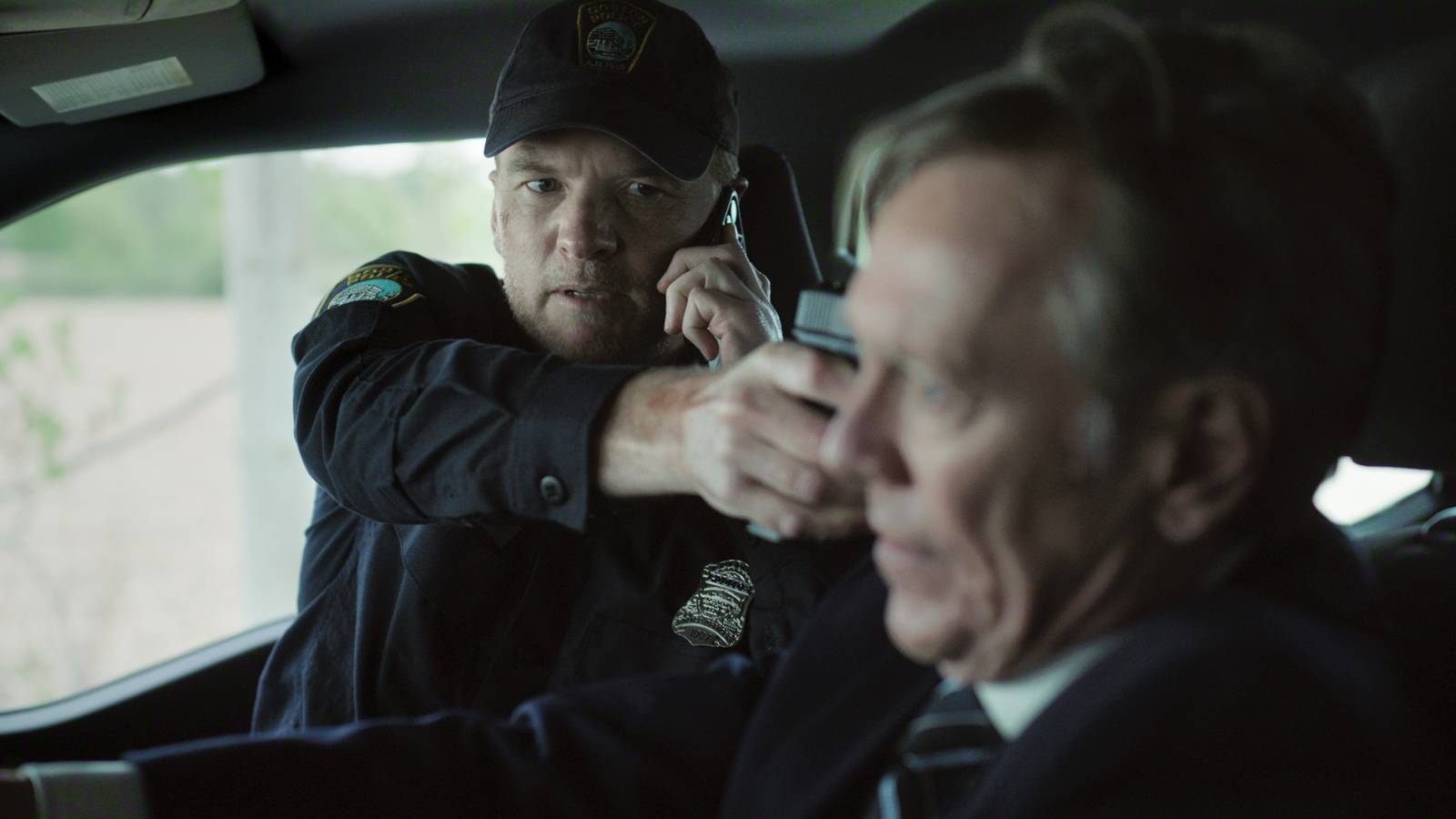
That gap between critical reception and viewer engagement has become something of a signature for Coben’s Netflix catalog. The shows are not necessarily built for unanimity — they are built for momentum. You start, you keep watching, and by the time you reach the final episode, you are already invested enough to argue about what should happen next.
Much of that debate now centers on Rachel and David’s final interaction. Was it romantic intent, or emotional aftermath? Was it closure, or the beginning of something that the series simply chooses not to name?
Hull’s comments suggest the ambiguity is the point. The ending is not meant to answer the question but to preserve it — to leave viewers sitting in the same uncertainty that defines the characters themselves.
And in that sense, the handhold becomes less of a conclusion and more of a reflection. Not “what happens next,” but “what do you want to believe happens next?”
Whether that approach satisfies viewers will depend largely on how much ambiguity they are willing to accept. But it does align with the broader tone of I Will Find You, which consistently resists clean emotional categorization. Nothing in the series is fully resolved, and even truth itself feels negotiable.
As streaming audiences continue to consume crime dramas at scale, that kind of ending has become increasingly common — not because it is easy, but because it lingers. It invites conversation. It extends the life of the story beyond the screen.
And for Netflix, that may be the real success metric.
For now, I Will Find You sits comfortably in that space between resolution and uncertainty, with its two leads frozen in a moment that could mean everything or nothing at all.
And that, ultimately, is exactly what the show wants.