Creating “The Chosen” has always been surrounded by moments that those involved describe as nothing short of extraordinary. Over the years, creator Dallas Jenkins has spoken openly about what he believes are unmistakable instances of divine guidance shaping the series’ path, from funding breakthroughs to casting decisions and, perhaps most notably, the unlikely access to one of the most important filming locations in the show’s history.
Now, as production moves into its seventh and final season, Jenkins is reflecting once again on one of those defining chapters: how “The Chosen” secured permission to film at the Motion Picture Studio South Campus in Goshen, Utah, a sprawling Jerusalem-style set owned by The Church of Jesus Christ of Latter-day Saints.
Speaking recently on the “Deseret Voices” podcast with Sheri Dew, executive vice president and chief content officer of Deseret Management Corporation, Jenkins revisited the complicated and almost improbable process that ultimately opened the doors to Goshen, and how close the series came to never filming there at all.

For Jenkins, the experience has only reinforced a sense that the show’s journey has been guided by forces beyond logistics, budgets, or industry expectation.
Sheri Dew, who played a pivotal role in navigating access to the Goshen set, described the entire process as something that defied normal explanation.
“I don’t like to throw the word miracle around loosely,” Dew said, “but it certainly was something that involved heavenly help.”

Before she ever met Jenkins, Dew had been assigned by the Presiding Bishopric of The Church of Jesus Christ of Latter-day Saints to evaluate outside requests to use the Goshen facility. At the time, “The Chosen” was still in its early stages, having released only its first season and already outgrowing its original Texas filming setup.
When Jenkins first met Dew in early 2020, he was hoping for something that, at the time, felt like a long shot: permission to film at the Utah-based Jerusalem set, one of the few large-scale biblical-era production sites in the United States.
Dew admitted she went into the meeting with only a passing familiarity with the show.
“I had heard of ‘The Chosen,’ but I hadn’t watched it yet,” she said. “You walked out and I remember thinking, ‘Oh, I kind of like that guy. I think I like what he’s doing.’”
As discussions were underway, the COVID-19 pandemic brought nearly everything to a halt. Dew’s review process was paused indefinitely, and she was instructed not to pursue further inquiries about the set’s availability during the global shutdown.
For Jenkins, the uncertainty was equally frustrating. He had not yet seen the Goshen set in person and, by his own admission, avoided visiting it because he feared becoming emotionally attached to something he might not be able to use.

Eventually, curiosity and opportunity won out, and he toured the site.
“And when I was on the set, I really felt God’s presence,” Jenkins said. “Not an audible voice, but a very clear impression that people’s lives are going to be changed by what we do here.”
But just as momentum seemed to be building, Jenkins received an official rejection.
He described telling his wife that the opportunity had likely ended.
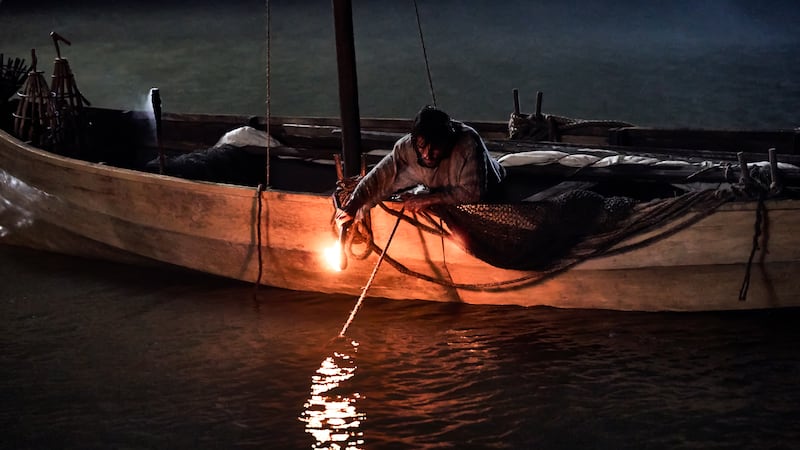
Her response, he recalled, reframed the moment entirely: she compared it to being “at the edge of the Red Sea,” suggesting that what looked like a closed door might instead be a setup for something unexpected.
While Jenkins processed the rejection, developments were quietly unfolding on the other side.
A member of the church’s senior leadership, part of the Quorum of the Twelve Apostles, received a DVD of “The Chosen.” After watching it, that leader reached out to Dew directly, initiating a renewed internal conversation about the series.
Within days, Jenkins was invited to a Zoom meeting with church representatives. Dew followed up with a formal memo submitted to the First Presidency.
What happened next came quickly.
Just three days after the initial rejection, Jenkins received an invitation to use the Goshen set.
“It took the help of several leaders,” Dew said, “but it felt like a miracle.”

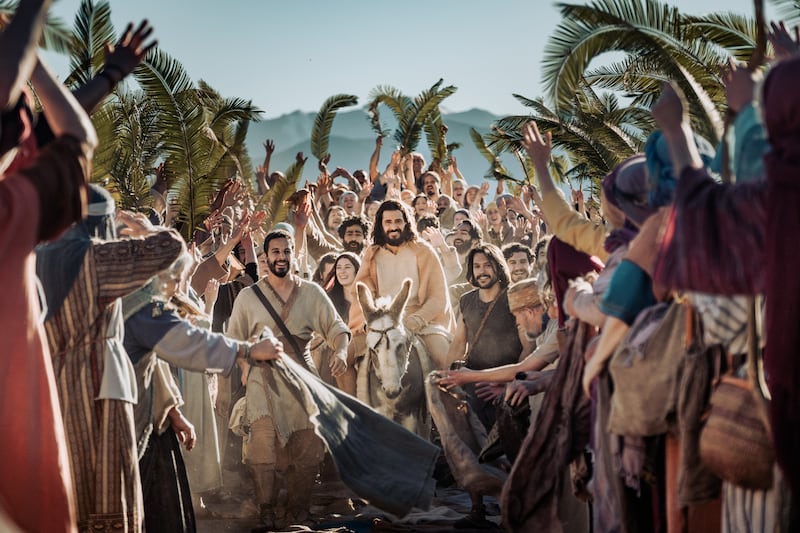
From Season 2 onward, “The Chosen” has filmed extensively at the Utah location, transforming it into one of the show’s most recognizable production environments.
Now approaching its final season, “The Chosen” has grown far beyond its early expectations. The series has reached more than 300 million viewers worldwide, with nearly a billion episode views across 175 countries. It has also been translated into more than 125 languages, making it one of the most widely distributed biblical dramas in television history.
For Jenkins, the use of the Goshen set remains central to that success.
“We couldn’t have done the show without it,” he said. “I’m not a member of the LDS Church, but there’s been mutual respect and a shared goal in making Jesus known around the world.”
He added that the collaboration has been one of the most meaningful aspects of the entire production journey.
“That relationship and the use of the set has been an immense blessing,” he said. “You guys have been so generous.”
As filming continues on the final season, Jenkins has found himself reflecting more frequently on how many pivotal moments in the show’s history felt, in his view, orchestrated rather than simply planned.

“It was an indication that the show is bigger than me,” he said. “When God has something to do, when God has something to say, we get fortunate to be asked to be part of it.”
Given the close association between “The Chosen” and the Latter-day Saint-owned Goshen set, Jenkins has also faced questions about working across theological differences. He acknowledged those distinctions but emphasized that they have not hindered collaboration.
“My relationship with members of this church has been life-giving,” he said. “It’s been huge for the success and spreading of the show.”
When asked what advice he would offer to members of The Church of Jesus Christ of Latter-day Saints, Jenkins kept his answer simple.
“Know Jesus more,” he said. “Go deeper into scripture, go deeper into your Bible, and grow in love and understanding of Him.”
As “The Chosen” moves toward its conclusion, Jenkins said his understanding of faith, storytelling, and collaboration has deepened in ways he never anticipated when the project began.
“I think sometimes we forget that God has a personal relationship with you,” he said. “He knows your heart. He knows your history. And the intimacy of that relationship is something I value more now than ever before.”
With filming underway in Goshen for the final season, the production returns once more to the place that nearly never became part of its story at all—now firmly embedded in the legacy of a series that, for its creator, continues to feel guided by something far beyond coincidence.