Jacob Tierney is giving “Heated Rivalry” fans exactly what they have been begging for since the moment Shane Hollander and Ilya Rozanov first turned on-screen tension into a full-blown cultural obsession: a deeper look behind the curtain of how it all came together.
The creator of the hit sports romance series is set to release a new behind-the-scenes book titled I’ll Believe in Anything, which promises to pull back the rink-side glass on everything from casting decisions to costume design to the emotional architecture of the show’s most talked-about moments. For a series that built its reputation on intimacy, restraint, and slow-burning intensity, the book is being framed as a companion piece that finally gives readers access to the machinery underneath the romance.
For fans already emotionally invested in the world of “Heated Rivalry,” the announcement feels less like a side project and more like an extension of the show itself.
:max_bytes(150000):strip_icc():focal(749x0:751x2):format(webp)/ILL-BELIEVE-IN-ANYTHING-by-Jacob-Tierney-060126-a3f28050095146cd822ffc95d1f0a3ce.jpg)
The book, created in collaboration with Tierney’s producing partner Brendan Brady and their production company Accent Aigu, will compile annotated scripts from the show’s first season. It also includes extensive behind-the-scenes material that traces how the series evolved from adaptation to global streaming phenomenon after debuting on HBO Max in 2025.
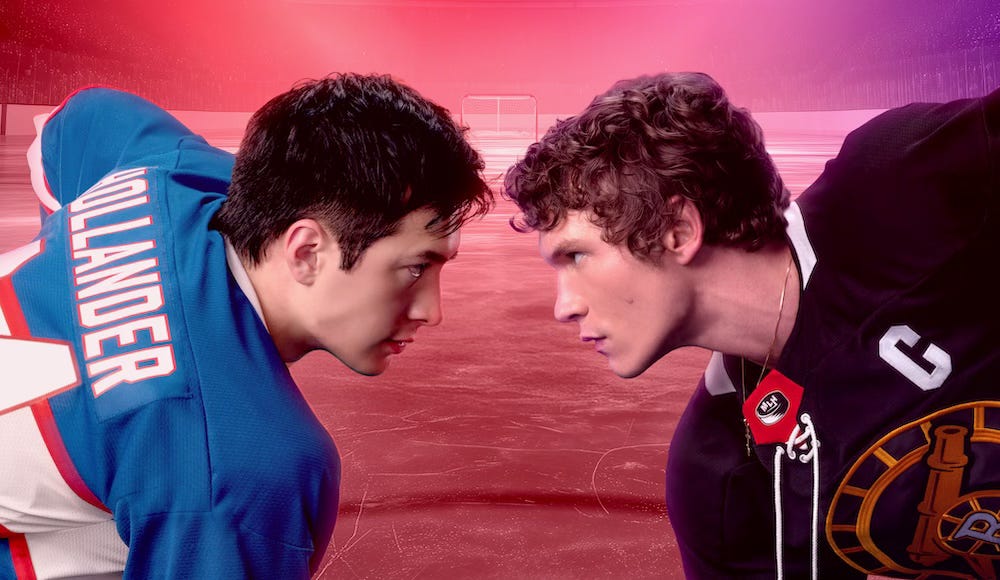
Based on Rachel Reid’s bestselling Game Changers novels, “Heated Rivalry” follows rival hockey stars Shane Hollander, played by Hudson Williams, and Ilya Rozanov, played by Connor Storrie. What begins as a classic sports rivalry gradually transforms into a secret relationship that spans leagues, continents, and emotional consequences that neither character fully knows how to articulate.
That combination of athletic intensity and emotional vulnerability is precisely what turned the series into a breakout hit—and what Tierney now appears eager to dissect in granular detail.
According to the official description, I’ll Believe in Anything will go far beyond simple production trivia. The book will explore how the creative team approached balancing multiple narrative threads, including secondary relationships such as Kip and Scott, and how those storylines were woven into the larger emotional fabric of the series. It also promises insight into how the adaptation attempted to “rewrite the playbook” for romance television, particularly in its portrayal of queer intimacy on a mainstream streaming platform.

For readers expecting glossy summaries, Tierney’s approach appears to be something more intimate and self-reflective. The book includes annotated scripts that reveal not just what changed from page to screen, but why those changes were made in the first place. In many ways, it mirrors the tone of the show itself—quietly obsessive, detail-driven, and deeply concerned with emotional truth over spectacle.
Speaking about the project, Tierney emphasized that the goal was not to create a conventional making-of book, but something that felt personal to the creative process. He described television production as inherently collaborative, shaped by constant negotiation between writers, directors, actors, designers, and editors. The book, he said, is meant to reflect that evolution rather than simplify it.
He explained that he wanted readers to feel as though they were sitting alongside the creative team while decisions were being made, rather than only seeing the polished final result. That philosophy aligns closely with what made “Heated Rivalry” resonate in the first place: a sense that the story was always about more than what was explicitly shown on screen.
The foreword for the book is written by Rachel Reid herself, further cementing the project as a bridge between the original novels and their screen adaptation. For fans of the source material, that collaboration is likely to be one of the most anticipated aspects of the release.
Tierney has previously spoken about the challenges of adapting Reid’s novels for television, particularly in maintaining the emotional core of the relationship between Shane and Ilya while translating it into a visual medium. In earlier interviews, he has described his intention to “dig deeper” into the emotional logic of the characters rather than soften or dilute their complexity for broader audiences.
That commitment is reflected in both the series and, now, the accompanying book. Rather than treating the adaptation as a finished product, I’ll Believe in Anything positions it as an ongoing conversation between text, performance, and audience interpretation.
The release also arrives at a time when “Heated Rivalry” continues to grow far beyond its initial niche audience. What began as a sports romance adaptation has become a global streaming talking point, with fan communities dissecting everything from line delivery to lighting choices with near-academic precision. The cottage at the center of Shane and Ilya’s story has already taken on a kind of mythological status among viewers, symbolizing the emotional core of the series.
In that context, a behind-the-scenes book feels almost inevitable—an attempt to document a phenomenon that has already extended well beyond the screen.
While Tierney’s book focuses on the making of season one, attention is already shifting toward what comes next. Season two of “Heated Rivalry” is currently slated for a Spring 2027 release and will adapt The Long Game, the next installment in Reid’s Game Changers series. That chapter of the story is expected to explore the consequences of Shane and Ilya’s relationship as it moves into a more public and complicated phase, where professional expectations and personal vulnerability collide more directly than before.
For now, however, I’ll Believe in Anything offers fans something more immediate: a chance to revisit the origins of a story that has already left a significant mark on modern streaming culture.
The book is expected to appeal not only to dedicated fans of the series, but also to readers interested in adaptation, screenwriting, and the mechanics of building emotionally resonant television. With annotated scripts, production insights, and reflections from the creative team, it functions as both a reference guide and a narrative in its own right.
If “Heated Rivalry” is about the tension between what is said and what is felt, then Tierney’s new book is about what happens in the space between those two things during production—the moments that never make it to screen, but still shape everything audiences end up seeing.
And for a show built on restraint, longing, and carefully controlled emotional release, that behind-the-scenes perspective might be exactly what fans have been waiting for all along.