We’ve officially reached the season finale of Marshals on CBS, and the show does not ease up even slightly as it closes out its first run. Episode 10, titled “Wolves at the Door,” delivers a full mix of emotional reckonings, shifting loyalties, and an all-out action sequence that brings multiple storylines crashing together in explosive fashion. As always, spoilers follow below.
The finale opens with lingering uncertainty hanging over everything Kayce has been building throughout the season. Luke Grimes returns as Kayce Dutton, a man constantly balancing duty, legacy, and personal loss. After the events of last week, he is still considering the offer from Tom Weaver regarding East Camp — a decision that could permanently reshape his future.
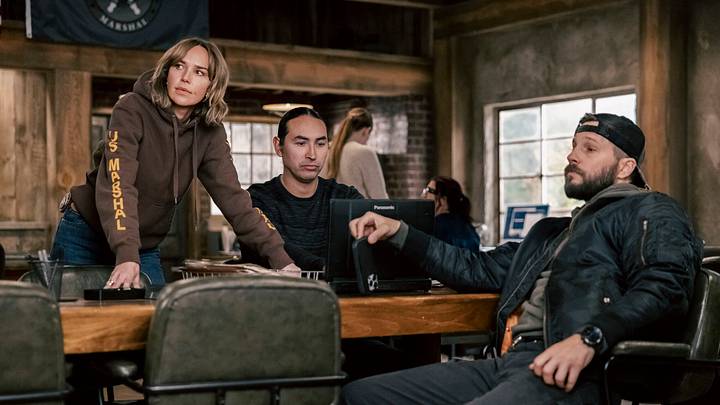
East Camp has become more than just land. It is memory, identity, and one of the last remaining emotional ties to the Dutton legacy that once defined his life.
As Kayce weighs the decision, he visits Monica’s grave. The moment is quiet, reflective, and heavy with unspoken history. It is also a reminder that East Camp is not just a ranch — it is where his life with Monica was built, and where it was also shattered. That emotional weight makes Tom Weaver’s offer both appealing and impossible.
When Tom arrives to finalize the deal, the offer is more than generous. It represents stability, financial security, and a clean break from the burdens Kayce has been carrying. But instead of relief, the proposal only deepens his internal conflict.
Ultimately, Kayce declines.
It is not a decision driven by logic, but by identity. East Camp still belongs to him in a way that cannot be measured in dollars or contracts. Tom, surprisingly, accepts the decision without resistance, recognizing that some things cannot be bought. Dolly Weaver also appears to respect Kayce’s choice, though her interest in him personally adds another layer of complexity to their dynamic.
For a brief moment, Kayce seems at peace.
But peace in this world never lasts long.
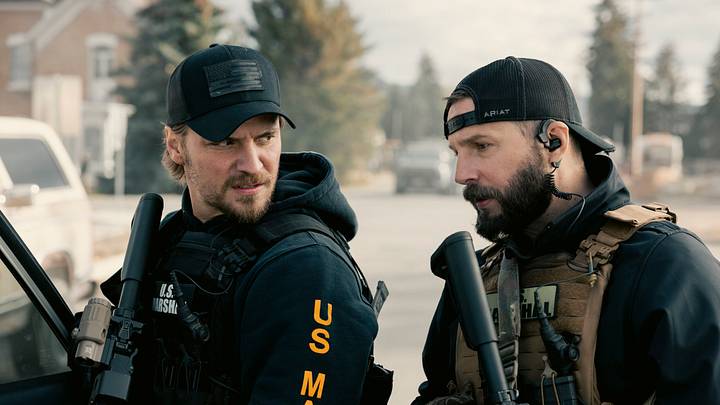
At work, the team begins to settle back into routine until Cruz notices that something is different about Kayce. Ash Santos as Cruz picks up on his emotional shift immediately, sensing that his decision regarding East Camp has changed him. Kayce reveals his intention to remain and transform part of the land into an equine therapy program for veterans, honoring Garrett in the process.
The idea is met with quiet support, but the moment is quickly disrupted when Marshal Gifford, played by Brett Cullen, delivers unexpected news: Cruz is leaving. She has accepted a promotion that will take her out of the field and into a different phase of her career.
The departure hits the team harder than expected. Cruz has been one of the emotional anchors of the unit, and her absence signals that change is unavoidable, even in the closest-knit groups.
There is little time to process it, however, because the mission resumes almost immediately.
The team is redirected toward a fugitive case they previously lost track of during the chaos involving Tom Weaver. But before they can mobilize, Kayce receives an emergency call from Mo, pulling him back toward East Camp once again.
From this point forward, the episode shifts into high gear.
Chairman Rainwater, portrayed by Gil Birmingham, becomes the target of another coordinated attack while en route to address the Senate. With the unexpected assistance of Miles, played by Tatanka Means, who has recently been suspended, Rainwater narrowly survives the assault.
In the aftermath, Mo brings Rainwater and Miles to East Camp for protection. Kayce immediately steps into a leadership role, taking responsibility for securing the land as a safe zone. Tate also chooses to stay and help, signaling his own growth and willingness to confront danger alongside his father.
That decision quickly proves dangerous.
The attackers locate East Camp sooner than expected, triggering a full-scale firefight. Kayce and Mo find themselves outnumbered and outgunned, holding the line while waiting for backup that may not arrive in time.
Desperation sets in as Kayce reaches out to Cal, who makes the pivotal decision to abandon his manhunt and rally the team. His choice shifts the balance just in time, bringing reinforcements — including Miles — into the fight.
The arrival of backup turns the tide, but the danger is far from over.
One intruder breaks through the defenses and makes it inside the house where Rainwater is sheltering. In a tense, confined sequence, the attacker corners the Chairman, leaving him with little chance of survival.
Just as the situation reaches its breaking point, Tate emerges from hiding with a shotgun and eliminates the threat.
It is a moment that redefines Tate’s role in the story. Once again, he is forced into violence to protect someone he cares about, but unlike earlier incidents, there is a noticeable shift in his reaction. Instead of trauma or shock, there is acceptance — a quiet understanding that the choice, however brutal, was necessary.
When Kayce arrives moments later, he is relieved to find everyone alive, but deeply troubled by the fact that his son has once again been forced into a life-or-death situation.

The immediate crisis ends, but the aftermath begins to reveal deeper fractures in the story.
Investigation into the attack suggests that Nathan Irons was responsible for orchestrating the violence, driven by opposition to Rainwater’s policies. However, the situation takes another turn when Irons is found dead under suspicious circumstances, initially ruled as a self-inflicted death.
That conclusion, however, does not hold.
Cruz begins to question inconsistencies in the case, continuing her investigation even as she prepares to leave. Meanwhile, Cal and Belle, played by Arielle Kebbel, pursue a separate lead that ultimately ends in another dead body, leaving the team with more questions than answers.
The sense of closure they hoped for quickly dissolves.
At this point, the narrative shifts perspective one final time, revealing the truth behind the chaos.
As Tom Weaver boards a plane with Tate for a fishing trip to Texas, he receives an update from his right-hand man. The message confirms that loose ends have been handled and exposure has been minimized.
In that moment, the final twist lands.
Tom Weaver was behind the attacks all along.
The revelation reframes everything that came before it, transforming earlier decisions and interactions into part of a much larger, more calculated plan. His calm demeanor throughout the season suddenly reads differently in hindsight, suggesting a level of control that no one around him fully understood.
With that final reveal, the season closes on a note of quiet menace rather than explosive action.
Despite the chaos, the finale also offers several character-driven resolutions. Kayce’s decision to remain at East Camp grounds the story emotionally, reinforcing his connection to place and memory. Cruz’s potential departure introduces uncertainty, while Cal’s personal growth and Miles’ redemption hint at shifting dynamics within the team.
Belle’s continued integrity, including confirmation that she did not take the money from earlier events, adds another layer of moral clarity in an otherwise unstable environment. There is also subtle development in her relationship with Cal, as she offers support during his medical treatment, hinting at a possible deeper connection forming between them.
Taken as a whole, the first season of Marshals delivers a strong balance of action, emotional storytelling, and long-term setup. The finale ties together major arcs while simultaneously opening the door for an even more complex second season.
With Kayce anchored at East Camp, unresolved threats still looming, and Tom Weaver now revealed as a hidden antagonist, the series positions itself for an even darker and more unpredictable future.
And if this finale is any indication, the real storm is only just beginning.