The future of The Madison is already taking shape behind the scenes, but for viewers still processing the emotional weight of Season 1’s finale, the biggest question remains unanswered: what happens next after Stacy Clyburn’s shocking return to Montana?
Although Season 2 has already been filmed, Paramount+ has yet to announce an official release date, leaving fans in a prolonged state of anticipation. That uncertainty has only intensified following new comments from Michelle Pfeiffer, who offered fresh insight into what lies ahead for her character after the devastating events of the first season.
Warning: spoilers ahead for The Madison Season 1.
Created by Taylor Sheridan, The Madison quickly established itself as one of the most emotionally driven entries in the expanding Sheridan universe. At its core, the series is not about power or land in the traditional sense, but about love, grief, and the fragile identity that remains when everything familiar is taken away.
Michelle Pfeiffer and Kurt Russell star as Stacy and Preston Clyburn, a couple whose love story spans decades. Having met at 19, they built a life defined by immense wealth, family obligation, and a connection so deep it often blurred the boundaries between individual identity and shared existence.
By the time the series begins, Stacy and Preston are grandparents, still navigating the complexities of adult children raised in privilege while trying to maintain emotional grounding within a world that has always been insulated by money.
Despite their long marriage and apparent stability, the series introduces a hidden vulnerability beneath their polished exterior.
That vulnerability is shattered when tragedy strikes.
Preston and his brother Paul, played by Matthew Fox, are killed in a sudden plane crash during what was meant to be a peaceful fishing trip in Montana. The accident sends shockwaves through the Clyburn family and forces them into a confrontation with grief they were entirely unprepared for.
What follows is not just mourning, but disorientation.
Montana, once a distant and almost mythical place tied to Preston’s private retreats, becomes the emotional center of the story. It is where he escaped, where he found clarity, and where, ultimately, his life ended.
For Stacy, it becomes something entirely different: a place she must now understand without him.

Season 1 carefully charts the aftermath of that loss.
After Preston’s death, Stacy begins to uncover a side of her husband she never fully understood. His journals, left behind in a Madison River Valley cabin, reveal years of introspection, solitude, and emotional complexity that never fully translated into their shared life in Manhattan.
Through those writings, Montana transforms in Stacy’s mind from a remote escape into something far more meaningful.
It becomes personal.
It becomes sacred.
Eventually, after the family returns to New York for Preston’s funeral, Stacy finds herself unable to remain in the environment they once shared. Grief overwhelms her sense of place, structure, and identity, making Manhattan feel unbearable.
In the Season 1 finale, she makes a quiet but decisive choice.
Without informing her children and without bringing her phone, Stacy returns alone to Montana. Her arrival is not framed as an escape, but as a return to something unresolved. The final image of the season, showing her lying near Preston’s grave on the land he loved, leaves her emotional state deliberately ambiguous.
Is she seeking peace, closure, or something more uncertain?
Michelle Pfeiffer’s recent comments suggest that Season 2 will not offer easy answers.
Speaking about the upcoming season, Pfeiffer revealed that the emotional tone will shift significantly as the initial shock of grief begins to fade. According to her, what once felt like romantic idealism surrounding Montana will gradually give way to a more complicated and uncomfortable reality.
“The honeymoon is over,” she explained, describing how both Stacy and her family begin to see Montana not as an emotional sanctuary, but as a place that demands difficult adjustments.
That shift is central to Season 2’s narrative direction.
Rather than continuing to romanticize grief or transformation, the story appears poised to explore what happens when idealized emotions confront practical survival. The beauty of Montana, once framed through memory and loss, begins to lose its softness as real-world challenges emerge.
What remains is something far more unstable.
Pfeiffer also hinted that the Clyburn family will not remain separated from Montana for long. According to Beau Garrett, who plays Abigail, Season 2 will force other family members to return, bringing unresolved tensions directly into the environment where Stacy has chosen to isolate herself.
That development sets the stage for inevitable conflict.
Each family member arrives carrying their own interpretation of Preston’s legacy, their own unresolved grief, and their own expectations about what should happen next. Montana, once a private emotional refuge for Preston, becomes a shared battleground for memory and identity.
At the center of it all is Stacy.
For her, Montana is no longer just a place tied to her husband’s history. It is the only space where she feels connected to him, and by extension, the only place where she feels connected to herself.
But that connection is increasingly fragile.
Pfeiffer described Season 2 as a period defined by “messy and profound building” in the aftermath of total loss. Rather than focusing solely on healing, the narrative will explore whether survival itself is even possible when a foundational relationship is suddenly gone.
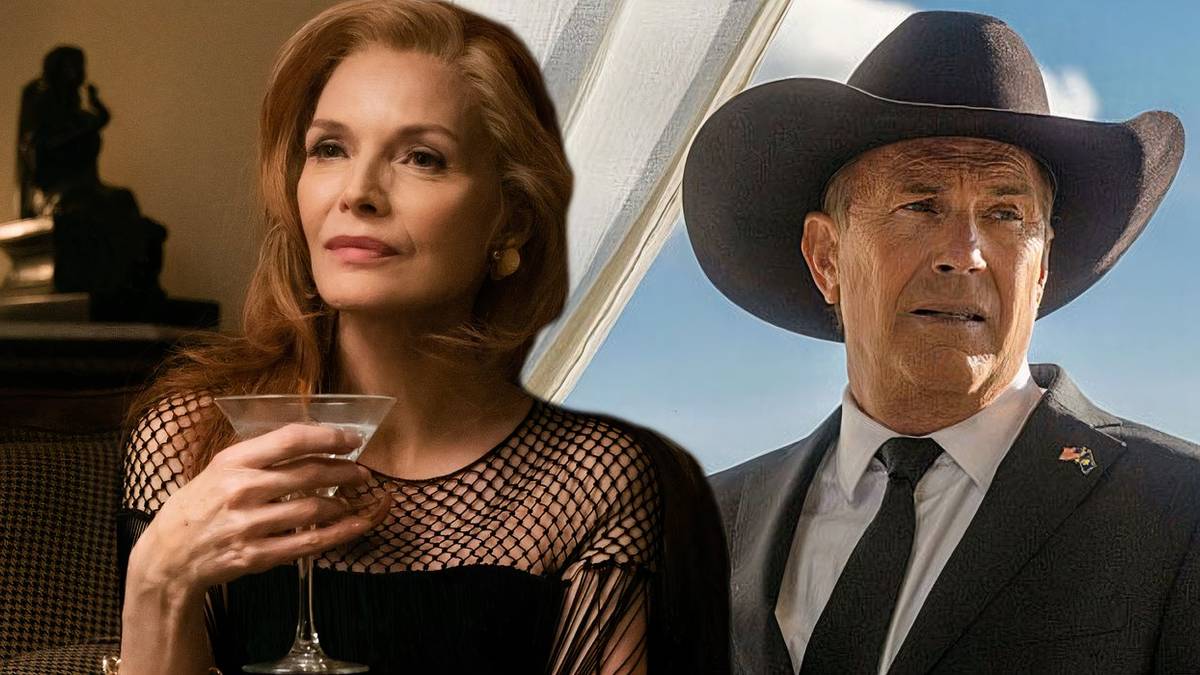
Kurt Russell, who portrays Preston in flashbacks and memory-driven sequences, echoed that sentiment in earlier discussions about the show’s direction. He suggested that Stacy’s emotional trajectory will become increasingly uncertain as she attempts to reconcile who she was within the marriage with who she must now become without it.
The question at the heart of Season 2 is no longer simply about grief.
It is about identity.
Stacy and Preston’s relationship was built over decades of shared experience, to the point where their individual selves were often inseparable. They did not just grow together—they evolved as a single emotional unit.
Now, that structure no longer exists.
As Pfeiffer noted, the deeper issue is not just loss, but fragmentation. With Preston gone, Stacy is forced to confront a version of herself that was never fully independent. Every decision, every memory, and every emotional reflex was once filtered through the presence of her husband.
Without him, those systems collapse.
The upcoming season will reportedly examine whether she can rebuild any sense of self in the aftermath—or whether she remains permanently defined by what she has lost.
This emotional complexity is further heightened by the show’s broader narrative arc, which has already secured a renewal for Season 3 at Paramount+. That early renewal suggests that the story of the Clyburn family is far from reaching its conclusion, even as Season 2 continues to deepen the emotional stakes.
It also raises larger questions about the direction of the series as a whole.
Will Montana continue to serve as a grounding force for the family, or will it ultimately become a site of irreversible fracture?
For now, those answers remain deliberately out of reach.
What is clear, however, is that Stacy’s return marks a turning point not only for her character, but for the entire emotional foundation of The Madison. Her decision to stay in Montana transforms grief from a private experience into a shared family confrontation.
And as the rest of the Clyburn family begins to arrive, the fragile illusion of closure begins to unravel.
If Season 1 was about the shock of loss, Season 2 appears ready to explore something far more complicated.
The long, uncomfortable process of learning how to exist after everything familiar has disappeared.
And for Stacy Clyburn, the hardest part may not be returning to Montana at all.
It may be discovering that she can never truly leave it again.