Fans of Taylor Sheridan’s expanding television universe are used to watching characters in “Dutton Ranch” face gunfights, betrayals, and the occasional moral collapse in the middle of cattle country. What they might not expect is that, off camera, the biggest threat to the cast wasn’t rival ranchers or Texas heat—it was something far smaller, quieter, and far more venomous.
Rattlesnakes.
During a recent appearance on The Kelly Clarkson Show, “Dutton Ranch” stars Kelly Reilly and Cole Hauser revealed that filming the Paramount+ series in North Texas came with an unexpected wildlife problem that sounds almost too extreme to be real. According to Hauser, the production spent months dealing with an extraordinary number of rattlesnakes across filming locations.
“Eight months, 3,400 rattlesnakes we caught,” Hauser said, describing what sounded less like a TV shoot and more like an ongoing nature documentary about survival in the wild.
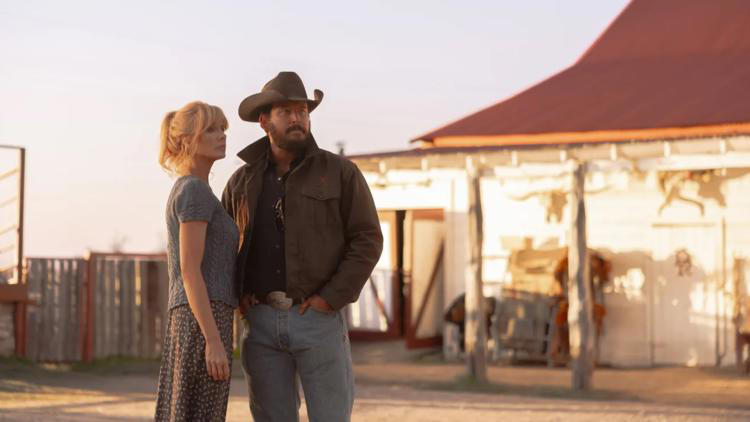
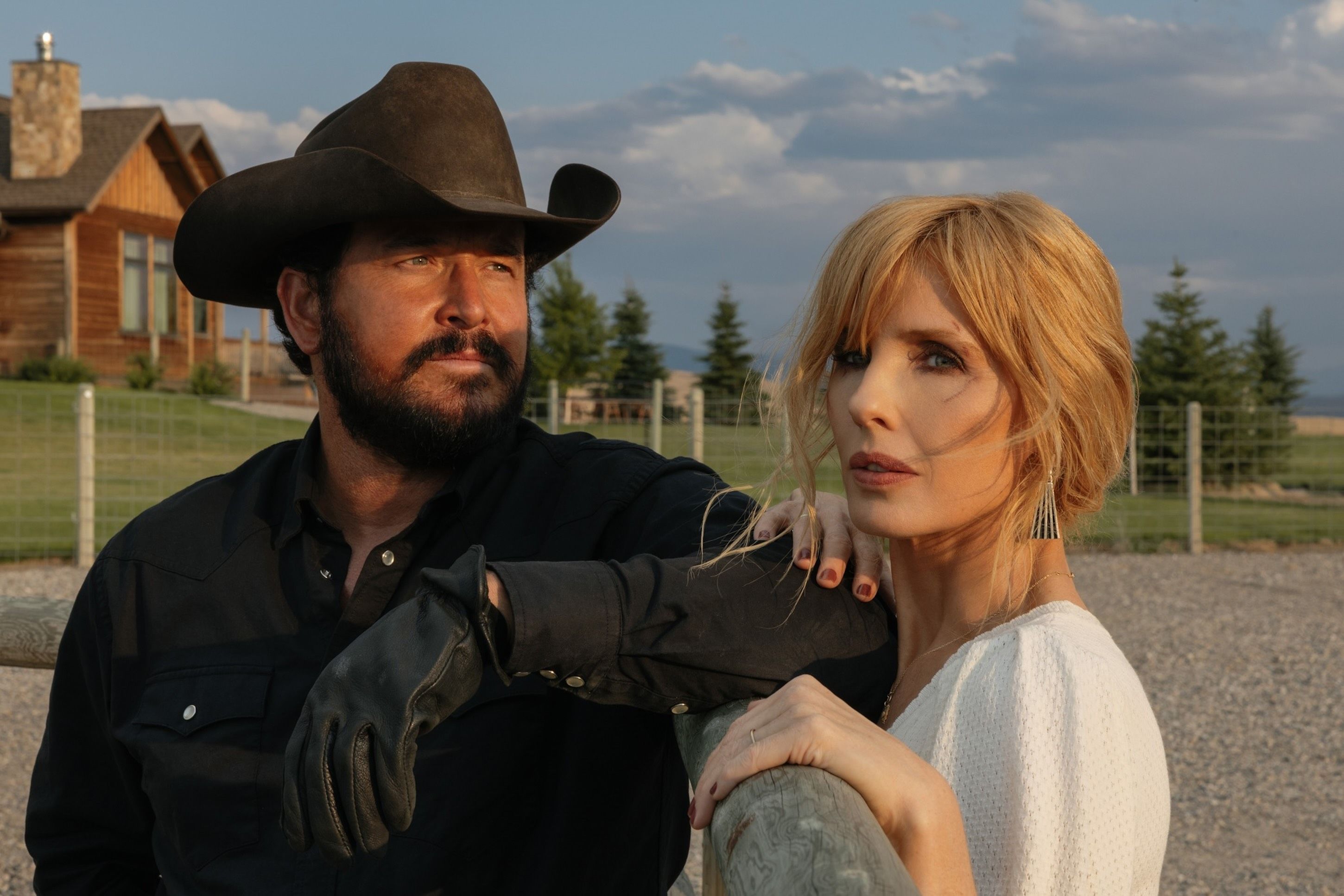
The series, which premiered on May 15 and continues the story of Beth Dutton and Rip Wheeler as they attempt to build a new life in a fictional South Texas setting, was filmed primarily in Ferris and surrounding areas of North Texas. The region, known for its wide open land, ranching culture, and blistering summers, also happens to be home to a dense population of rattlesnakes that apparently take no notice of production schedules.
Reilly, who reprises her role as the fiercely unfiltered Beth Dutton, confirmed that the production had to employ a specialized team of “snake wranglers” whose sole job was to locate and safely remove snakes before and during filming. According to her, the process became routine—but never exactly comforting.
“They just pick them up and put them somewhere far away from us,” Reilly explained, as if summarizing a daily workplace hazard that somehow sits just outside the usual Hollywood safety briefing.
The idea of a multi-million-dollar television production being paused because of a snake sighting might sound exaggerated, but both actors made it clear that it was a regular occurrence. In fact, Hauser recalled one particular night shoot where production came to a sudden halt after crew members discovered a large cluster of rattlesnakes near the set.
He described arriving for filming only to be told that the area had become unusable due to the presence of what he estimated to be “forty or fifty” snakes gathered in one location. The discovery immediately shut down production for the night, leaving cast and crew to wait until professionals could safely intervene.
For Clarkson, who grew up in Fort Worth and is no stranger to North Texas wildlife, the story didn’t come as a complete shock. She chimed in during the interview with her own experience dealing with rattlesnakes on private property, noting that many people underestimate just how common they are in the region.
“In Fort Worth, I know, because I lived there, there are a lot of rattlesnakes,” she said. “People don’t realize how many snakes are in the area.”
What makes the situation even more surreal is the contrast between the show’s carefully constructed world and the unpredictable reality of filming in open ranchland. On screen, “Dutton Ranch” is defined by controlled chaos: tense negotiations, carefully staged violence, and the kind of emotional standoffs that have become synonymous with Sheridan’s storytelling style. Off screen, however, the tension sometimes came from simply walking through tall grass in costume and hoping not to step on something that could ruin both the shot and your day.
Reilly noted that her character’s wardrobe only added to the challenge. Beth Dutton is rarely seen without her signature high-fashion Western aesthetic, and that includes footwear that is far less practical than what one might choose for snake country survival. According to Reilly, filming often required her to run through thick vegetation in stilettos, a combination that made every movement feel like its own kind of stunt sequence.
It is a detail that underscores just how physically demanding location filming can be, even for experienced actors accustomed to high-intensity roles. The combination of costume design, natural terrain, and wildlife turned ordinary scenes into logistical puzzles that required constant coordination between departments.
While rattlesnakes might not typically make the list of challenges associated with prestige television production, the cast seemed to take it in stride. There was a sense, in their retelling, that the experience had become just another layer of the show’s already rugged identity. After all, “Dutton Ranch” is built on the idea of survival in harsh environments, even if those environments occasionally include unexpected wildlife encounters between takes.
Still, Hauser admitted that nothing quite prepares you for hearing a rattlesnake nearby in the middle of the night. The sound alone, he suggested, was enough to change the energy on set instantly.
“Nothing will make me run faster than hearing that sound in the dead of night,” Clarkson responded, capturing what most viewers were likely thinking as well.
Beyond the snake stories, the interview highlighted the increasingly immersive nature of Sheridan’s productions. Known for his commitment to authenticity and location shooting, Sheridan often places his casts in real environments that mirror the worlds their characters inhabit. In the case of “Dutton Ranch,” that meant filming in remote Texas landscapes where nature is not controlled so much as negotiated with on a daily basis.
The result, according to the cast, is a production experience that feels closer to working on a living ranch than a traditional studio set. While that authenticity contributes to the show’s visual realism, it also introduces variables that no script can fully account for.
Despite the challenges, both Reilly and Hauser appeared to speak about the experience with a mix of disbelief and appreciation. The snake encounters, while alarming in the moment, have already become part of the lore surrounding the production—a behind-the-scenes detail that only adds to the mythology of Sheridan’s television universe.
And in a series defined by survival, power struggles, and life on unforgiving land, perhaps it is fitting that even the production itself had to endure its own version of the wilderness test.
Because in “Dutton Ranch,” as both cast and crew learned, danger doesn’t always arrive on horseback or through a rival rancher’s front gate. Sometimes, it’s already in the grass, waiting quietly until someone rolls camera.