The rivalry between Heated Rivalry and Off Campus fans has taken on a life of its own online, but a new debate may be the most interesting one yet. This time, the discussion isn’t about which hockey romance is better, which cast has stronger chemistry, or which adaptation stayed more faithful to its source material. Instead, fans are examining something much more unexpected: the marketing campaigns behind the two streaming hits.
Over the past several months, both Heated Rivalry and Off Campus have become major success stories in the world of television romance. While the two shows tell very different stories, they share one obvious connection: hockey.
That overlap alone was enough to spark comparisons from the beginning. However, a growing number of fans now believe the similarities extend far beyond the ice rink.
The latest discussion erupted after several social media users began comparing promotional materials from both series side by side. Screenshots of magazine shoots, cast photos, brand partnerships, interview formats, and social media campaigns quickly spread across X, TikTok, and Reddit, prompting heated debates about whether the resemblance was simply coincidence or something more deliberate.
The conversation gained traction after one particularly viral post highlighted what the user described as a remarkably similar rollout strategy between the two productions.
The post included images from promotional shoots featuring Heated Rivalry stars Hudson Williams and Connor Storrie alongside comparable campaigns involving Off Campus stars Mika Abdalla and Stephen Kalyn.

The timing of another announcement only fueled the discussion further.
Recently, it was revealed that Abdalla and Kalyn would headline their own companion project, Rent Free, a move that immediately reminded many viewers of Williams and Storrie’s promotional series created during the height of Heated Rivalry mania.
For some fans, the parallels were impossible to ignore.
Others pointed to additional similarities, including corporate brand partnerships, lifestyle content, fashion shoots, and social media collaborations that appeared to mirror one another in tone and presentation.
One user argued that the resemblance extended beyond the actors themselves.
“No shade, but it absolutely does get to a point,” the viral post stated. “Even the stylists and hairstylists.”
The comment immediately generated thousands of reactions.
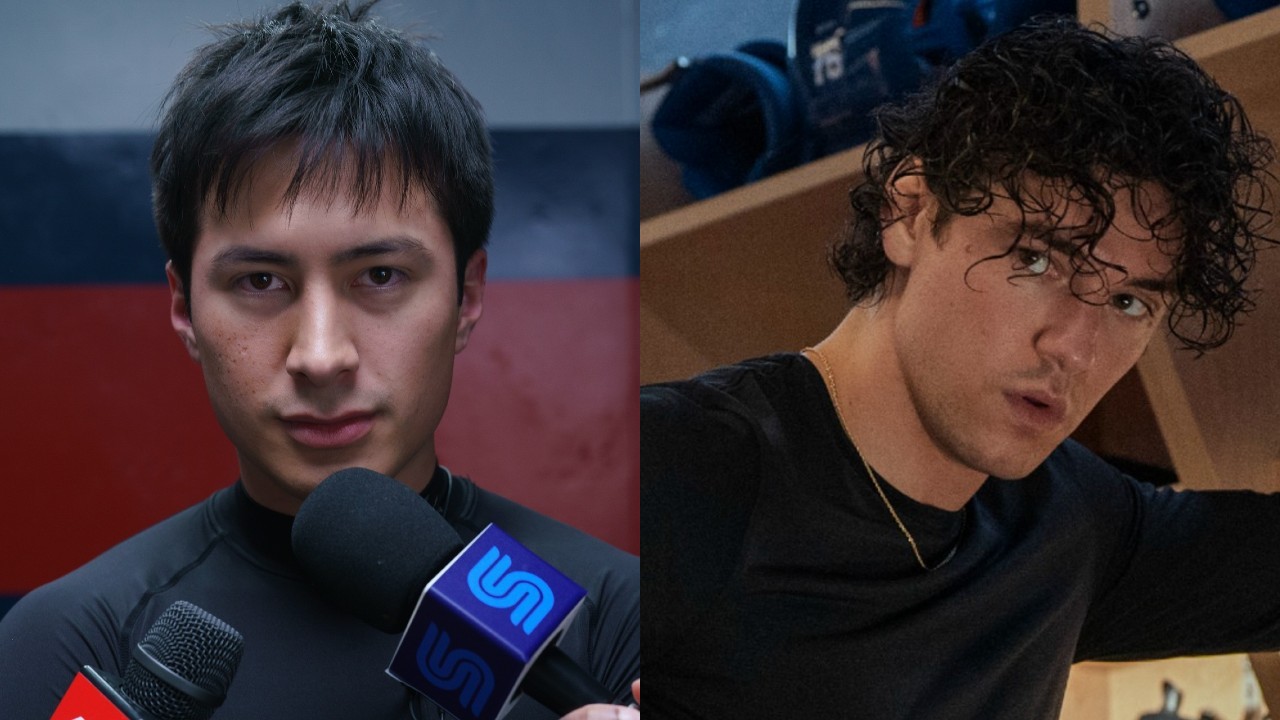
Many users agreed with the observation, arguing that the similarities felt increasingly difficult to dismiss as coincidence.
Others pushed back strongly, accusing fans of reading too much into standard entertainment-industry practices.
As often happens with online fandom debates, the discussion quickly evolved into a larger argument about influence, originality, and the nature of modern television marketing.
Some viewers believe the success of Heated Rivalry created a blueprint that other studios are now attempting to replicate.
After all, the show’s promotional campaign became almost as famous as the series itself.
The chemistry between Williams and Storrie generated enormous engagement online, leading to magazine covers, joint interviews, event appearances, viral social media clips, and extensive fan-created content.
The pair became a phenomenon far beyond the boundaries of the actual show.
It would hardly be surprising if other studios looked at that success and tried to recreate portions of it.
At the same time, supporters of Off Campus argue that such comparisons ignore a basic reality of entertainment marketing.
When a show becomes successful, studios naturally invest in promoting its stars.
Attractive young actors, fashion partnerships, magazine profiles, social media campaigns, and brand collaborations are hardly unique concepts.
Many fans have argued that people are confusing industry trends with direct imitation.
The original poster behind the viral comparison eventually addressed criticism from fellow fans.
“To the people hell-bent on implying I’m angry and need to focus on my own show,” they wrote, “I fear I’ve watched both shows, and Off Campus is fine. It’s just wild seeing the press tour be the exact same.”
The comment only intensified discussion.
Some users agreed wholeheartedly, while others insisted the similarities were being exaggerated.
One common defense centered on timing.
Unlike what some critics initially assumed, Off Campus was not developed in response to Heated Rivalry’s success.
Production on the Prime Video adaptation actually began long before Heated Rivalry became a streaming sensation.
That timeline has become an important part of the conversation.
While marketing strategies can certainly evolve after a show enters post-production, the core project itself was already underway before anyone could have predicted the cultural impact of Heated Rivalry.
That fact makes direct creative copying virtually impossible.
Even so, marketing departments operate independently from production schedules, which leaves room for speculation about whether successful promotional ideas may have influenced later decisions.
The debate eventually became significant enough that Off Campus showrunner Louisa Levy was asked about the comparisons directly.
Rather than avoiding the topic, Levy addressed it head-on.
According to the showrunner, she first became aware of Heated Rivalry while Off Campus was already deep into production.

“We were actually mid-way through shooting our show when I first heard about it,” Levy explained during an interview.
Far from viewing the other series as competition, she expressed admiration for its success.
“I was excited to see it even before it ever launched, and I love that it’s a queer romance,” she said.
Levy also emphasized the importance of having multiple stories operating within the same genre.
“We need more of that in the world,” she continued.
Her comments reflect a broader perspective that many industry observers share.
Rather than seeing the two shows as rivals fighting for the same audience, some argue that both productions benefit from the growing popularity of hockey romances as a whole.
Romance adaptations have experienced a major resurgence in recent years.
BookTok has transformed once-niche novels into international bestsellers. Streaming platforms have increasingly turned toward romance-focused content. Audiences have demonstrated a strong appetite for character-driven love stories that combine emotional drama with highly specific settings.
Hockey simply happens to be one of the latest settings enjoying that wave of popularity.
Viewed through that lens, the existence of both Heated Rivalry and Off Campus may be less surprising than inevitable.
The two shows also differ significantly in terms of tone, themes, and storytelling approach.
Heated Rivalry focuses on a secret relationship between two professional hockey players whose careers place them under immense pressure.
Its central conflict revolves around identity, secrecy, ambition, and long-term commitment.
Off Campus, meanwhile, explores college romance, friendships, campus life, and the challenges of young adulthood.
While both stories involve hockey players, the similarities largely end there.
Levy herself pointed to that distinction.
“We are obviously coexisting as hockey romances,” she explained, “but that’s kind of where the similarities end.”
That assessment has resonated with many viewers who enjoy both series.
In fact, a growing number of fans seem increasingly frustrated by efforts to frame the two shows as direct competitors.
Many argue that audiences should celebrate the success of both projects rather than forcing them into unnecessary conflict.
Still, fandom culture thrives on comparison.
As long as Heated Rivalry and Off Campus remain among the most visible romance series in streaming, every new casting announcement, promotional campaign, interview, or social media post will likely be scrutinized through the lens of rivalry.
Whether the marketing similarities are genuine, exaggerated, or entirely coincidental may ultimately depend on individual interpretation.
What is clear is that both shows have captured enormous attention, and both continue to dominate online conversation months after their premieres.
In an increasingly crowded streaming landscape, that level of engagement is something most productions would envy.
And if fans are arguing over which hockey romance has the better marketing campaign, it probably means both shows are doing something right.
For now, Heated Rivalry prepares for its highly anticipated second season while Off Campus continues building momentum for its next chapter. The debate over who inspired whom is unlikely to disappear anytime soon, but neither show’s success appears to be slowing down.
If anything, the ongoing comparisons only prove one thing: hockey romance has become one of television’s hottest genres, and audiences can’t seem to get enough of it.