Ever since Heated Rivalry exploded into one of the internet’s most obsessive fandoms, the line between fiction and reality has occasionally become blurry for some viewers. Now, after another wave of intense speculation surrounding stars Hudson Williams and Connor Storrie following the 2026 Met Gala, Williams is making it crystal clear that he wants certain fans to stop treating the actors’ real lives like extensions of the show’s romance.
The actor recently responded directly to fan theories and online shipping behavior after social media lit up with renewed speculation about his relationship with Storrie. The conversation escalated following the pair’s highly publicized Met Gala reunion and multiple reports describing them as inseparable throughout the night.
For fans of Heated Rivalry, the obsession isn’t exactly surprising. Since premiering in late 2025, the HBO hockey romance has become a genuine cultural phenomenon, catapulting Williams and Storrie from relatively unknown actors into full-fledged stars practically overnight. Their portrayal of rival hockey players Shane Hollander and Ilya Rozanov — whose secret romance unfolds beneath years of professional tension — struck a nerve with audiences immediately.
The chemistry between the actors became one of the show’s defining features. Interviews, press appearances, award shows, and red carpet moments only intensified fan fascination, especially as Williams and Storrie developed an openly affectionate friendship offscreen. The pair regularly joke together during interviews, appear at events side-by-side, and frequently praise each other in public.
But after months of escalating fan speculation, Williams appears increasingly frustrated with audiences treating fictional chemistry as proof of a real-life romance.
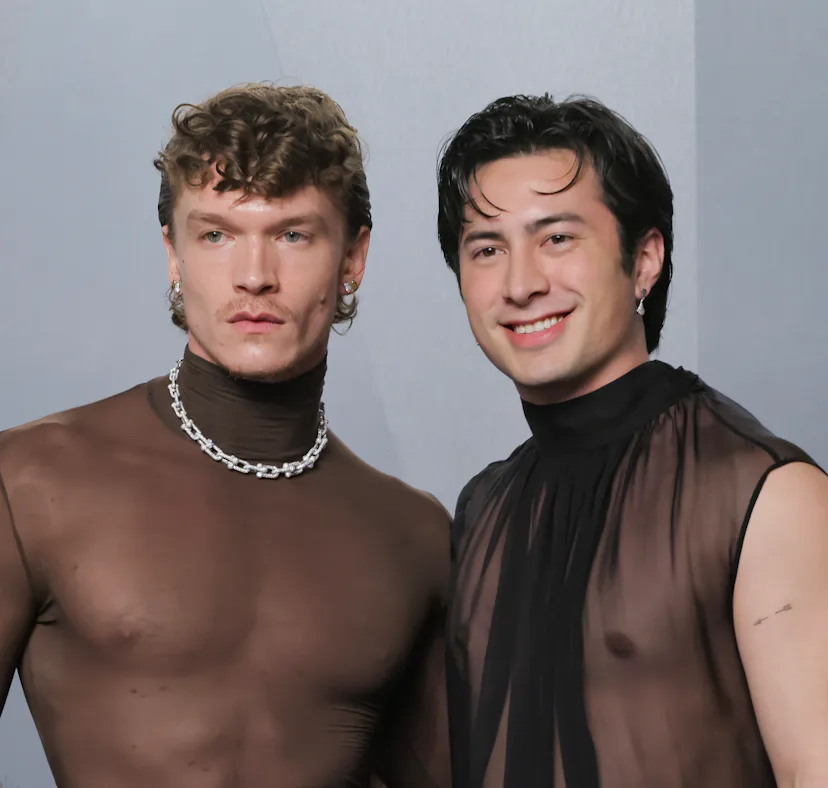
The latest round of discourse exploded after the Met Gala on May 4, where both actors made their debut appearances. Although they walked the carpet separately, they reunited multiple times during the evening and later attended several after-parties together.
Reports from Page Six described the duo as “inseparable” throughout the night, claiming they moved through the GQ after-party “hand-in-hand” and even sat on each other’s laps while laughing together. Sources at the event compared their dynamic to “high school bonfire energy,” fueling another social media frenzy among fans who already obsessively track the actors’ interactions.
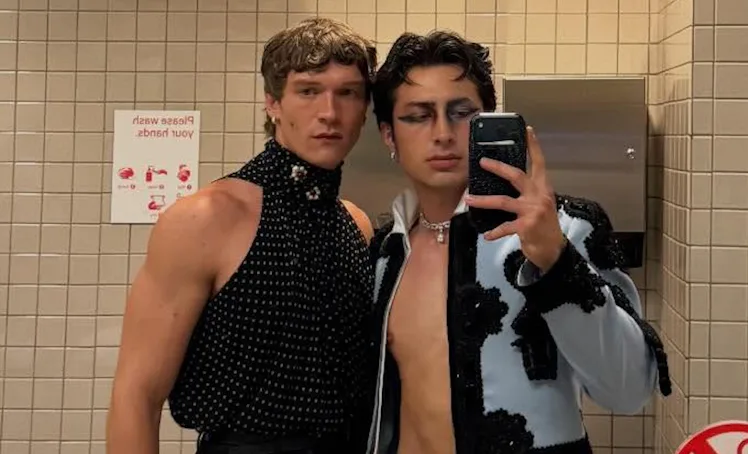
Photos and videos from the evening quickly spread online. Hudson later posted several behind-the-scenes images from the night on Threads, including a bathroom selfie with Storrie at the gala and another candid image showing Storrie drinking from a faucet during an after-party.
For many fans, the posts were simply fun glimpses into a chaotic celebrity night out. But for a smaller — and increasingly vocal — corner of the fandom, every interaction became further “evidence” supporting theories that the actors are secretly together.
Things escalated even further when some fans began dissecting unrelated social media activity for hidden meaning. One user interpreted Williams posting lyrics from Rihanna’s 2016 song “Woo” as some coded emotional message about Storrie, despite the actor being publicly linked to longtime girlfriend Katelyn Larson.
That was apparently the breaking point.
Responding directly on Threads, Williams wrote: “RPFing gotta stop yall.”
While brief, the message carried a very specific meaning for online fandom culture. “RPF” stands for “Real Person Fiction,” a controversial fandom subgenre where fans create fictional romantic or sexual narratives involving actual people instead of fictional characters.
The term has existed online for decades, particularly within fanfiction communities, but has become increasingly mainstream in recent years as celebrity fandom culture has intensified through TikTok, Twitter, Threads, and Tumblr. In many fandoms, fans distinguish between harmless appreciation of chemistry and more invasive behavior that blurs boundaries between actors and the characters they portray.
Williams’ wording was especially notable because it showed he clearly understands the language and culture surrounding online fandom spaces. By specifically using “RPFing,” he wasn’t simply criticizing gossip — he was directly calling out fans who project fictional romantic fantasies onto real people.
And this isn’t the first time he’s addressed the issue.
Back in March, Williams posted a much more direct statement criticizing toxic behavior from parts of the fandom after online arguments and speculation intensified around the cast.
“None of us need your hateful ‘love,’” he wrote at the time. “We all respect and support and love each other and are on the same side. If you can’t accept that gtfoh.”
At the time, many fans applauded him for setting boundaries while others argued that intense fan investment simply comes with starring in a romance series as emotionally charged as Heated Rivalry. But the repeated statements suggest Williams feels the situation has continued escalating rather than calming down.
What makes the Heated Rivalry fandom particularly intense is the show’s origins. The series is adapted from Rachel Reid’s beloved hockey romance novels, which already had a deeply passionate fanbase long before HBO adapted the story for television.
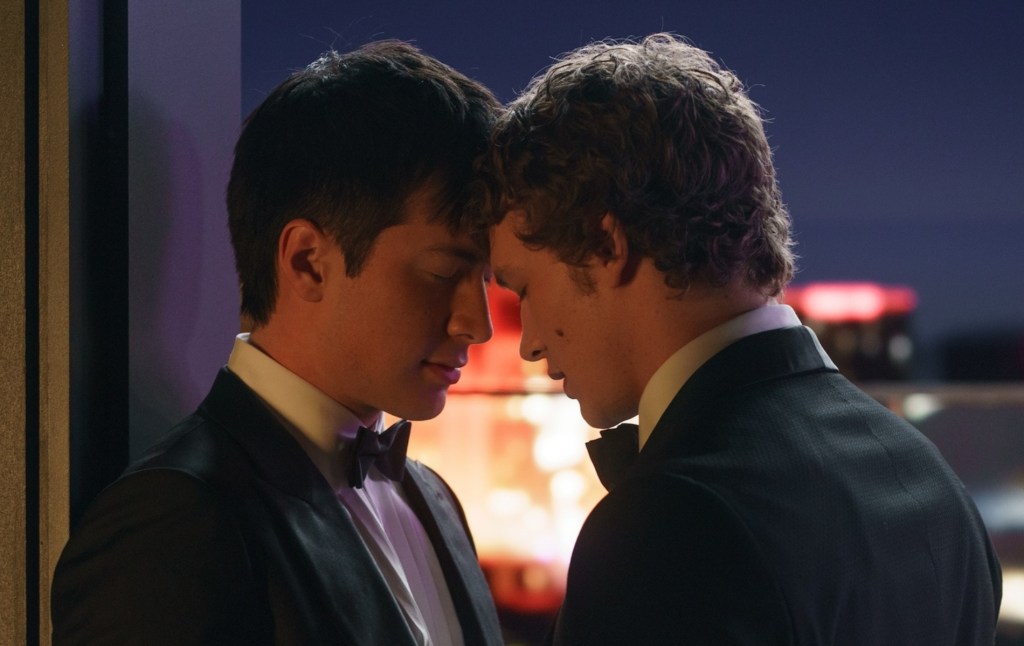
The original books built much of their popularity online through fandom communities, fanfiction culture, and queer romance spaces where audiences became heavily emotionally invested in Shane and Ilya’s relationship. When Williams and Storrie were cast, that energy immediately transferred onto the actors themselves.
Since then, their fame has accelerated at a dizzying pace. In less than a year, the actors have gone from relative unknowns to fashion week fixtures, Golden Globe presenters, Met Gala attendees, and social media sensations.
That rapid rise also means they’re learning how to navigate modern fandom culture in real time.
The situation highlights a broader issue that increasingly affects actors starring in romance-heavy projects, especially within fandoms fueled by social media algorithms and constant access to celebrity content. The line between appreciating chemistry and feeling entitled to private lives can quickly disappear online.
For some fans, shipping fictional characters evolves into interpreting every interaction between actors as meaningful. Casual friendships, jokes, physical affection, or even social media timing become “evidence” supporting imagined narratives.
And in many cases, the actors involved are left in an uncomfortable position. If they publicly interact too warmly, speculation increases. If they pull back or stop appearing together, fans accuse them of hiding something or being forced apart by studios.
Williams and Storrie now appear to be navigating exactly that balancing act.
What complicates matters further is that both actors genuinely seem extremely close. Multiple interviews suggest they developed a real friendship while filming Heated Rivalry, and their comfort with each other naturally translates into affectionate body language and playful interactions.
But friendship and chemistry aren’t the same thing as romance — a distinction Williams clearly wants fans to respect.

Importantly, the vast majority of the Heated Rivalry fandom appears supportive and respectful. Most fans simply enjoy the actors’ friendship and appreciate the way they promote the series together. But as with many massive fandoms, a smaller section often dominates discourse online through increasingly intense theories and speculation.
Ironically, the very authenticity that helped make Shane and Ilya feel believable onscreen may now be contributing to the problem. Williams and Storrie’s natural chemistry became central to the show’s success, but it also encouraged some viewers to stop separating performance from reality.
As Heated Rivalry continues growing — with future seasons already generating massive anticipation — that tension between fandom enthusiasm and personal boundaries will likely remain an ongoing challenge.
For now, though, Hudson Williams seems determined to make one thing perfectly clear: fans are free to obsess over Shane and Ilya all they want, but the actors behind them deserve the space to simply be themselves.