Big changes are coming to Sullivan’s Crossing, but this time the biggest developments aren’t unfolding on screen.
As anticipation continues to build for a fifth season of the hit romantic drama, the series is undergoing a major creative transition behind the scenes. After guiding the adaptation through its first four seasons, creator and longtime showrunner Roma Roth is stepping down from her leadership role, paving the way for a new creative voice to take over.

The change marks one of the most significant shifts in the show’s history and arrives just as production prepares to begin on another chapter of Maggie Sullivan and Cal Jones’ story.
According to industry reports, Floyd Kane will assume showrunner duties for Season 5.
Kane is best known for his work on the Canadian drama Diggstown and will oversee the upcoming season as filming prepares to begin later this summer in Nova Scotia.
Although Canadian broadcaster CTV has already renewed the series, The CW has yet to formally announce its own pickup for the fifth season in the United States.
Even so, production plans appear to be moving forward without interruption.
The leadership change comes after four successful seasons that transformed Sullivan’s Crossing into one of television’s most popular romantic dramas.
Based on Robyn Carr’s bestselling novels, the series follows neurosurgeon Maggie Sullivan as she leaves behind her demanding city life to reconnect with her rural hometown and rebuild relationships that had long been neglected.
Along the way, she develops a deep bond with mysterious campground resident Cal Jones, played by Chad Michael Murray.
That central romance has become the emotional foundation of the series, helping attract a loyal international audience.
Despite stepping away as showrunner, Roth will not be leaving the production entirely.
She is expected to remain involved as an executive producer, allowing her creative influence to continue shaping the series even without overseeing day-to-day operations.
Reports suggest the show’s overall creative direction will remain largely consistent despite the leadership transition.
That continuity may reassure longtime viewers concerned about dramatic changes to the tone or storytelling style.
After all, Roth played a central role in adapting Carr’s novels for television from the very beginning.
Her continued involvement behind the scenes should help preserve much of the show’s established identity.
Nevertheless, the transition has generated considerable discussion among fans and industry observers alike.
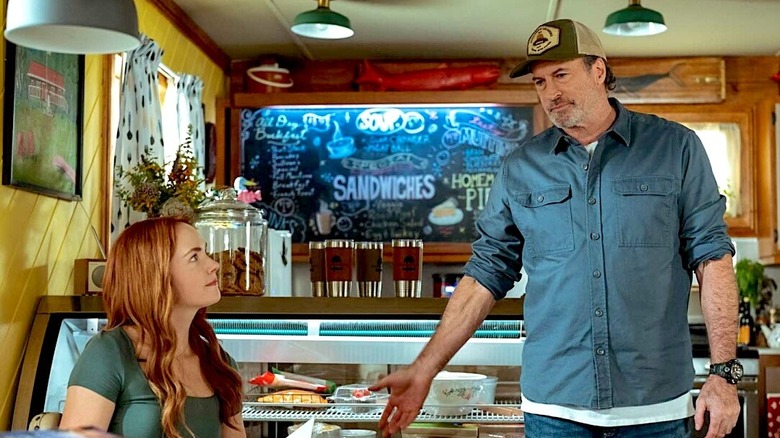
According to reports, the change follows ongoing rumors that the production environment behind the scenes had become increasingly difficult.
Industry sources have suggested the Sullivan’s Crossing set was not always considered a harmonious workplace, with speculation centering on Roth’s management approach during production.
While no official statements have confirmed those reports in detail, the timing of the leadership change has naturally fueled conversation.
Neither Roth nor the series has publicly addressed those specific allegations.
Instead, attention has largely shifted toward what Floyd Kane’s arrival could mean creatively.
Kane brings substantial experience to the role.
His work on Diggstown earned praise for balancing character-driven storytelling with emotionally grounded drama, qualities that align naturally with the tone Sullivan’s Crossing has cultivated throughout its run.
His appointment also reflects the growing prominence of Canadian television creators taking leadership positions on internationally successful productions.
Whether Kane introduces noticeable stylistic changes remains to be seen.
Many fans are likely hoping for evolution rather than reinvention.
The timing of the transition also follows another major departure that already reshaped the series earlier this year.
Original cast member Scott Patterson exited Sullivan’s Crossing after appearing in its first three seasons as Maggie’s father, Sully.
His departure surprised viewers, particularly because the character had served as one of the emotional anchors of the series.
At the time, Patterson explained that continuing with the production was no longer possible due to creative disagreements.
In a lengthy public statement, the actor described those differences as becoming “untenable.”
According to Patterson, he ultimately reached the conclusion that remaining with the series no longer aligned with his creative vision.
His exit quickly became one of the most discussed moments surrounding the show’s fourth season.
Complicating matters further, Patterson later expressed frustration regarding public comments surrounding his departure.
Specifically, the actor objected to suggestions that the production had decided not to bring him back.
He insisted the opposite was true, maintaining that leaving the series had been his own decision after creative conflicts reached an impasse.
Patterson also claimed that others connected to the production were aware of those circumstances despite publicly presenting a different narrative.
The disagreement drew significant attention among the show’s fan base, many of whom had grown attached to Sully throughout the first three seasons.
Ultimately, the series wrote the character out by sending him to Ireland alongside his romantic partner, allowing the story to continue without his on-screen presence.
Season 4 therefore became something of a transition period.

Without Sully, the focus shifted even more heavily toward Maggie and Cal’s evolving relationship.
That season presented one of the couple’s biggest emotional challenges after Maggie’s estranged husband unexpectedly returned, forcing both characters to confront unresolved issues from her past.
Despite the turbulence, the finale concluded on a hopeful note.
Cal proposed to Maggie after the pair reconciled, only for their emotional moment to be interrupted by the arrival of young Tracy, who needed temporary guardians following difficulties with her foster family.
The unexpected twist set the stage for a fifth season likely to explore not only marriage but also the possibility of parenthood.
Those developments represent an intriguing starting point for Kane’s first season as showrunner.
Rather than inheriting a series searching for direction, he takes over at a moment filled with emotional momentum and numerous unresolved storylines.
Viewers will undoubtedly be eager to see how he balances honoring the foundation established by Roth while gradually introducing his own creative perspective.
That challenge becomes even more significant given the show’s growing popularity.
Since premiering on The CW in 2023, Sullivan’s Crossing has steadily expanded its audience through both traditional broadcasts and streaming platforms.
Its arrival on Netflix introduced the series to an even larger international fan base, transforming what initially appeared to be a modest romantic drama into a global success.
The show’s combination of scenic landscapes, heartfelt relationships and emotionally grounded storytelling has drawn frequent comparisons to Carr’s other successful adaptation, Virgin River.
Interestingly, Roth also serves as an executive producer on that Netflix hit, further highlighting her longstanding relationship with Carr’s literary universe.
Maintaining consistency across those adaptations has become one of her defining strengths.
Even with a new showrunner assuming leadership, that connection to the source material remains intact.
Production for Season 5 is expected to begin later this summer, suggesting casting announcements and additional creative updates may arrive soon.
Although plot details remain closely guarded, fans already have plenty of questions.
How will Maggie and Cal adjust to becoming engaged?
Will Tracy become a permanent member of their family?
How will supporting characters continue evolving without Sully’s presence?
And perhaps most intriguingly, will audiences notice a different storytelling approach under Kane’s leadership?
Such questions inevitably accompany any major creative transition.
Television history offers numerous examples of long-running series successfully navigating showrunner changes without losing their identity.
Others, however, have struggled to maintain consistency after significant behind-the-scenes departures.
For Sullivan’s Crossing, much will depend on the collaboration between Kane, Roth and the returning cast.
Fortunately, the show’s strongest asset remains unchanged.
Morgan Kohan and Chad Michael Murray continue anchoring the series with performances that have become increasingly beloved over four seasons.
Their chemistry provides a stable emotional center regardless of who occupies the showrunner’s office.
As production prepares to begin, viewers can take comfort knowing that while leadership may be changing, the heart of Sullivan’s Crossing appears firmly intact. Roma Roth’s departure as showrunner undoubtedly marks the end of one era, but her continued involvement as executive producer suggests the series will not abandon the qualities that made it successful in the first place. With Floyd Kane now preparing to guide the next chapter, Season 5 represents both a fresh beginning and an opportunity to prove that meaningful creative evolution can strengthen an already beloved series rather than redefine it.