“HE WAS THE VILLAIN ALL ALONG?” — Marshals’ Explosive Season Finale Leaves Yellowstone Fans Asking One Brutal Question
For months, viewers believed they knew who the real enemy was.
The clues seemed obvious. The conflicts appeared straightforward. Every episode seemed to point toward familiar threats, old rivalries, and dangerous opponents standing directly in Kayce Dutton’s path.
Then the Season 1 finale of Marshals arrived and turned everything upside down.
In a shocking twist, Tom Weaver—the seemingly friendly ranch owner who had spent much of the season presenting himself as an ally—was revealed to be the mastermind operating behind the scenes. The revelation was clearly designed to be one of the biggest moments in the entire season, a dramatic betrayal that would leave audiences stunned and eager for more.
Instead, many viewers were left asking a very different question.
Why didn’t it feel bigger?
The answer may reveal a deeper problem that has followed Marshals since its very first episode.
A Twist That Should Have Changed Everything
On paper, the reveal is exactly the kind of moment television writers dream about.
Tom Weaver was never presented as an obvious villain. When audiences first met him, he appeared almost reassuring. He was successful, experienced, and seemed willing to help Kayce Dutton adapt to life after the events of Yellowstone.
In many ways, Weaver looked like a replacement father figure.
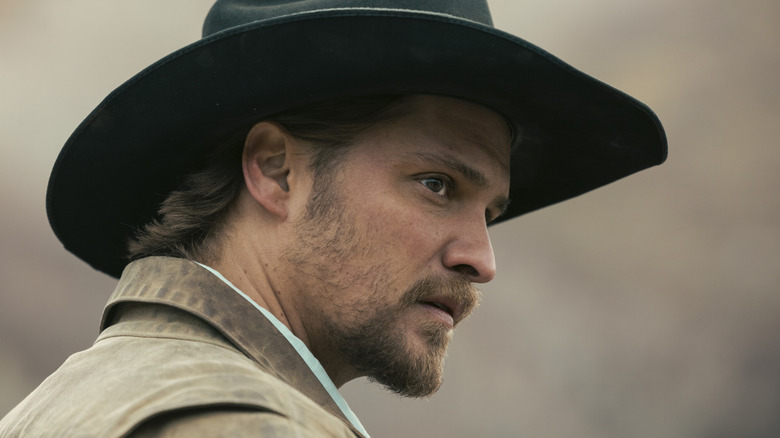
A calmer version of John Dutton.
A man who understood Montana.
A man who understood land ownership.
A man who appeared capable of helping Kayce finally move forward.
That setup should have made the betrayal devastating.
When a trusted ally turns out to be the enemy, audiences are supposed to feel shocked.
Betrayed.
Even angry.
Yet for many fans, the finale created a different reaction.
Confusion.
Not because the twist was impossible to understand.
But because Tom Weaver barely felt present enough throughout the season to carry the weight of being the ultimate villain.
The Problem Started Long Before The Finale
The issue wasn’t necessarily the reveal itself.
The issue was everything that happened before it.
Throughout Season 1, Marshals struggled to decide what kind of show it wanted to be.
At various points it seemed determined to become a crime procedural.
Then it shifted toward family drama.
Moments later it focused on political issues surrounding Native American communities.
Then it moved back toward law enforcement investigations.
Then military trauma.
Then ranch disputes.
Then personal relationships.
The result was a series constantly moving in different directions.
Every time one storyline began gaining momentum, another appeared to replace it.
Rather than building steadily toward a central conflict, the season often felt fragmented.
By the time the finale arrived, many viewers had spent more time following weekly cases than thinking about Tom Weaver.
And that created a major problem.
Because successful twists depend on emotional investment.
The Villain Was Missing For Much Of The Story
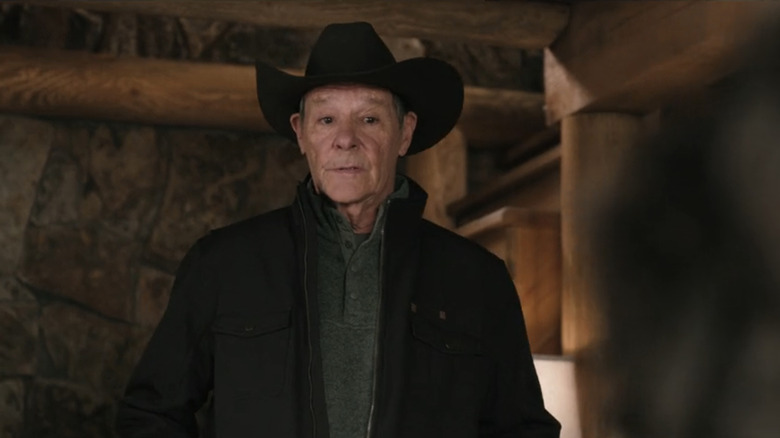
One of the most surprising aspects of the finale is how little time audiences actually spent with Tom Weaver.
Despite ultimately being revealed as the season’s central antagonist, he appeared in only a handful of episodes.
His appearances were brief.
Sometimes separated by weeks.
Sometimes overshadowed by entirely unrelated storylines.
As a result, viewers never had the opportunity to develop a strong emotional reaction toward him.
Great television villains leave a mark long before their secrets are exposed.
They create tension.
Suspicion.
Curiosity.
Their presence lingers even when they are off-screen.
Tom Weaver never fully achieved that.
Instead, he often felt like a secondary character wandering in and out of a much larger story.
When the finale suddenly announced that he had been orchestrating major events behind the scenes, many viewers struggled to feel the intended impact.
Not because the idea was bad.
Because the groundwork never felt complete.
Randall Clegg Looked Like The Real Big Bad
Part of the problem involves another character entirely.
Earlier in the season, Randall Clegg appeared poised to become Kayce’s defining enemy.
The rivalry carried history.
Emotion.
Family conflict.
Generational tension.
Everything fans expect from a Yellowstone-style feud.
For several episodes, Clegg seemed positioned as the primary threat.
The type of adversary capable of carrying an entire season.
Then suddenly he was gone.
His story concluded long before the finale.
At the time, many viewers wondered why such a significant conflict ended so quickly.
Now the answer seems obvious.
The writers were saving the real villain reveal.
Unfortunately, removing one major antagonist only increased the pressure on Tom Weaver’s eventual reveal.
And because audiences had spent far less time with him, the payoff never fully landed.
Too Many Stories Competing For Attention
Perhaps the biggest criticism directed at Marshals involves its sheer number of storylines.
Throughout the season, the series introduced characters, conflicts, mysteries, investigations, and emotional arcs at an almost relentless pace.
Some of those stories were genuinely compelling.
Others felt rushed.
Many disappeared before reaching their full potential.
Instead of creating one strong narrative spine, the show often felt like multiple television series competing for screen time.
One episode focused heavily on law enforcement.
Another emphasized family relationships.
Another explored military trauma.
Another dealt with ranch politics.
Each storyline contained interesting ideas.
The problem was balance.
Because every new subplot reduced time available for developing the season’s primary conflict.
And when the finale finally revealed the hidden mastermind, viewers were still trying to process everything else.
Why Dutton Ranch Is Winning The Comparison

The contrast with Dutton Ranch has become increasingly difficult to ignore.
While Marshals races between numerous storylines, Dutton Ranch has taken a much more focused approach.
Its characters receive room to breathe.
Relationships develop gradually.
Conflicts build naturally.
Viewers spend enough time with each major figure to understand their motivations and emotional journeys.
As a result, surprises feel earned.
Betrayals carry weight.
Revelations matter.
Fans know these characters.
They understand them.
And they care about what happens next.
Many viewers believe that if Dutton Ranch introduced a similar twist, it would likely generate a far stronger reaction because the foundation has already been established.
That difference highlights one of the most common criticisms surrounding Marshals.
The show rarely slows down long enough for its biggest moments to truly resonate.
The Kayce Dutton Problem
Ironically, the strongest element of Marshals remains the same reason many fans started watching.
Kayce Dutton.
Luke Grimes continues delivering a compelling performance, bringing emotional depth and quiet intensity to the role.
Whenever the series focuses directly on Kayce’s internal struggles, family relationships, or personal growth, it feels connected to what made Yellowstone successful.
The challenge comes when the show moves away from him.
Instead of using Kayce as the center of every major storyline, Season 1 frequently scattered its attention across numerous supporting characters and procedural plots.
That decision diluted the emotional impact of many developments.
Including the finale itself.
Because ultimately, audiences weren’t invested in Tom Weaver.

They were invested in Kayce.
And the series sometimes seemed to forget that.
Can Season 2 Fix The Biggest Problem?
Despite criticism surrounding the finale, Marshals still possesses enormous potential.
The Tom Weaver reveal creates opportunities for a more focused second season.
The conflict is now clear.
The stakes are personal.
The enemy has finally stepped into the spotlight.
Most importantly, the show no longer needs to hide its primary antagonist.
That alone could dramatically improve the storytelling.
If Season 2 commits to developing its central conflict rather than constantly introducing new distractions, the series could become far stronger.
Because the ingredients are already there.
A compelling lead character.
A rich franchise universe.
Interesting supporting players.
And now, finally, a villain audiences can truly focus on.
The Twist That Exposed A Larger Issue
In the end, Tom Weaver’s shocking reveal may be remembered for an unexpected reason.
Not because it transformed the story.
Not because it shocked viewers.
But because it exposed the biggest challenge facing Marshals.
The series has spent so much time trying to be everything at once that it sometimes struggles to be one thing exceptionally well.
The finale wasn’t simply a reveal about Tom Weaver.
It was a reveal about the show itself.
A reminder that great twists aren’t built in the final episode.
They’re built throughout an entire season.
And unless Marshals learns that lesson moving forward, even its biggest surprises may continue feeling smaller than they should.