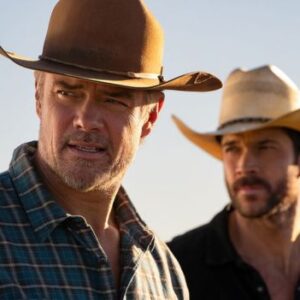
Wrong Gate, Ma’am — A Delta Force Operator Mocked the Woman in Business Attire at Reagan National, Until My Protection Team Stepped Forward
The private federal charter lounge at Ronald Reagan Washington National Airport was quiet in the way only secure spaces can be — hushed conversations, the low hum of classified briefings, and the occasional click of expensive shoes on polished floors.
I stood near the glass wall overlooking the tarmac, my black wool coat buttoned against the January chill seeping through the terminal. A locked aluminum briefcase rested at my feet. My name was Dr. Alexandra Rivera, Deputy Director of the National Threat Assessment Division. Most people who mattered in Washington knew exactly who I was.
The man who approached me clearly did not.
He was tall, broad-shouldered, wearing the casual confidence of someone used to being the most dangerous person in any room. Delta Force, if the insignia on his bag and the way he carried himself were any indication. Two other operators lingered behind him, smirking like they were watching a show.
“Wrong gate, ma’am,” he said loudly, loud enough for the entire lounge to hear. “This area is for authorized personnel only. Commercial departures are back through security.”
I didn’t respond immediately. I simply looked at him.
He took my silence as confusion.
With a condescending smile, he reached down and hooked two fingers under the strap of my briefcase, sliding it away from my feet as if I were a lost tourist.
“Let me help you find where you actually belong, sweetheart.”
The word landed like a slap. A few people in the lounge looked away. Others watched with interest. No one intervened.
He tapped the briefcase with the toe of his boot.
“This side of the terminal is for people who matter.”
I slipped my right hand into my coat pocket and pressed a single button on my phone. Not a call. Not a distress signal in the traditional sense. A silent priority alert.
He laughed. “Calling your boss? Or maybe your husband?”
That was when the glass doors at the far end of the lounge opened.

Six men and two women in dark suits entered with calm, measured steps. No shouting. No drawn weapons. Just the quiet authority of people who had done this many times before. My protection detail — handpicked, highly trained, and completely invisible until they chose not to be.
The lead agent, a tall woman named Reyes, stopped at my right shoulder.
“Director Rivera,” she said evenly, “are you unharmed?”
The Delta Force operator’s face changed in stages. First confusion. Then recognition. Then the slow, sickening realization of exactly who he had just mocked in front of witnesses.
Reyes looked at his hand still touching my briefcase.
“Sir,” she said, her voice calm but carrying the weight of federal authority, “step away from the Director’s case. Now.”
The operator released the briefcase like it had burned him. His teammates behind him had gone completely still.
I finally spoke.
“My name is Dr. Alexandra Rivera. Deputy Director of the National Threat Assessment Division. The materials in that case are classified at the highest level. You just interfered with a federal operation and laid hands on protected evidence.”
The lounge had gone dead silent.
The operator’s face had lost all color.
“I… I didn’t know—”
“You didn’t ask,” I said quietly. “You assumed. That’s a dangerous habit in your line of work.”
Reyes motioned subtly. Two agents moved to flank the operators. Not arresting them — not yet — but making it very clear that the power dynamic had shifted completely.
I looked at the man who had called me “sweetheart.”
“Next time you see a woman in a secure area,” I said, “consider the possibility that she owns the room.”
Then I picked up my briefcase, nodded to my team, and walked toward the secure boarding area without another word.
Behind me, I heard one of the other operators whisper, “Holy shit, that’s Rivera…”

The incident should have ended there — a moment of embarrassment for an arrogant operator and a quiet reminder of why assumptions can be deadly in our line of work.
It didn’t.
Two hours later, as my plane climbed into the sky toward a classified briefing in Colorado, my phone buzzed with an encrypted message from the Director of National Intelligence. The Delta Force operator’s commander had already been notified. An internal investigation was opening. The operator’s career was likely over, not because he had mocked the wrong person, but because he had compromised operational security in a sensitive federal space.
I closed my eyes and leaned back in my seat.
This wasn’t the first time. It wouldn’t be the last.
Being a woman in a position of significant power in national security still meant navigating a world that often defaulted to seeing me as someone’s assistant, someone’s wife, or someone who had wandered into the wrong room.
But moments like this — when the mask slipped and the truth stepped forward — reminded me why I stayed.
The work mattered. The quiet authority mattered. The ability to protect the country without needing to announce my presence mattered.
When we landed in Colorado, my full protection detail was waiting on the tarmac. As I walked down the stairs, one of the younger agents — a former Marine named Torres — fell into step beside me.
“Director,” he said quietly, “that operator from Dulles has already been pulled from active duty. His commander wants a meeting with you next week.”
I nodded.
“Good. Maybe he’ll learn something.”
That evening, in a secure briefing room beneath the mountains, I presented the evidence from the briefcase that had started the entire incident. The room full of generals, intelligence directors, and policymakers listened as I laid out the threat.
No one called me “sweetheart.”
No one questioned whether I belonged.
Later that night, back in my temporary quarters, I allowed myself one small smile.
The operator at Dulles had seen a woman in a navy coat and made assumptions.
He had learned, in the most public way possible, that some of the most dangerous people in the room are the ones who don’t need to announce it.
And somewhere out there, a Delta Force operator was probably explaining to his chain of command exactly how he had managed to insult one of the most powerful women in American national security — in front of witnesses.
I slept well that night.
Some lessons, after all, are best learned the hard way.