‘The Odyssey’ Trailer Sparks Massive Backlash as Christopher Nolan Faces Most Divisive Reaction of His Career
For years, Christopher Nolan has been treated as one of Hollywood’s untouchable filmmakers — the rare director capable of turning original ideas, historical dramas, and cerebral blockbusters into global cinematic events. From The Dark Knight to Oppenheimer, Nolan has built a reputation for commanding enormous audience trust long before his films even reach theaters.
But now, months before the release of his newest epic, that reputation is suddenly colliding with one of the loudest online controversies of his career.
The latest trailer for The Odyssey has unexpectedly become the most disliked trailer ever associated with a Nolan film on YouTube, igniting a wave of online debate that stretches far beyond the movie itself. What should have been a triumphant first look at Nolan’s ambitious adaptation of Homer’s legendary poem has instead evolved into a chaotic culture-war battlefield involving historical accuracy, casting choices, internet outrage, and competing ideas about what audiences expect from epic storytelling in 2026.
And with millions already watching the drama unfold online, the conversation surrounding The Odyssey may now be becoming almost as big as the movie itself.

A Trailer That Instantly Divided Audiences
According to reports circulating online, the newest trailer for The Odyssey currently sits at roughly 315,000 likes and more than 83,000 dislikes on YouTube, meaning around one-fifth of visible audience reactions have been negative.
For most filmmakers, those numbers would still look overwhelmingly positive. But for Nolan — a director whose trailers historically generate near-universal excitement — the backlash is unusually intense.
The trailer itself introduces audiences to Nolan’s sweeping interpretation of Homer’s ancient Greek epic. Matt Damon stars as Odysseus, the legendary king of Ithaca attempting to return home following the Trojan War. Along the way, he encounters monsters, storms, mythical temptations and deadly supernatural threats, while his wife Penelope — played by Anne Hathaway — struggles to protect their kingdom from opportunistic suitors convinced Odysseus will never return.
Meanwhile, Tom Holland portrays Telemachus, the son desperate to understand the fate of his missing father.
On paper, the project sounds almost tailor-made for Nolan’s style: mythology, large-scale spectacle, emotional family themes, and psychologically driven heroism. Yet online reaction to the trailer quickly spiraled into something far more complicated.
Historical Accuracy Becomes A Flashpoint
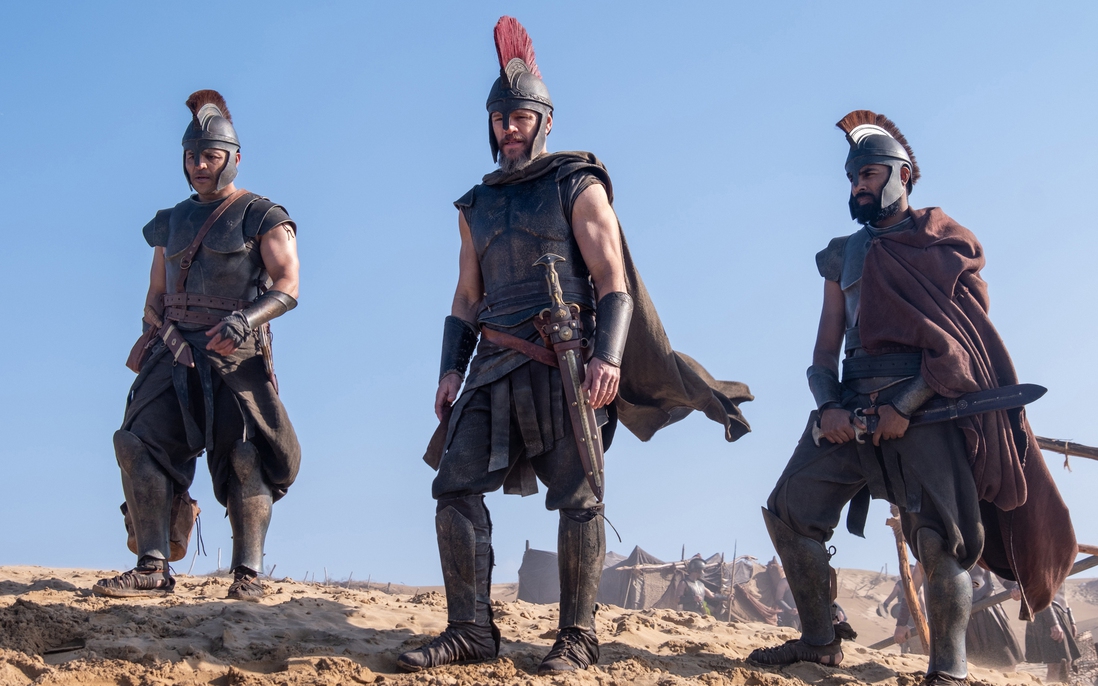
One of the earliest criticisms focused on the film’s visual design.
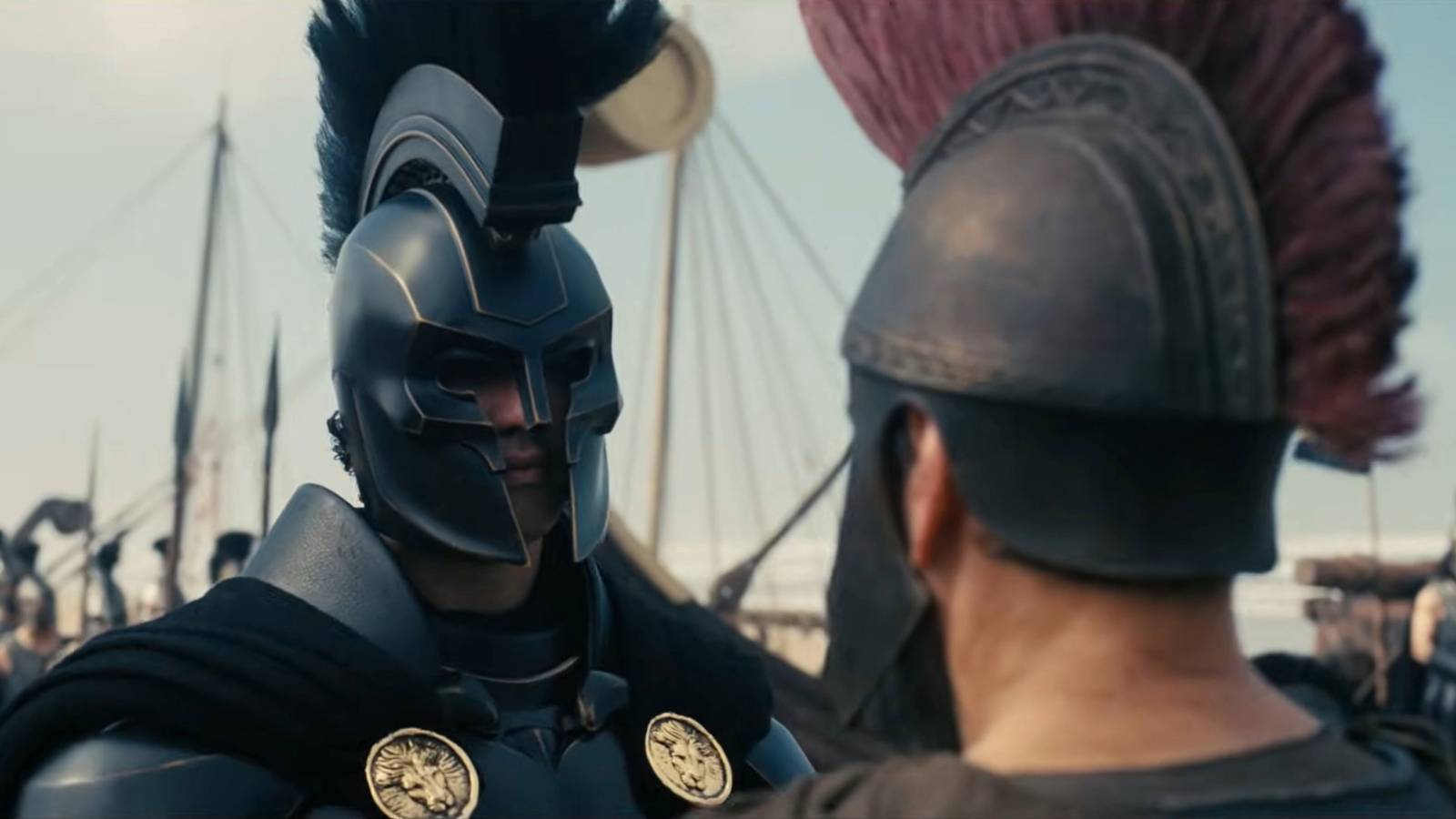
Some viewers argued that the armor and costumes shown in the trailer appear inconsistent with the Bronze Age setting traditionally associated with Homer’s works. Others complained about the dialogue choices, particularly modern-sounding language and contemporary emotional phrasing that they felt clashed with the ancient setting.
For certain critics online, even the accents became controversial.
Many commenters compared the trailer unfavorably to Troy, Wolfgang Petersen’s loose adaptation of Homeric mythology starring Brad Pitt as Achilles. Although that film was hardly historically accurate itself, audiences often remember it as sounding more traditionally “epic” because many of the actors used British accents.
Ironically, critics of The Odyssey appear to be demanding a version of historical authenticity that previous Hollywood epics rarely attempted in the first place.
Ancient Greeks obviously did not speak modern British English either.
But online discourse rarely rewards nuance, especially once controversy gains momentum.
Casting Choices Trigger The Loudest Debate
While discussions about costumes and accents fueled part of the backlash, the largest source of online outrage appears tied to casting decisions.
Oscar-winning actress Lupita Nyong’o became a major target of criticism despite barely appearing in the trailer itself. Nyong’o reportedly plays both Helen of Troy and Clytemnestra — two supporting characters within the broader mythological world.
Conservative commentators and culture-war influencers rapidly seized on her casting as evidence that Hollywood was once again “rewriting history,” despite the fact that Homeric mythology itself exists in dozens of interpretations across centuries of literature, theater, and film.
Many defenders of the film quickly pointed out that Greek mythology has always been reinterpreted through different cultures, languages, and artistic visions. Others argued that the backlash says more about online outrage culture than the actual movie.
Still, the controversy spread rapidly across social media platforms.
At the same time, rumors and arguments also exploded around Elliot Page and speculation regarding which character the actor may or may not be portraying in the film. Some online commentators incorrectly claimed Page was cast as Achilles, despite reports remaining unclear about the actual role.
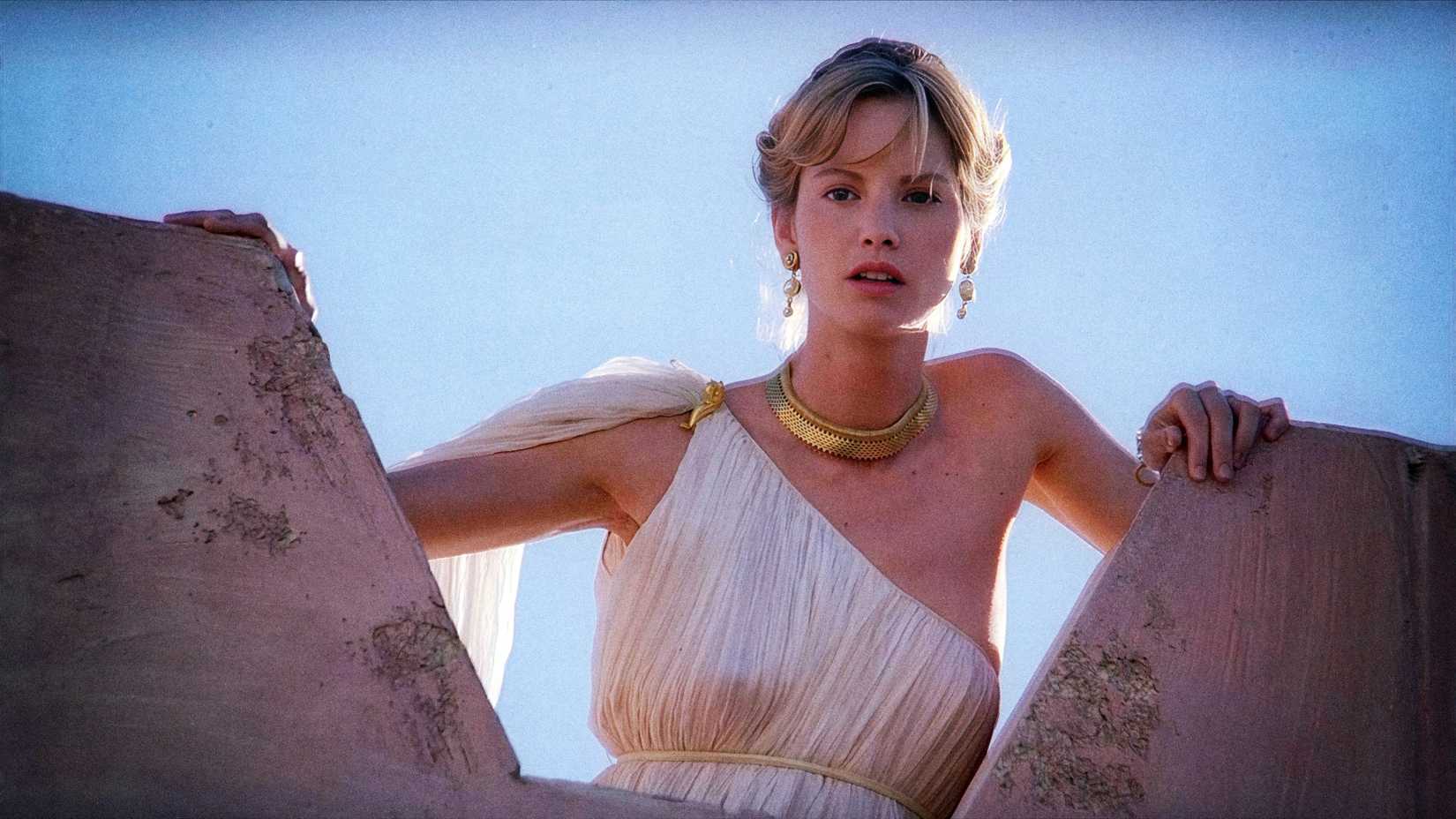
As a result, conversations about the trailer increasingly shifted away from the movie itself and toward broader political and cultural arguments dominating internet discourse in 2026.
Nolan Suddenly Finds Himself In A Different Kind Of Spotlight
What makes this moment especially unusual is that Christopher Nolan has largely managed to avoid this level of culture-war controversy throughout his career.
Even when Nolan tackled politically charged material like Oppenheimer, public conversation mostly centered on filmmaking quality rather than ideological battles.
But The Odyssey arrives at a moment when nearly every major franchise, remake, or historical adaptation becomes instantly dissected online through political lenses.
Some fans believe the backlash is being exaggerated by coordinated outrage campaigns. Others insist the criticism reflects genuine disappointment from audiences who expected a more traditional historical epic.
Either way, Nolan now finds himself pulled into a type of internet firestorm that increasingly dominates modern blockbuster filmmaking.
The Trailer Is Still A Massive Success
Despite the backlash headlines, there is another side to the story that is harder to ignore.
The trailer has already generated more than 23 million views and climbed to the top of YouTube’s movie trending charts.
That level of attention is enormous — even by Nolan standards.
In Hollywood, controversy often fuels curiosity rather than destroying it. And many analysts believe the intense debate may ultimately help the film commercially by turning it into one of the year’s most talked-about theatrical releases.
After all, audiences have not actually seen the finished movie yet.

Much of the outrage currently dominating social media revolves around assumptions, screenshots, partial scenes, and political arguments detached from the final storytelling experience.
There is still every possibility that once the full film arrives, conversation could shift dramatically.
A Modern Culture War Wrapped Inside Ancient Mythology
Perhaps the strangest aspect of the controversy is how perfectly it mirrors the themes of mythology itself.
Homer’s original stories were constantly retold, reshaped, adapted and argued over for centuries. Ancient myths survived precisely because every generation reinterpreted them differently.
Now, thousands of years later, The Odyssey has somehow become another battlefield over who “owns” stories from the past and how they should be presented to modern audiences.
Some viewers want strict historical realism.
Others want emotional storytelling first.
Others simply want to watch a giant Christopher Nolan epic featuring cyclopes, sirens, gods and war heroes without turning every casting choice into a political debate.
But in today’s online world, separating entertainment from internet culture wars has become almost impossible.
All Eyes Now Turn Toward Release Day

For now, the arguments continue growing louder across YouTube, Reddit, X, TikTok and entertainment forums.
Some fans remain deeply excited by the scale of Nolan’s vision. Others fear the film may collapse under the weight of online controversy before audiences even see it.
But one thing already feels certain: The Odyssey is no longer just another blockbuster release.
It has become an event.
A lightning rod.
A modern internet spectacle wrapped inside one of humanity’s oldest stories.
And when the film finally arrives in theaters on July 17, audiences may discover whether all this outrage was the beginning of a genuine disaster — or simply another example of the internet exploding long before the real story had even begun.